1870
The Source of the Albarine


Listen to curator's interpretation
Curatorial notes
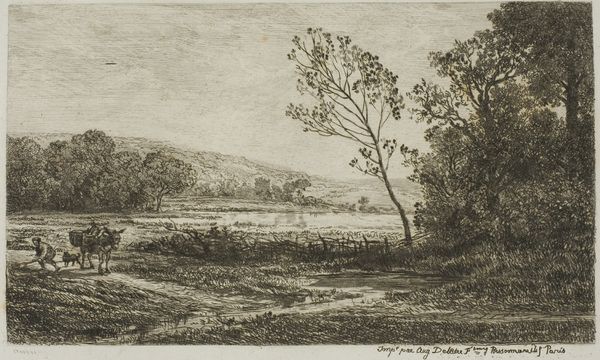
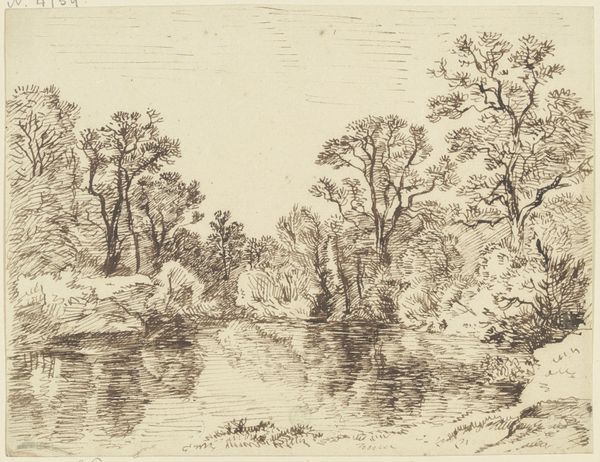
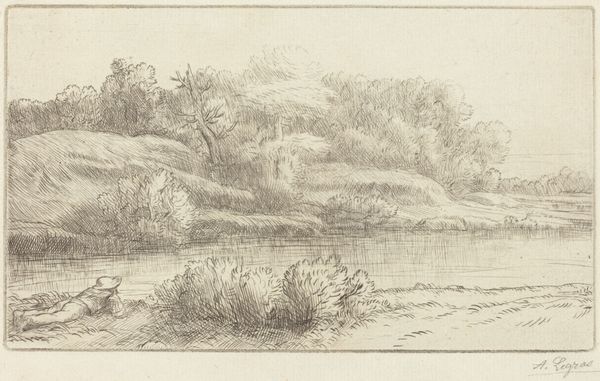
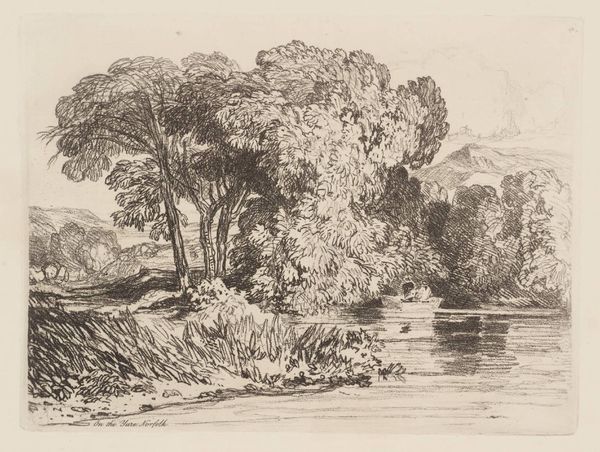
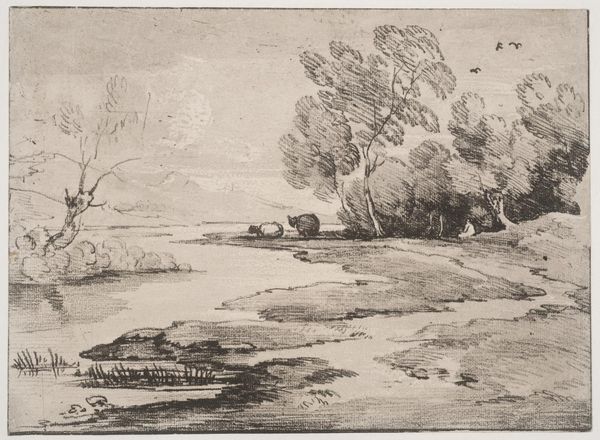
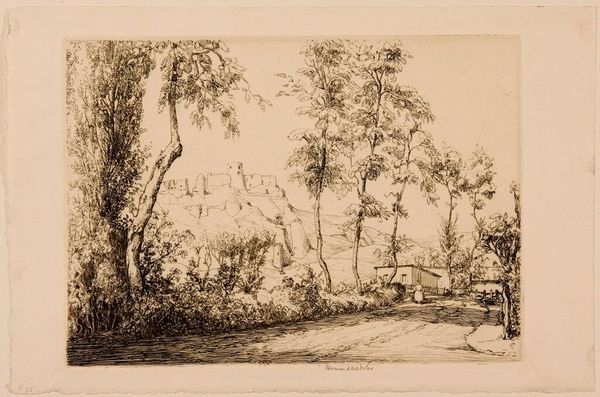
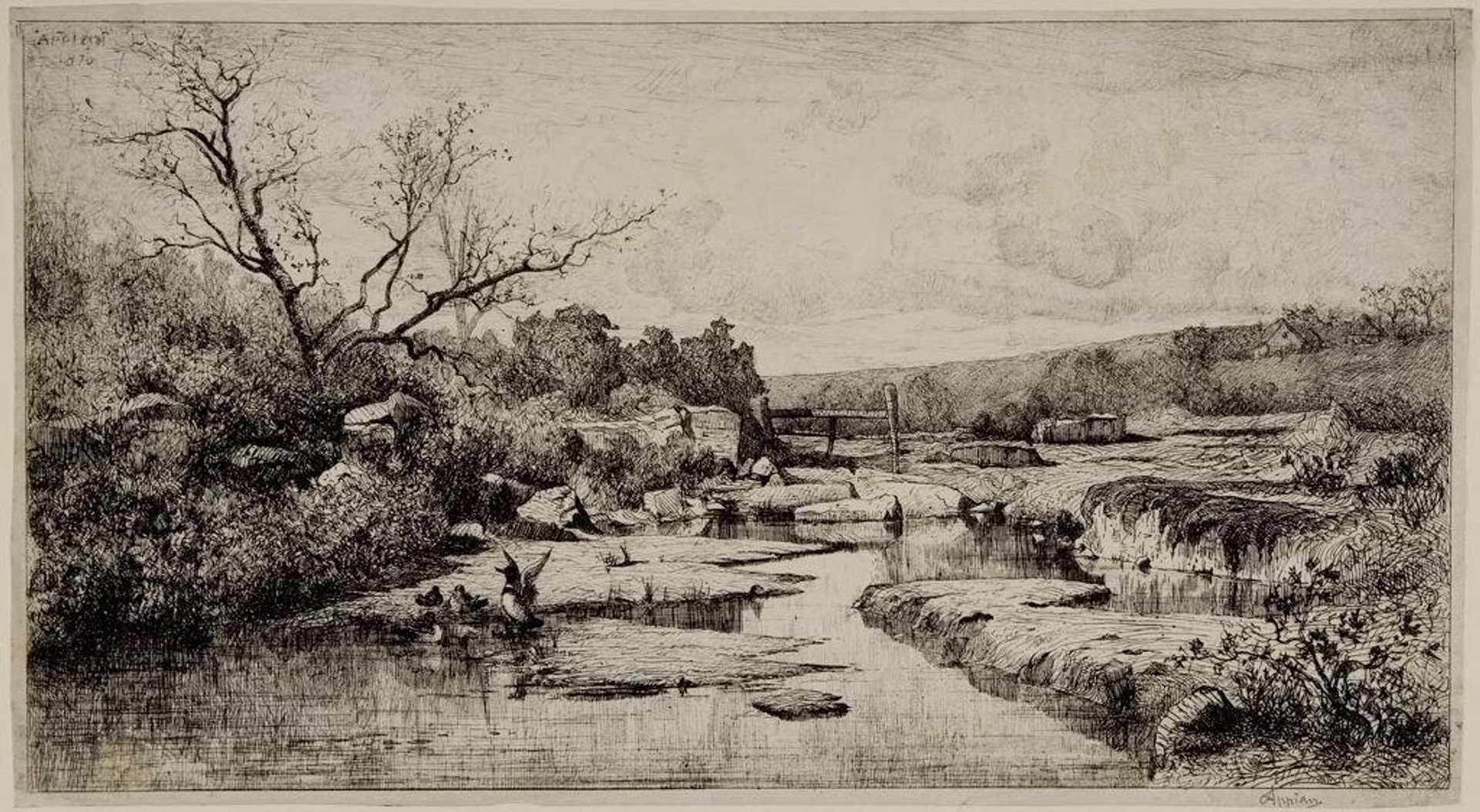
Curator: The density of those etched lines certainly evokes a somber mood, doesn't it? A rather stark tonal landscape. Editor: Indeed. We’re looking at Adolphe Appian's "The Source of the Albarine," currently housed at the Harvard Art Museums. Appian, born in 1818, captured a specific place, its title naming the artwork in that way. Curator: The use of hatching to create depth is intriguing. See how the textures vary from the foliage to the water, reflecting a keen observation. Editor: The Albarine river, here, is more than just a geographical feature; it’s a site interwoven with the history of the French countryside and its inhabitants, and by Appian’s day, this would have been a symbol for the wild and free from the industrial era. Curator: I'm struck by the balance between the detailed foreground and the hazier background; the composition creates a sense of receding space. Editor: It's a narrative embedded in the landscape, a commentary on place, identity, and the shifting dynamics of rural life, all rendered with remarkable skill. Curator: Ultimately, the artwork’s formal qualities contribute to a feeling of quiet contemplation. Editor: And together, Appian’s rendering provides a glimpse into a specific time and place, reflecting broader socio-political currents.