
Curatorial notes
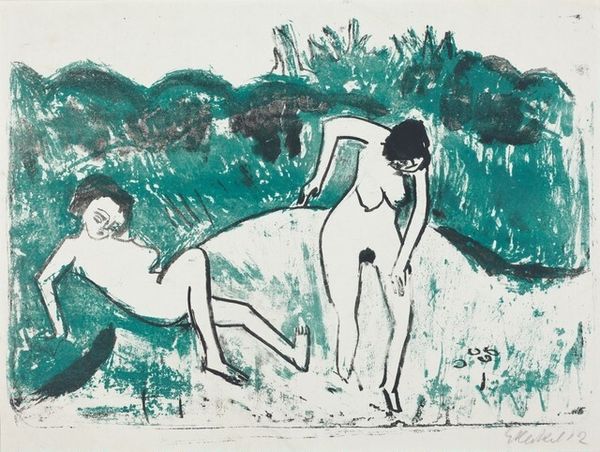
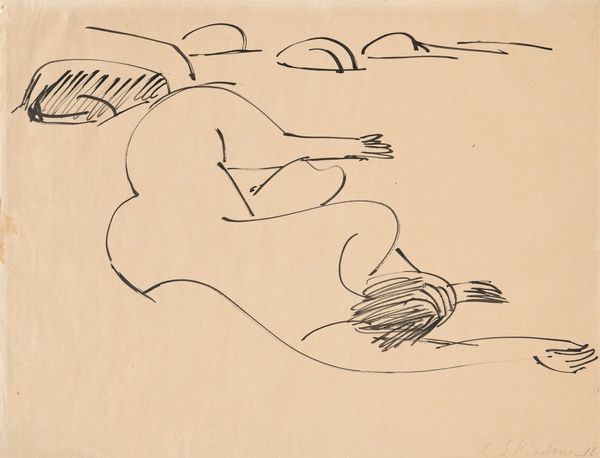
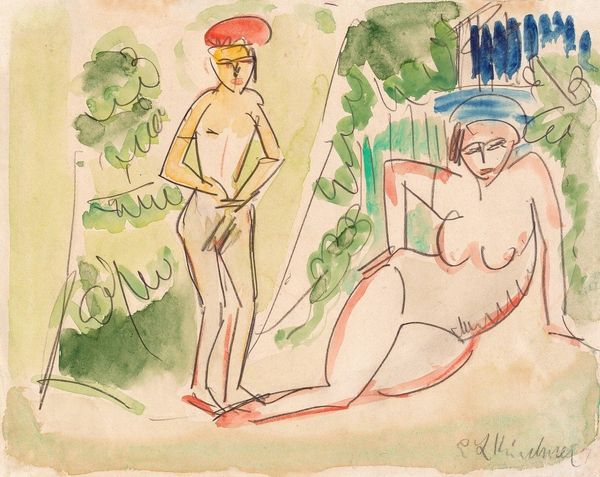
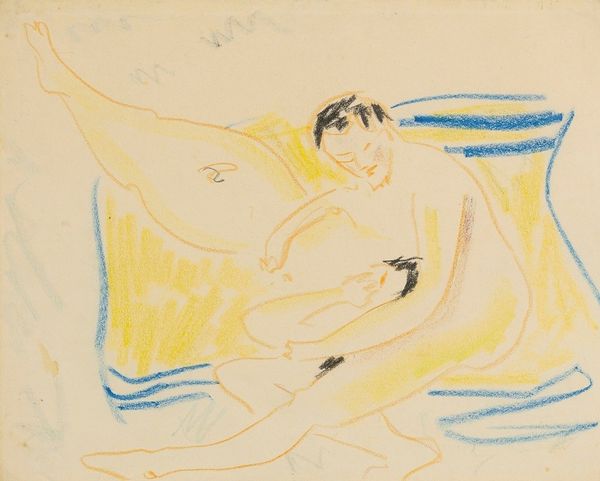
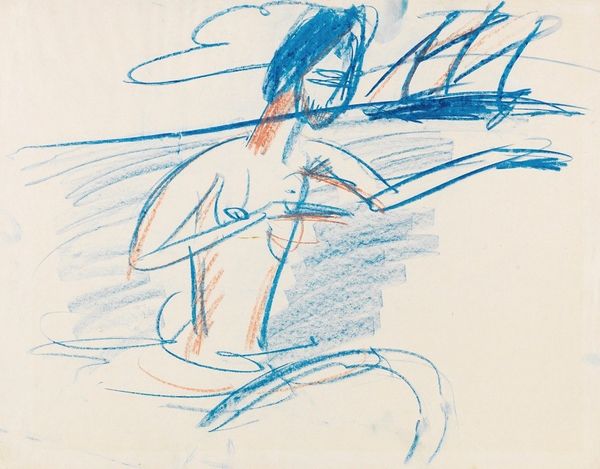
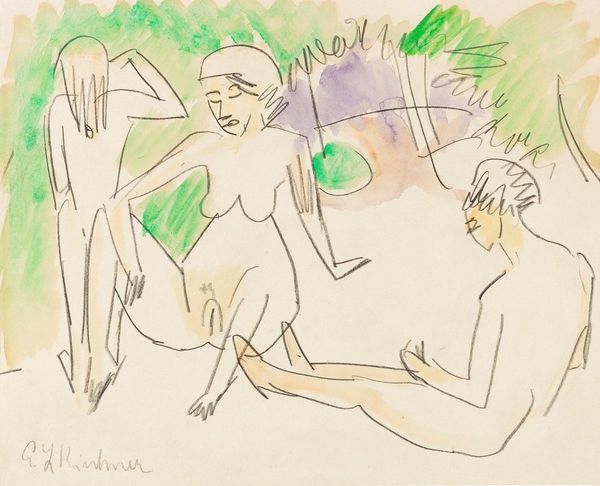
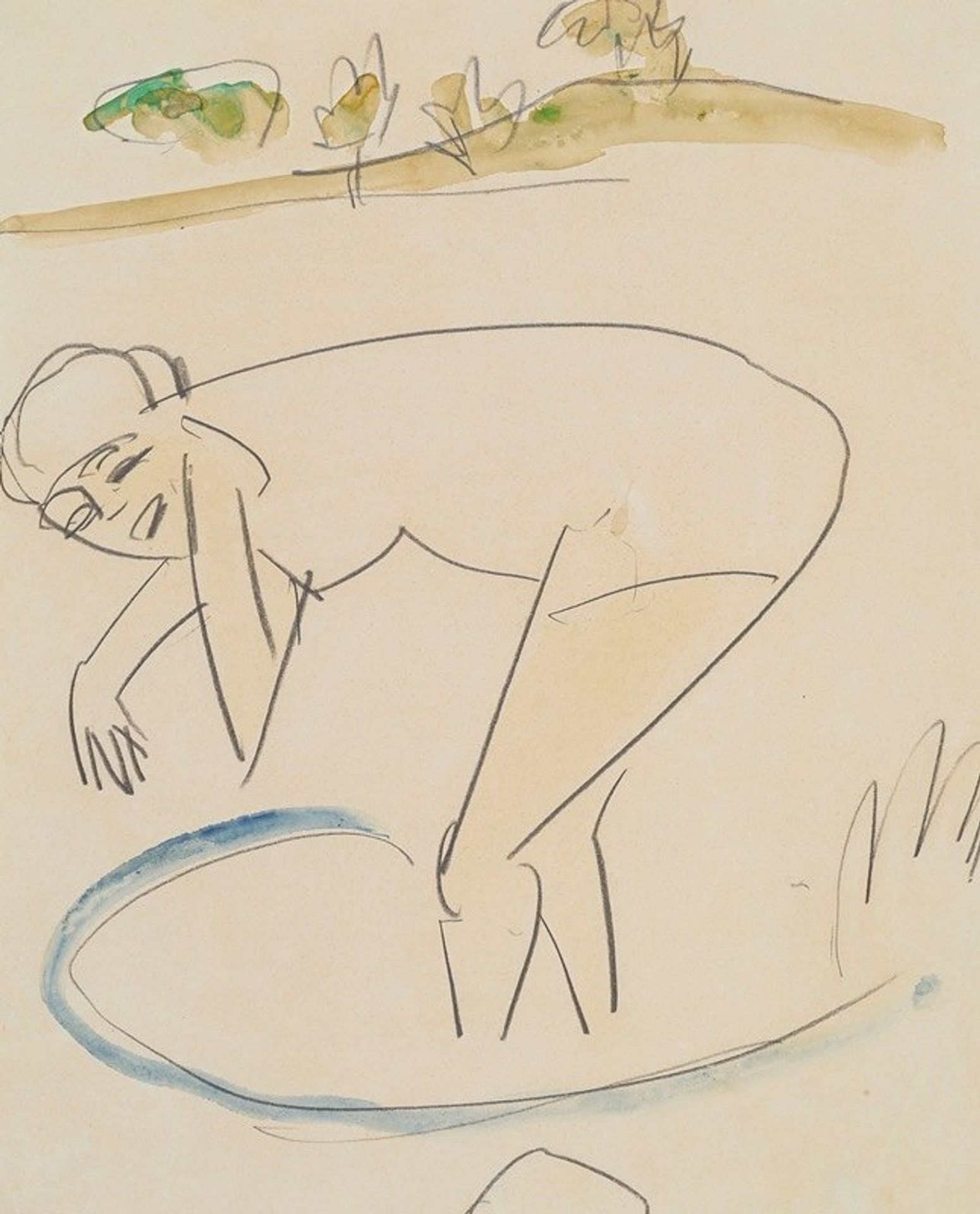
Editor: Ernst Ludwig Kirchner's "Bathers on the Shore," made in 1911, is a watercolor and pencil work that strikes me as both intimate and a bit unsettling, the nude bather distorted in an expressionistic style. What do you see in this piece, considering its time? Curator: This piece pulsates with the anxieties and liberation movements brewing in pre-World War I Germany. The stark lines and almost primitive depiction of the body reject classical ideals, right? It echoes a cultural fascination with the 'natural' and a rejection of bourgeois values. Editor: Yes, the rejection is clear. I'm trying to understand how this all connects back to imagery and its weight over time? Curator: Kirchner and his Die Brücke contemporaries sought to strip away artifice. Nudity here is not about idealized beauty; instead, it is raw and exposed. The beach becomes a space of freedom but also vulnerability. Does it suggest anything of the changing societal mores of the time, particularly surrounding ideas of gender and identity? Editor: It does feel raw, yes. Perhaps Kirchner is revealing not just the physical body but the psychological exposure of modern life, a feeling heightened by the awkward posture and simplified rendering of the landscape? Curator: Precisely! And look at how he captures figures. Those deliberately unrefined shapes mirror societal disruptions and individual alienation – an emotional tension he masterfully conveys. Water, being cleansing and formless, contrasts yet coexists with sharp angles and rigid bodies. Does any visual element hint towards future unease that World War I would soon cause? Editor: That's a lot to absorb – this initial quick sketch manages to encapsulate many tensions! I definitely see it in a different, more informed way now. Curator: Indeed. The deceptively simple strokes carry a weighty cultural memory, revealing layers of meaning. Hopefully it gives you better appreciation as we continue to engage in art history.