About this artwork
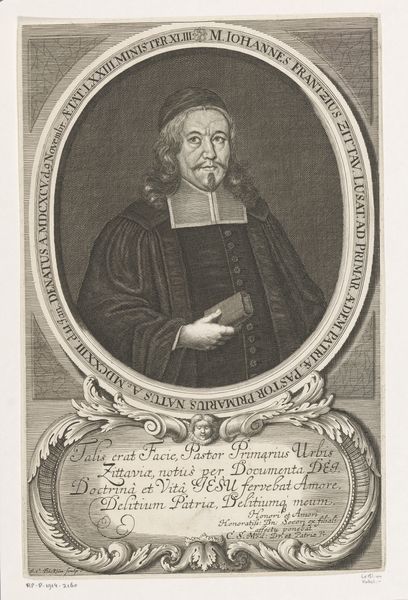
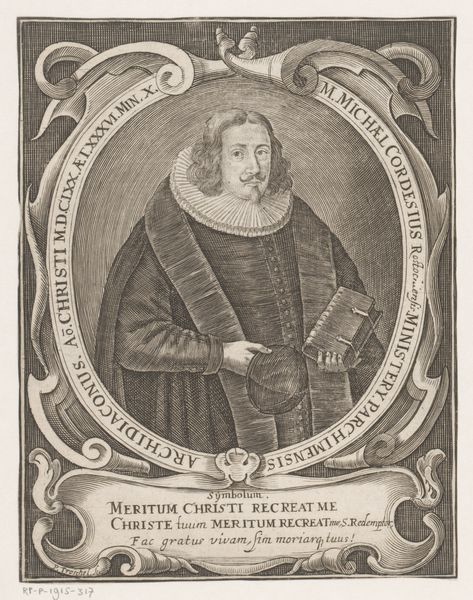
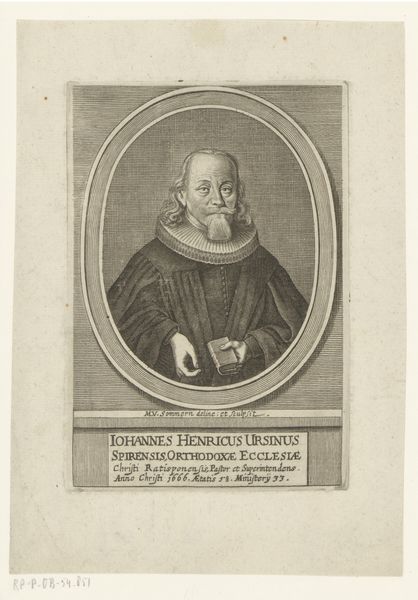
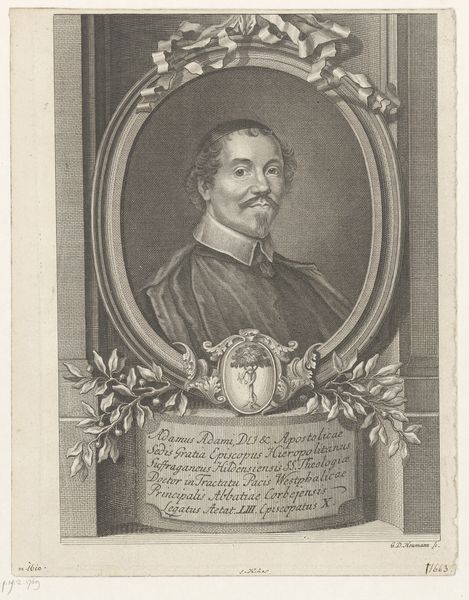
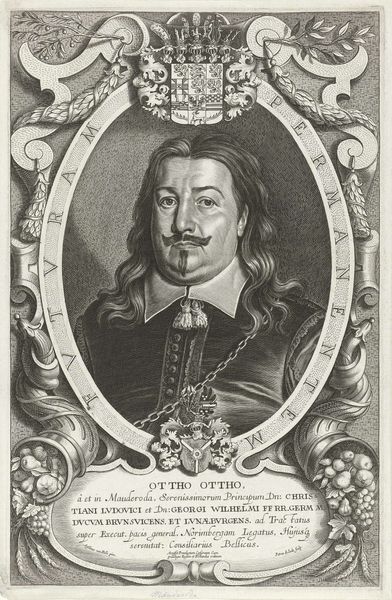
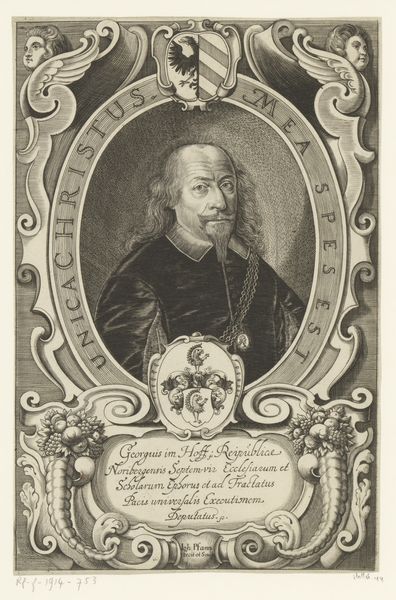
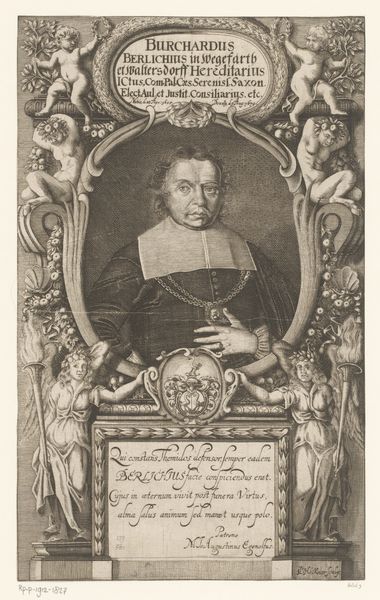
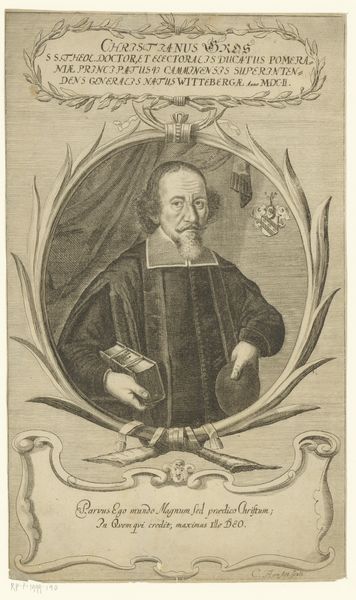
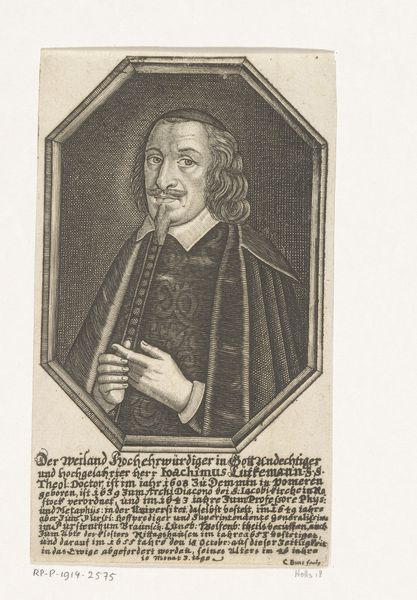
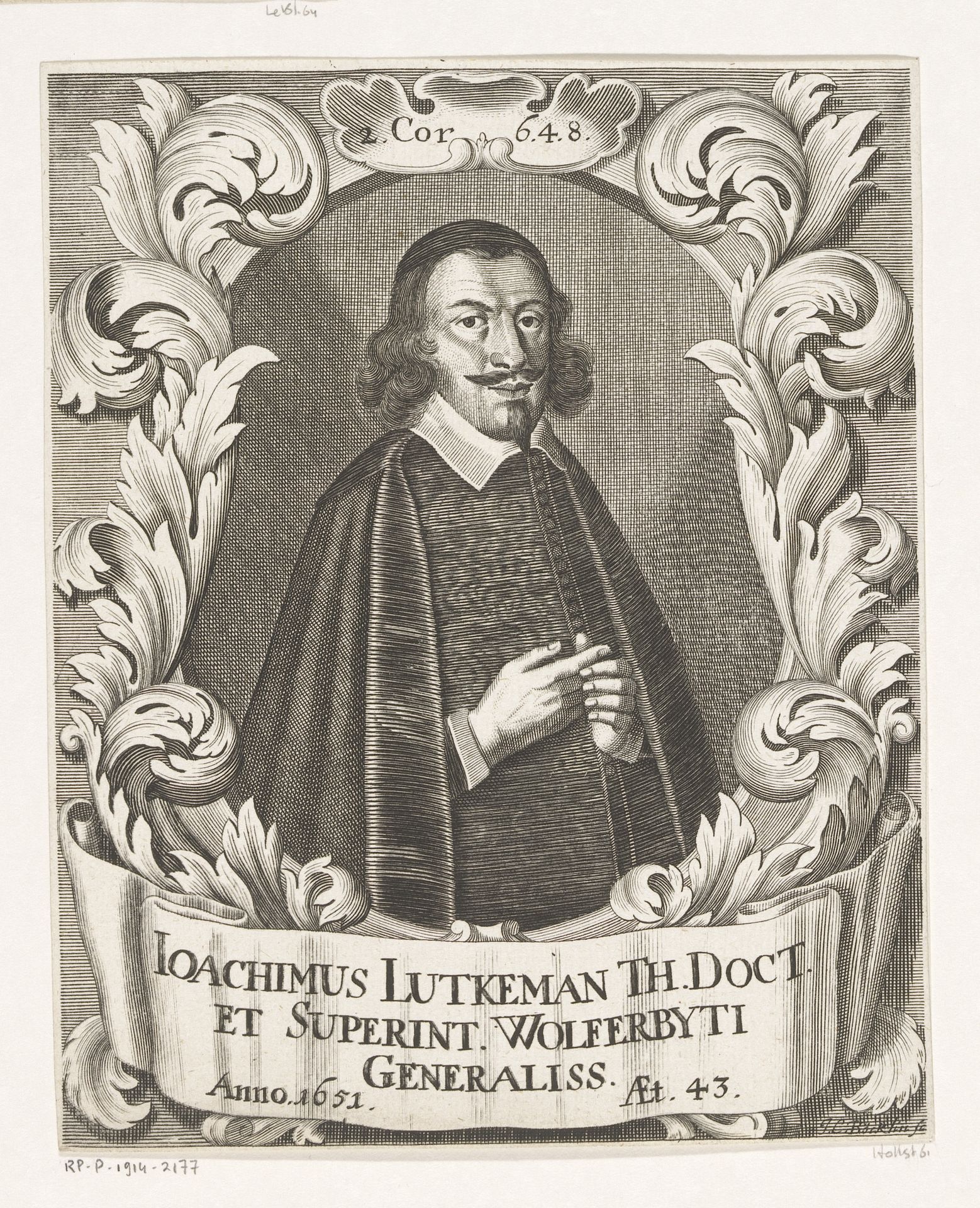
Johann Christoph Boecklin created this engraving, "Portret van Joachim Lütkemann," a powerful representation of identity and status in 1651. Boecklin’s detailed portrait captures Lütkemann, not just as an individual, but as a figure of authority and intellect during a time of significant social and religious change. The visual language of the piece speaks volumes about the social structures of the 17th century. Lütkemann's attire and the inscription identifying him as a Doctor of Theology, along with his age, serve to construct an image of a learned and respected man, reinforcing the era's hierarchical values. Consider how Boecklin employs the visual rhetoric typical of the period to convey Lütkemann’s importance, and think about how such images played a role in affirming the social order. What does it mean to see a portrait of a man of God framed by symbols of power and knowledge? It invites us to reflect on the relationship between the individual, their identity, and the broader societal narratives they inhabit.
Portret van Joachim Lütkemann
1667 - 1709

Johann Christoph Boecklin
1657 - 1709Location
RijksmuseumArtwork details
- Medium
- print, engraving
- Dimensions
- height 181 mm, width 146 mm
- Location
- Rijksmuseum
- Copyright
- Rijks Museum: Open Domain
Tags
portrait
baroque
caricature
engraving
Comments
Be the first to share your thoughts about this work.
About this artwork
Johann Christoph Boecklin created this engraving, "Portret van Joachim Lütkemann," a powerful representation of identity and status in 1651. Boecklin’s detailed portrait captures Lütkemann, not just as an individual, but as a figure of authority and intellect during a time of significant social and religious change. The visual language of the piece speaks volumes about the social structures of the 17th century. Lütkemann's attire and the inscription identifying him as a Doctor of Theology, along with his age, serve to construct an image of a learned and respected man, reinforcing the era's hierarchical values. Consider how Boecklin employs the visual rhetoric typical of the period to convey Lütkemann’s importance, and think about how such images played a role in affirming the social order. What does it mean to see a portrait of a man of God framed by symbols of power and knowledge? It invites us to reflect on the relationship between the individual, their identity, and the broader societal narratives they inhabit.
Comments
Be the first to share your thoughts about this work.