1882
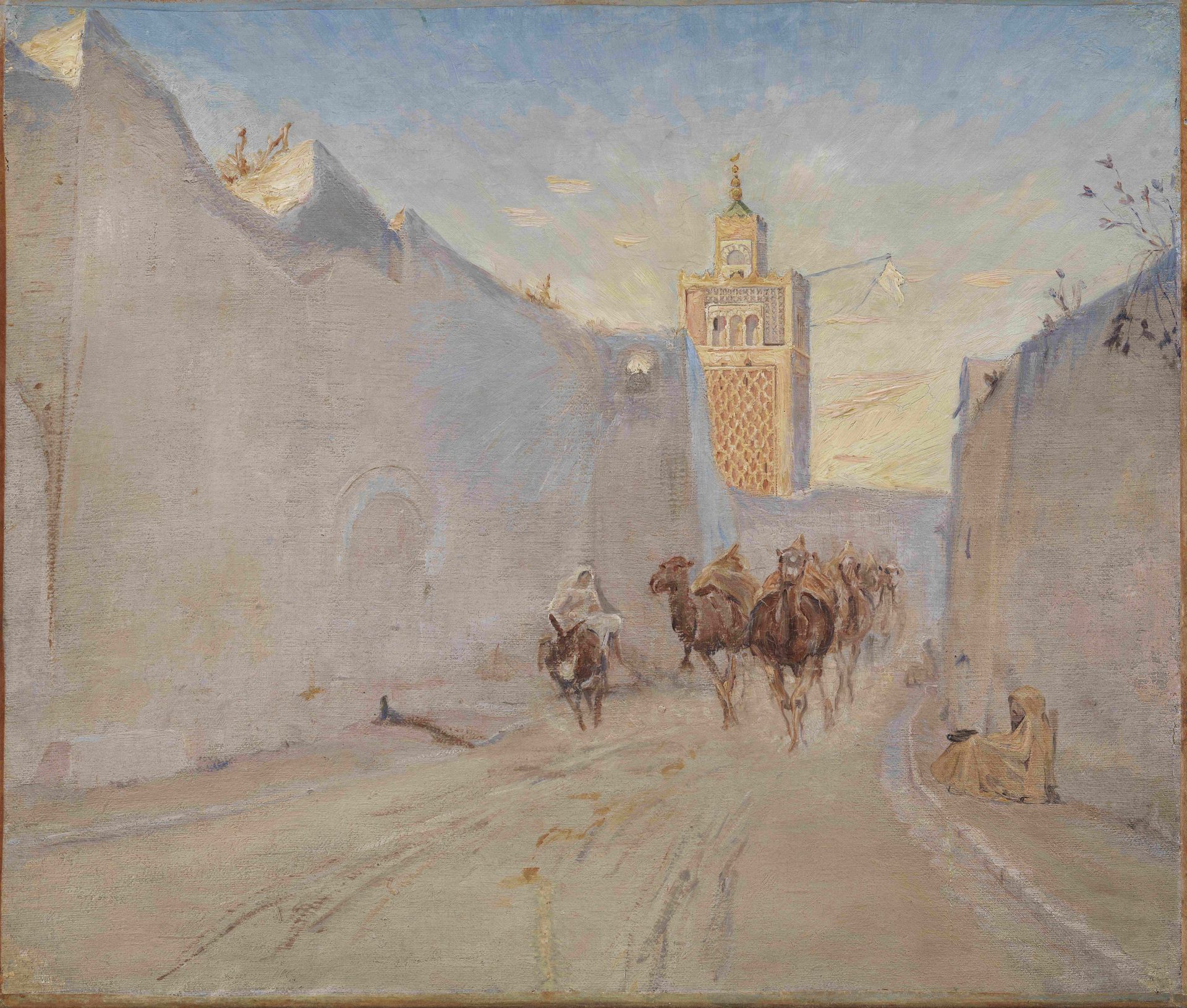
Camels in a Street in Tunisia


Listen to curator's interpretation
Curatorial notes
Theodor Philipsen painted "Camels in a Street in Tunisia" using oil on canvas, a technique that allows for rich color and subtle gradations of light. Philipsen applied the paint in thin layers, creating a hazy atmosphere. The brushstrokes themselves are visible, especially in the sky and the rough texture of the buildings, giving a sense of immediacy. This was a common approach among Impressionist painters, who were more interested in capturing a fleeting moment than creating a highly polished illusion. The canvas itself, likely made of linen, provides a receptive ground for the oil paint. The texture of the weave subtly influences the final appearance of the artwork. Philipsen’s technique, combined with his subject, reflects an interest in capturing a specific time and place, connecting him to broader movements in European art while also documenting a specific cultural context. Ultimately, "Camels in a Street in Tunisia" reminds us that paintings are not just images, but also material objects, made with specific tools and techniques that carry their own cultural significance.