1575 - 1579
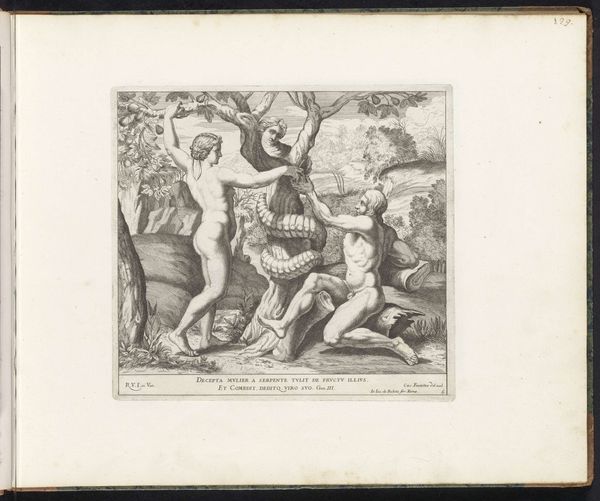
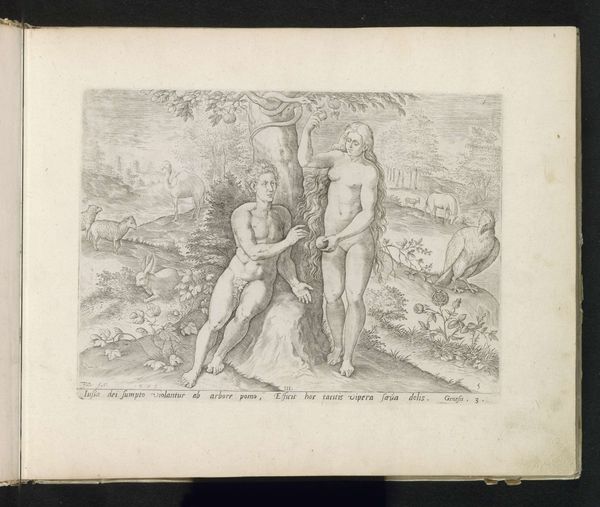
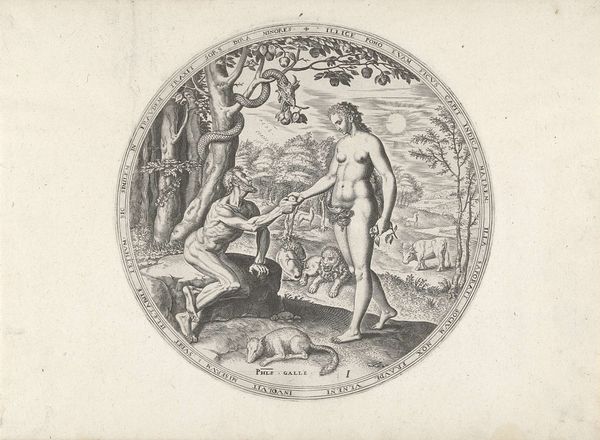
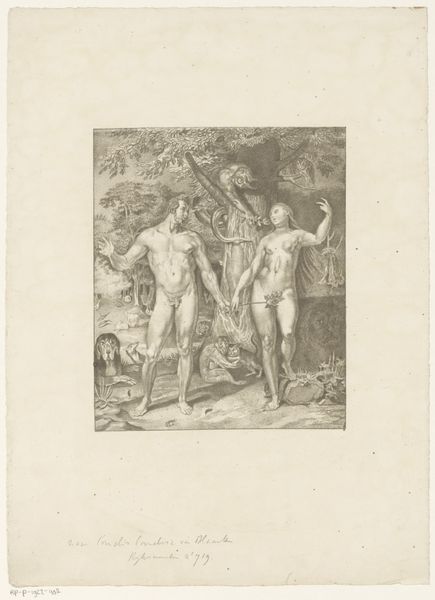
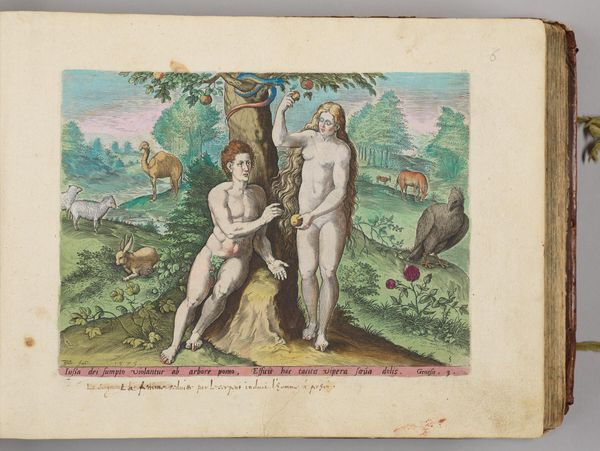
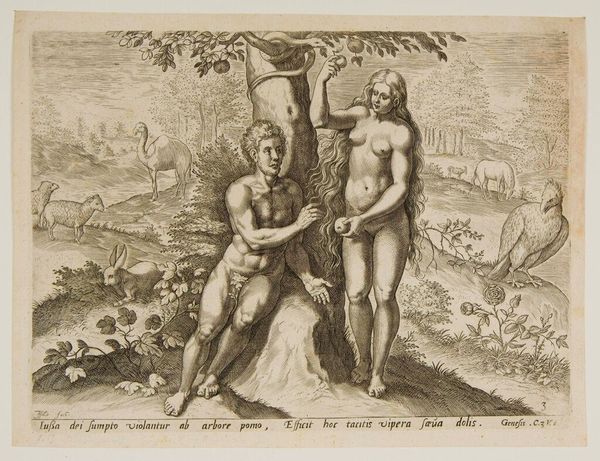
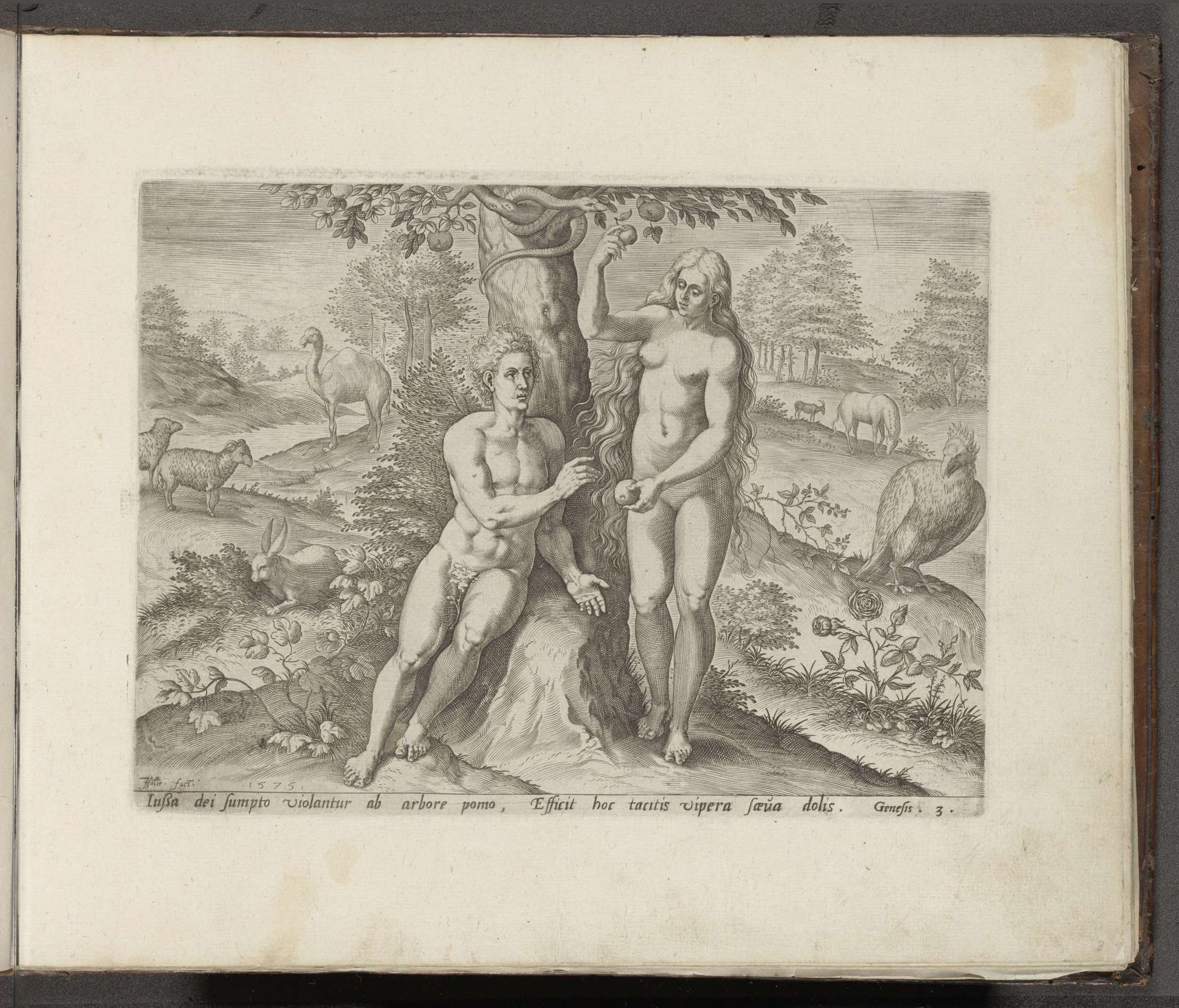
Eva verleidt Adam van de boom te eten

Johann Sadeler I
1550 - 1601Location
RijksmuseumListen to curator's interpretation
Curatorial notes
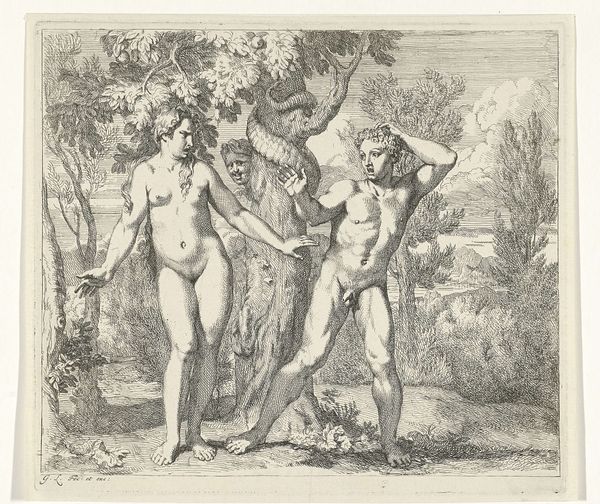
Johann Sadeler I made this engraving, “Eva verleidt Adam van de boom te eten,” or “Eve Tempting Adam to Eat from the Tree,” in the late 16th century. The story of Adam and Eve in the Garden of Eden has been represented by artists for centuries. The story is foundational to Western ideas about morality, gender, and knowledge. Sadeler was a Flemish artist working at a time of religious conflict in Europe. The visual codes of his image reflect this. We see the idealized nudes, the tempting serpent, and the lush landscape. But we also see the seeds of doubt and disobedience. The politics of imagery at the time would frame Eve as a temptress and Adam as weak. Consider how the institutions of religion shaped this story. How did the church control the narrative and how did artists like Sadeler reinforce or challenge those ideas? To understand this work better, we can turn to theological texts, social histories of the period, and the artist's biography. The meaning of this artwork lies not just in its aesthetic qualities, but in its complex relationship to the social and institutional context in which it was made.