About this artwork
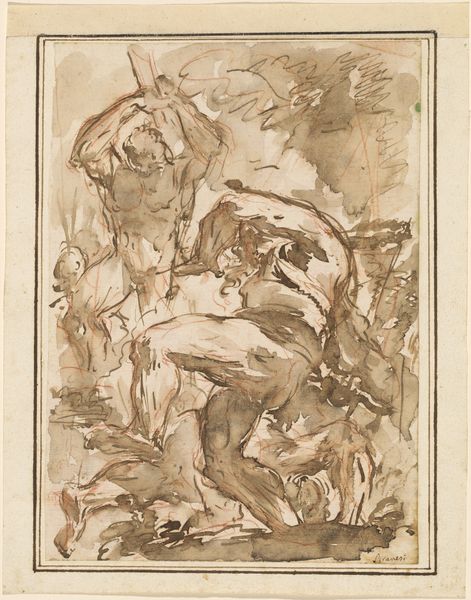
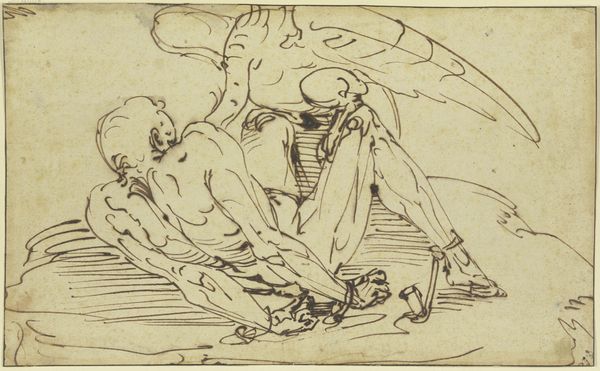
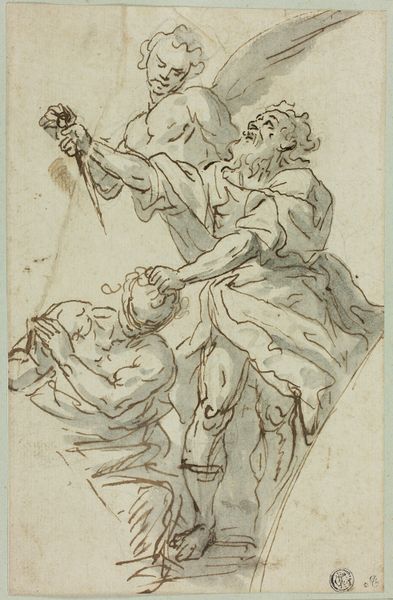
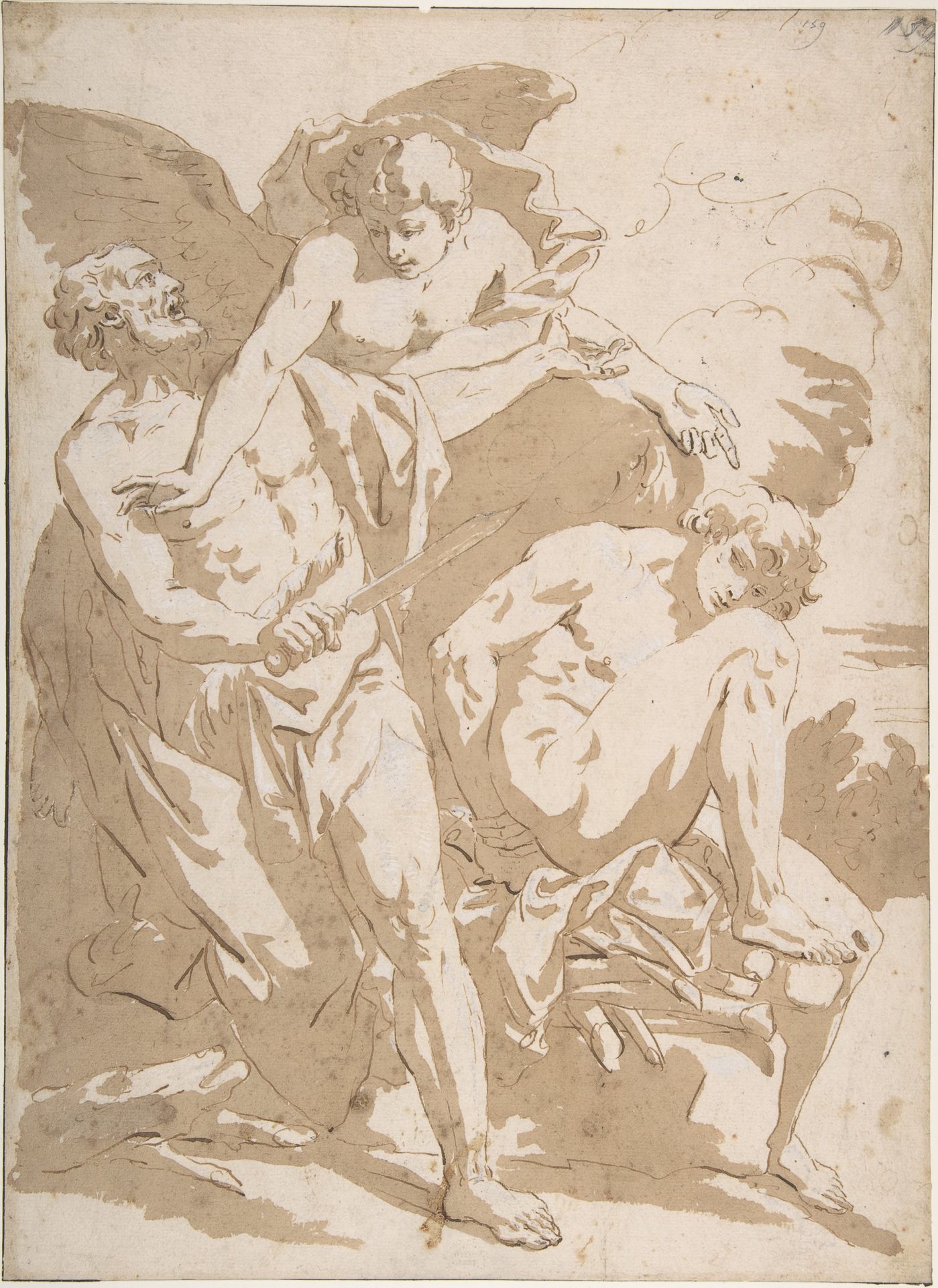
This is Johan Carl Loth's rendering of "The Sacrifice of Isaac", made with pen and brown ink on paper. Loth, a German Baroque painter active in Venice, takes on a popular subject in art history which speaks to themes of faith, obedience, and divine intervention. Here, Loth illustrates the dramatic moment where Abraham, poised to sacrifice his son Isaac to prove his devotion to God, is stopped by an angel. This scene is heavy with the weight of patriarchal expectations. Abraham's faith is tested through the potential loss of his son, while Isaac is cast into a passive role, his fate determined by his father's choices and religious duty. The emotional tension is palpable. Abraham's conflicted expression contrasts with Isaac's vulnerable pose. Loth masterfully captures the psychological complexity inherent in this biblical narrative, inviting us to reflect on the intersections of faith, family, and sacrifice.
The Sacrifice of Isaac
17th century


Artwork details
- Medium
- drawing, print
- Dimensions
- 12 11/16 x 9 1/4 in. (32.3 x 23.5 cm)
- Location
- Metropolitan Museum of Art, New York, NY
- Copyright
- Public Domain
Tags
Comments
Share your thoughts
About this artwork
This is Johan Carl Loth's rendering of "The Sacrifice of Isaac", made with pen and brown ink on paper. Loth, a German Baroque painter active in Venice, takes on a popular subject in art history which speaks to themes of faith, obedience, and divine intervention. Here, Loth illustrates the dramatic moment where Abraham, poised to sacrifice his son Isaac to prove his devotion to God, is stopped by an angel. This scene is heavy with the weight of patriarchal expectations. Abraham's faith is tested through the potential loss of his son, while Isaac is cast into a passive role, his fate determined by his father's choices and religious duty. The emotional tension is palpable. Abraham's conflicted expression contrasts with Isaac's vulnerable pose. Loth masterfully captures the psychological complexity inherent in this biblical narrative, inviting us to reflect on the intersections of faith, family, and sacrifice.
Comments
Share your thoughts