About this artwork
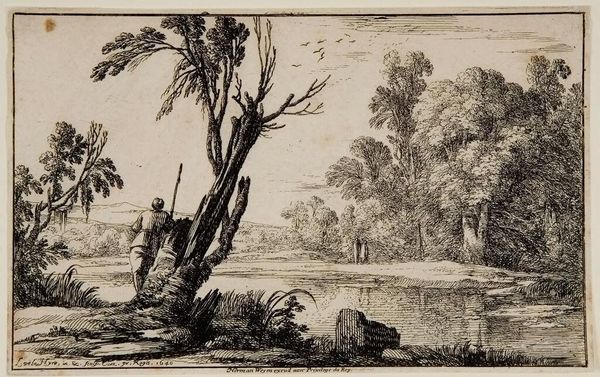
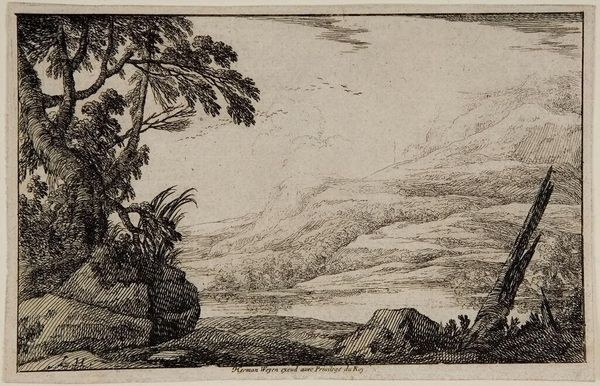
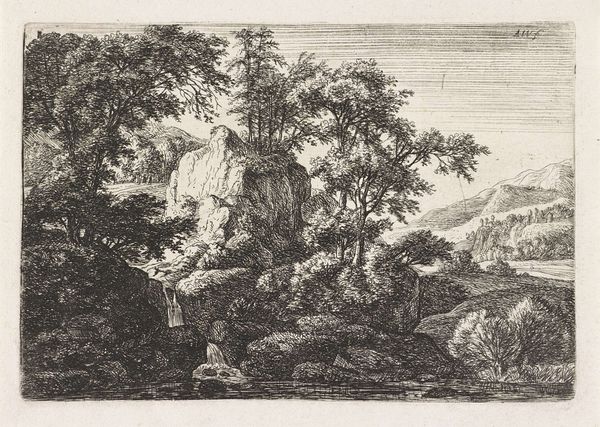
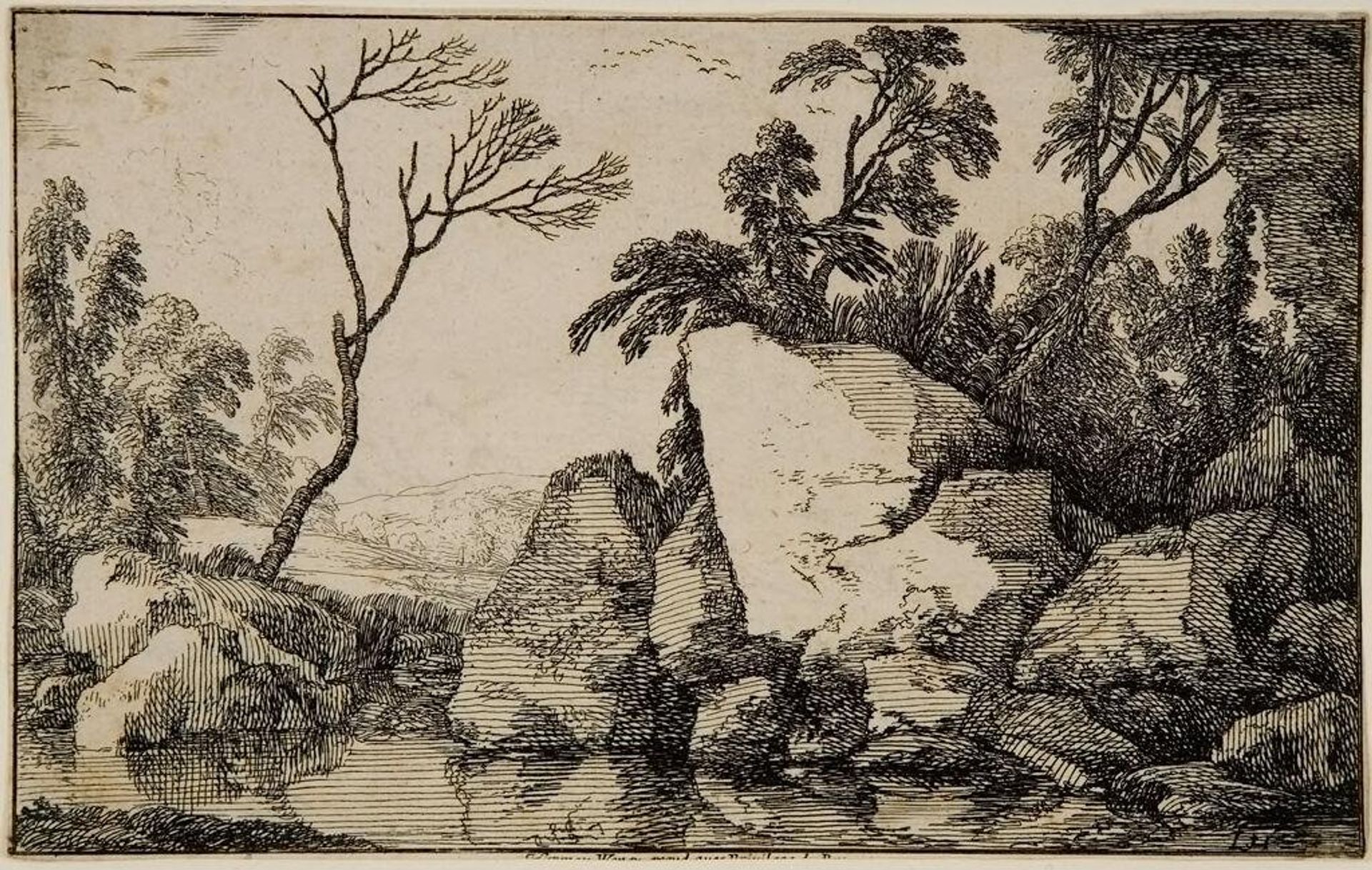
Curator: This is Laurent de La Hyre's "The Overhanging Rocks, a Dead Tree at Left," held here at the Harvard Art Museums. The dimensions are rather intimate, more suited to personal contemplation. Editor: It evokes a sense of melancholy. The stark tree contrasting with the lush foliage suggests themes of decay and resilience, perhaps mirroring societal anxieties of its time. Curator: Exactly. La Hyre was working amidst significant social upheaval. The iconography of the barren tree is striking, a powerful symbol of loss and potential rebirth, considering the Thirty Years' War. Editor: The rocks, though, feel like enduring presences, silent witnesses to history. They remind us that landscape wasn't simply scenery; it was deeply intertwined with cultural memory. Curator: Indeed. The landscape becomes a stage upon which human dramas play out, revealing anxieties about nature versus culture, or even the impermanence of life set against the enduring earth. Editor: It's a poignant reflection on the relationship between humanity and the natural world, isn't it? I'll be thinking about those overhanging rocks long after this.
The Overhanging Rocks, a Dead Tree at Left
1640


Artwork details
- Dimensions
- sheet: 9.7 x 15.6 cm (3 13/16 x 6 1/8 in.)
- Location
- Harvard Art Museums
- Copyright
- CC0 1.0
Comments
Share your thoughts
About this artwork
Curator: This is Laurent de La Hyre's "The Overhanging Rocks, a Dead Tree at Left," held here at the Harvard Art Museums. The dimensions are rather intimate, more suited to personal contemplation. Editor: It evokes a sense of melancholy. The stark tree contrasting with the lush foliage suggests themes of decay and resilience, perhaps mirroring societal anxieties of its time. Curator: Exactly. La Hyre was working amidst significant social upheaval. The iconography of the barren tree is striking, a powerful symbol of loss and potential rebirth, considering the Thirty Years' War. Editor: The rocks, though, feel like enduring presences, silent witnesses to history. They remind us that landscape wasn't simply scenery; it was deeply intertwined with cultural memory. Curator: Indeed. The landscape becomes a stage upon which human dramas play out, revealing anxieties about nature versus culture, or even the impermanence of life set against the enduring earth. Editor: It's a poignant reflection on the relationship between humanity and the natural world, isn't it? I'll be thinking about those overhanging rocks long after this.
Comments
Share your thoughts