About this artwork
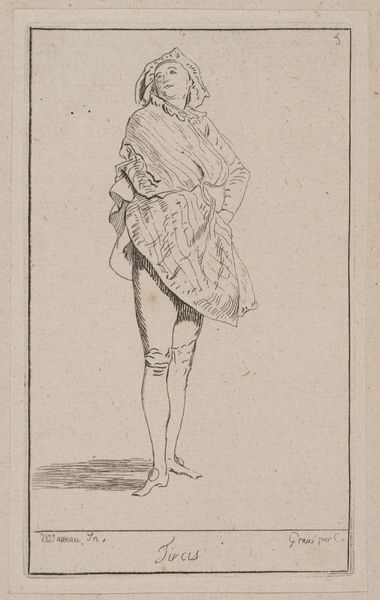
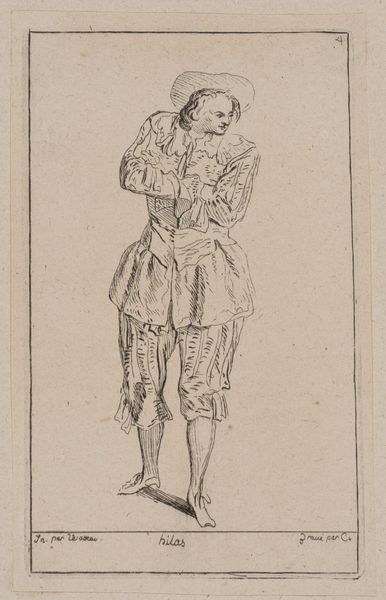
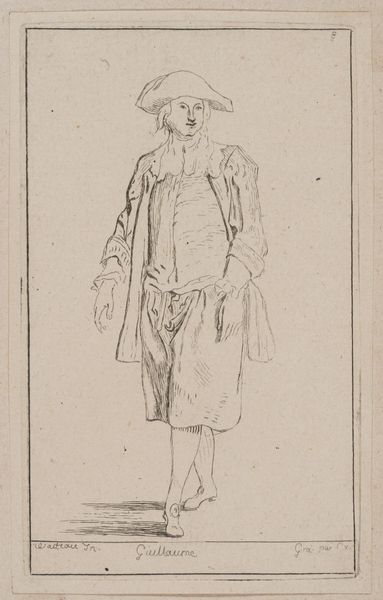
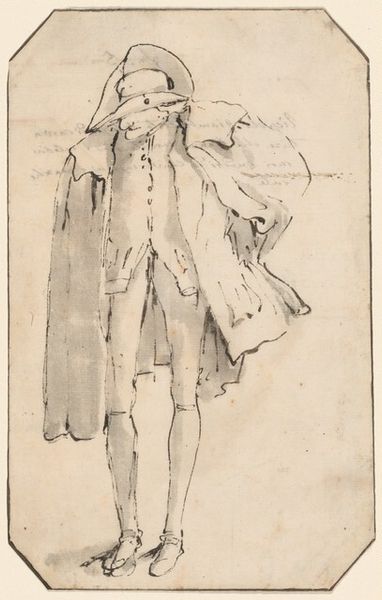
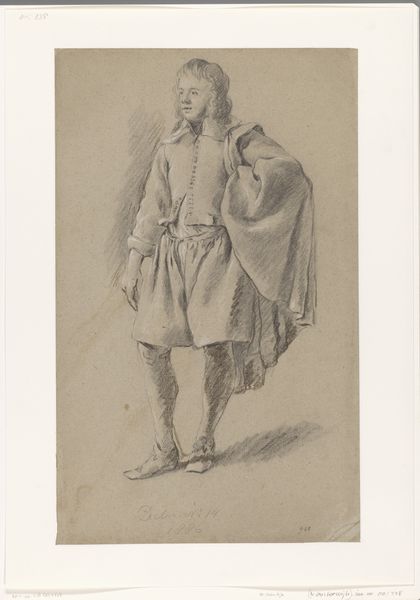
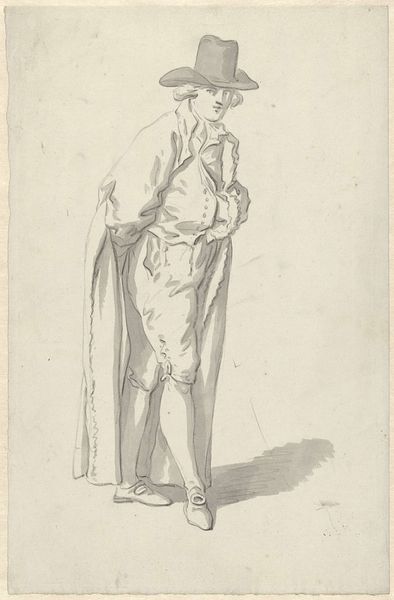
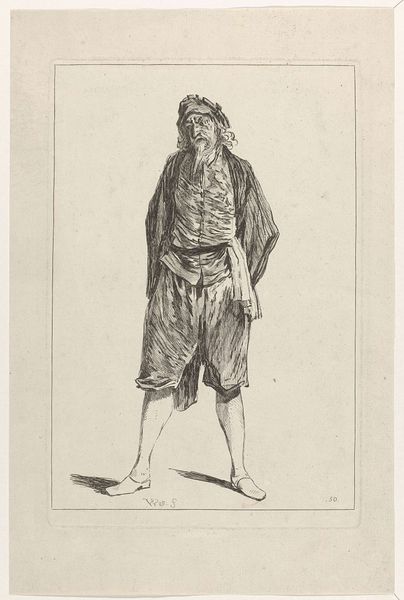
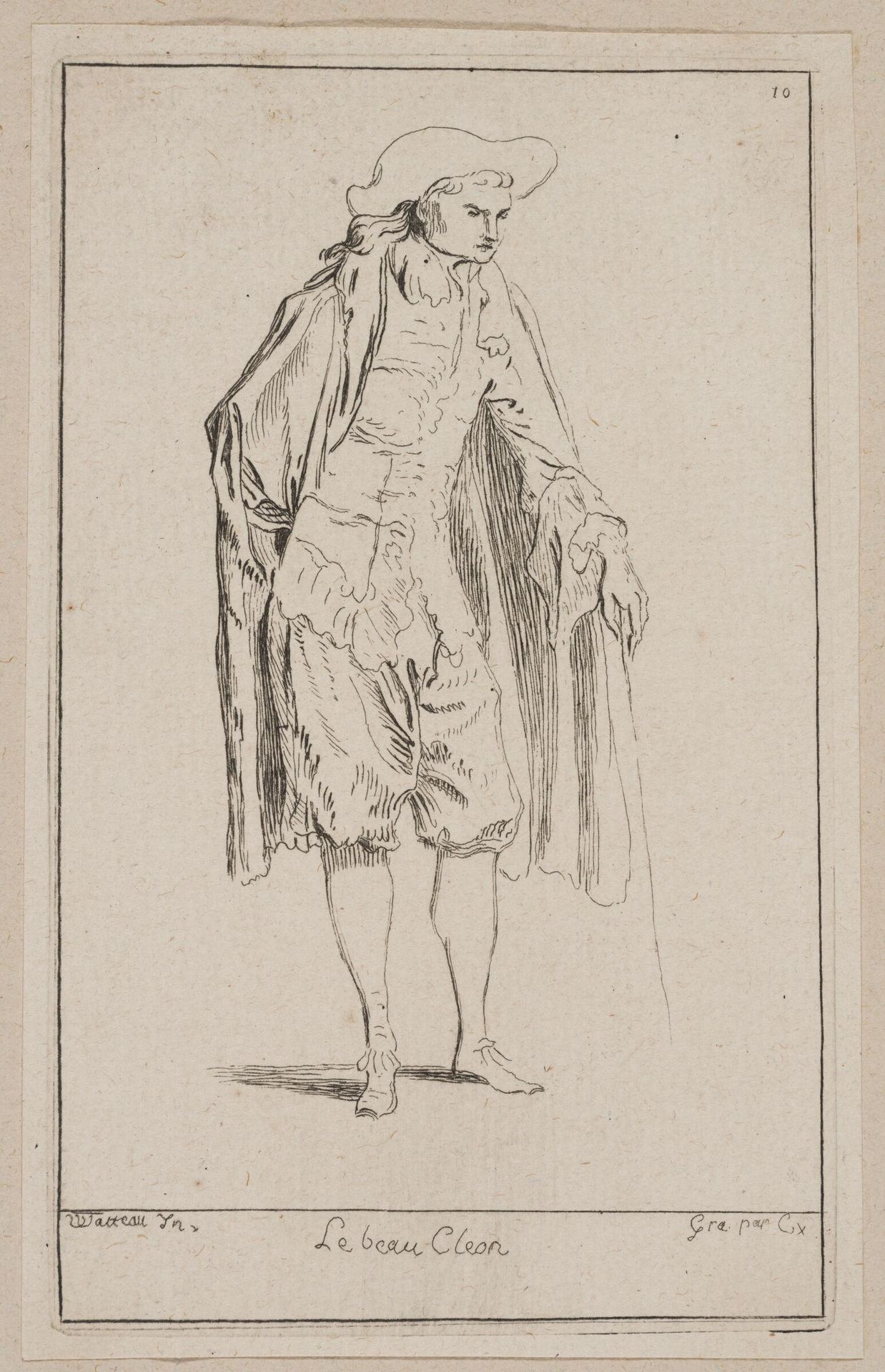
Curator: My first impression is one of nonchalance, the figure's posture and expression suggest an almost theatrical disinterest. Editor: This is "Le beau Cléon," an etching by A. Claude Philippe de Thubières, comte de Caylus, currently residing at the Harvard Art Museums. Its dimensions are quite modest, only about 15 by 9 centimeters. Curator: The line work is fascinating, almost scribbled in places, yet it defines the texture and form of the clothing remarkably well. There's a tension between precision and spontaneity. Editor: Indeed. Caylus was a key figure in the 18th-century art world, known for his antiquarian interests and influence on artistic taste. This image speaks to the prevailing social ideals of masculine elegance and aristocratic identity. Curator: Note how the cape drapes, creating diagonal vectors that intersect to form a complex visual dance, all rendered with a minimum of marks. Editor: And the title itself, "Le beau Cléon" – "The handsome Cléon" – suggests an engagement with contemporary theatrical characters and the performance of self. Curator: Ultimately, this work serves to investigate the line and its capacity to define not only form, but mood as well. Editor: A lens through which to consider how identity was actively constructed and circulated through visual culture in 18th century France.
Le beau Cléon
c. 18th century
A. Claude Philippe de Thubières comte de Caylus
@aclaudephilippedethubiarescomtedecaylus
Harvard Art Museums
Harvard Art MuseumsArtwork details
- Dimensions
- plate: 14.8 Ã 9 cm (5 13/16 Ã 3 9/16 in.)
- Location
- Harvard Art Museums
- Copyright
- CC0 1.0
Comments
Share your thoughts
About this artwork
Curator: My first impression is one of nonchalance, the figure's posture and expression suggest an almost theatrical disinterest. Editor: This is "Le beau Cléon," an etching by A. Claude Philippe de Thubières, comte de Caylus, currently residing at the Harvard Art Museums. Its dimensions are quite modest, only about 15 by 9 centimeters. Curator: The line work is fascinating, almost scribbled in places, yet it defines the texture and form of the clothing remarkably well. There's a tension between precision and spontaneity. Editor: Indeed. Caylus was a key figure in the 18th-century art world, known for his antiquarian interests and influence on artistic taste. This image speaks to the prevailing social ideals of masculine elegance and aristocratic identity. Curator: Note how the cape drapes, creating diagonal vectors that intersect to form a complex visual dance, all rendered with a minimum of marks. Editor: And the title itself, "Le beau Cléon" – "The handsome Cléon" – suggests an engagement with contemporary theatrical characters and the performance of self. Curator: Ultimately, this work serves to investigate the line and its capacity to define not only form, but mood as well. Editor: A lens through which to consider how identity was actively constructed and circulated through visual culture in 18th century France.
Comments
Share your thoughts