About this artwork
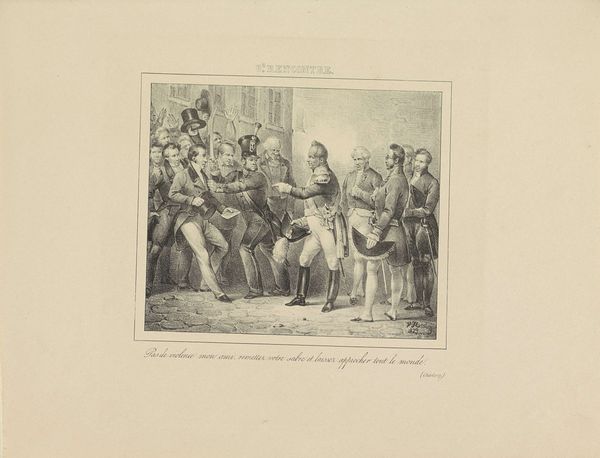
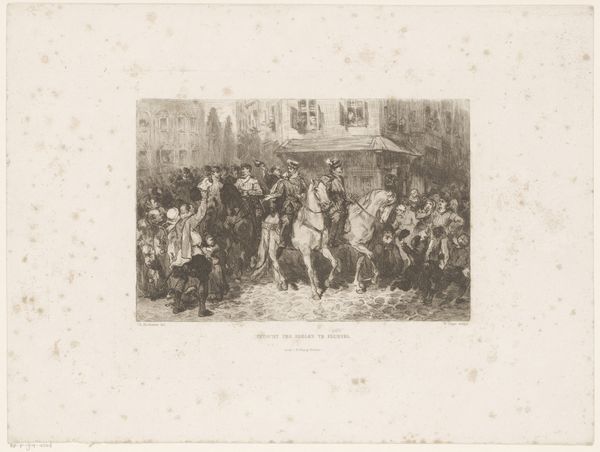
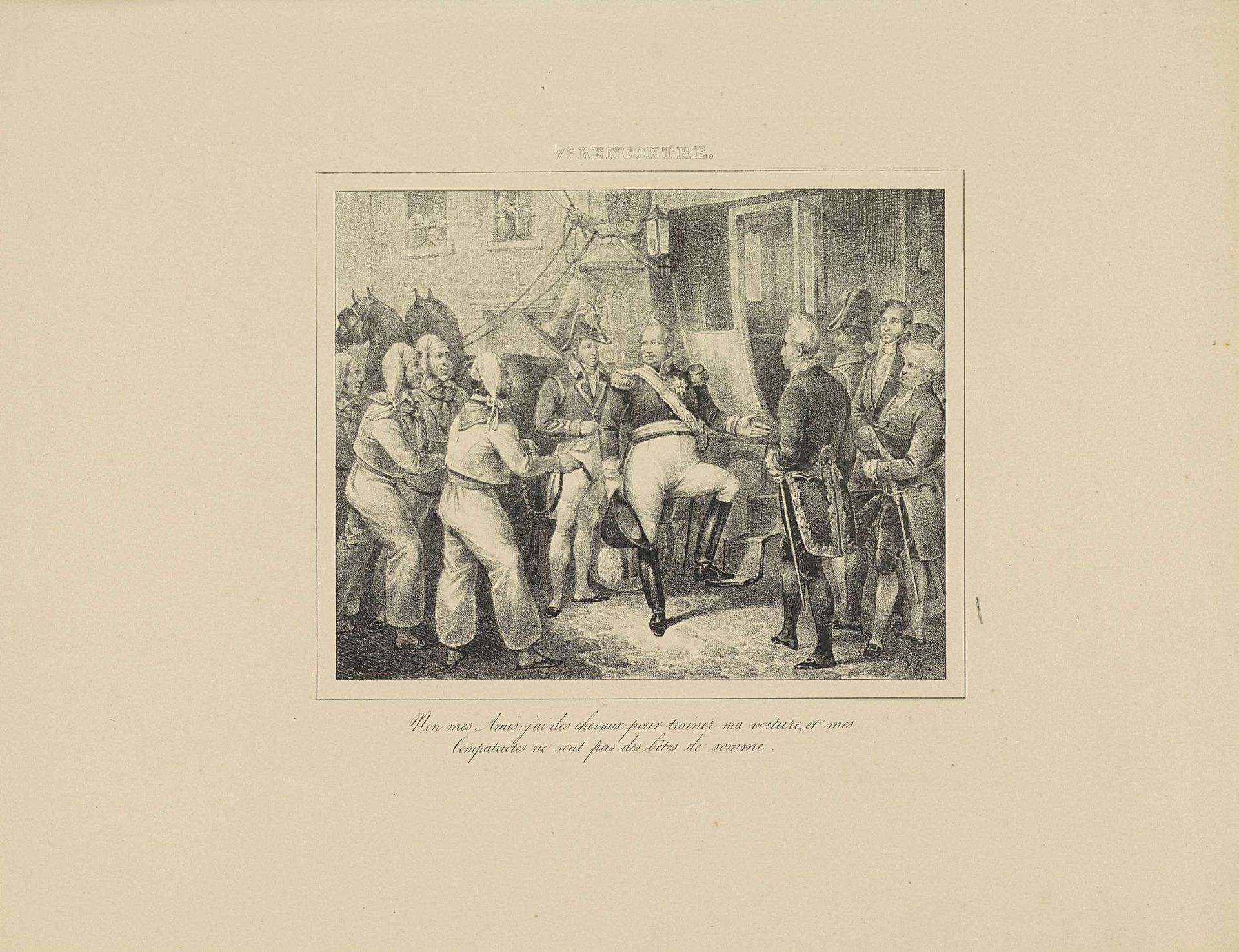
Jean-Louis Van Hemelryck made this print titled "Koning Willem I weigert het aanbod van de kaailopers" in 1829. Here, King William I is shown refusing an offer from the "Kaailopers" to pull his carriage. This term referred to the dockworkers of Brussels, a group often associated with poverty. The print offers a glimpse into the class dynamics of the time. The King, a symbol of authority and wealth, is placed in stark contrast to the working-class Kaailopers. In this moment, the King makes visible a power dynamic, which would have been palpable during the Kingdom of the Netherlands’ rule over Belgium. By rejecting their offer, King William I is refusing their help, and perhaps, symbolically, rejecting a connection with a lower social class. The artwork suggests societal tensions while provoking questions about the relationship between rulers and the ruled. This interaction is captured in a manner that hints at the complexities of identity and status in the 19th century.
Koning Willem I weigert het aanbod van de kaailopers, 1829
1829

Artwork details
- Medium
- print, engraving
- Dimensions
- height 235 mm, width 305 mm
- Copyright
- Rijks Museum: Open Domain
Tags
Comments
Share your thoughts
About this artwork
Jean-Louis Van Hemelryck made this print titled "Koning Willem I weigert het aanbod van de kaailopers" in 1829. Here, King William I is shown refusing an offer from the "Kaailopers" to pull his carriage. This term referred to the dockworkers of Brussels, a group often associated with poverty. The print offers a glimpse into the class dynamics of the time. The King, a symbol of authority and wealth, is placed in stark contrast to the working-class Kaailopers. In this moment, the King makes visible a power dynamic, which would have been palpable during the Kingdom of the Netherlands’ rule over Belgium. By rejecting their offer, King William I is refusing their help, and perhaps, symbolically, rejecting a connection with a lower social class. The artwork suggests societal tensions while provoking questions about the relationship between rulers and the ruled. This interaction is captured in a manner that hints at the complexities of identity and status in the 19th century.
Comments
Share your thoughts