

1865 - 1930
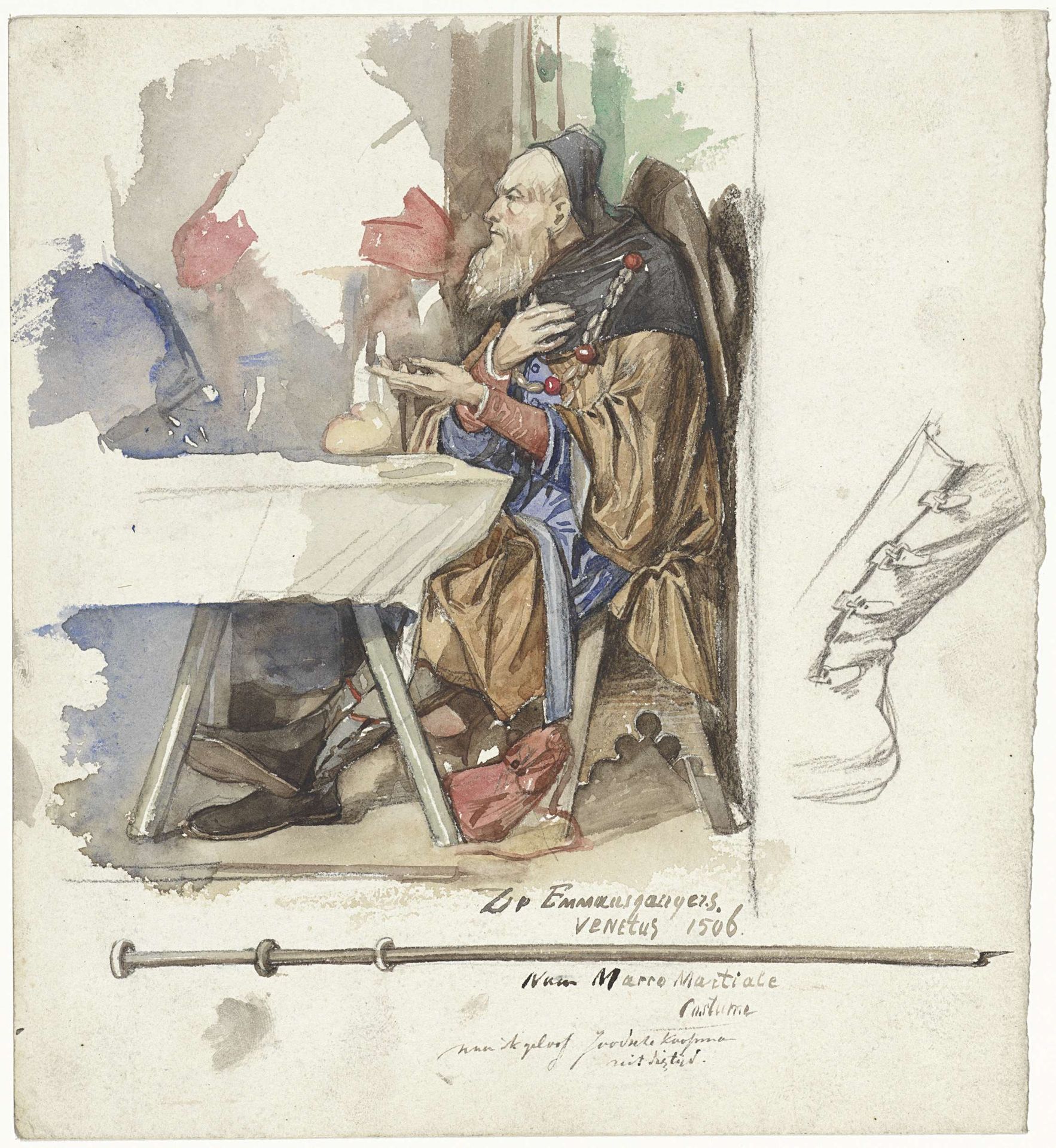
Detail van De Emmaüsgangers

Listen to curator's interpretation
Curatorial notes
Curator: Here we have Jac van Looij’s, “Detail van De Emmaüsgangers," a watercolor and drawing work dating from 1865 to 1930. What's your first impression? Editor: A hushed solemnity, really. The colors are muted, yet there's something powerful about that central figure's contemplative gaze. The sketch-like quality adds to the feeling that we’re peering into a moment of quiet significance. Curator: It’s a fantastic example of the artist's meticulous attention to materials and their transformative properties, isn’t it? Looking at the textures he achieves with watercolor—the rendering of fabric, for instance—we see the blending of labor and artistry. Editor: Absolutely. But more than just technique, the image calls up echoes of Renaissance iconography. That elder, almost monastic figure evokes biblical themes of wisdom and contemplation. Even the stark table setting holds echoes of Last Supper imagery. Curator: Well, and beyond overt biblical references, let's consider how van Looij employs those readily available, common materials. Paper and pigment were, even then, relatively accessible means to create a narrative. What that says about democratization in artistic expression… Editor: Interesting point. I think he taps into archetypal stories—shared cultural memory through the symbol of this solemn meal, the contemplative figure. We don’t need explicit labels to understand the depth of what is transpiring here. The materials convey a story, not simply form it. Curator: To push that further: How does he leverage accessible material to elevate craft, essentially bringing it closer to fine art, especially during a period when such hierarchies were rigidly maintained? Editor: I see that, and at the same time, he's drawing on centuries of visual tradition—from the poses to the muted palette—crafting meaning and inviting the viewer to recognize enduring human dramas. It is fascinating how symbols can transform ordinary material into something sublime. Curator: Indeed. Van Looij uses the medium of drawing to, in a sense, democratize high art while interrogating material's place in art and in everyday life. Editor: It's the tension between those things—the common and the transcendent—that holds the real power. Curator: A beautiful paradox for our time today, then. Editor: One to contemplate, certainly.