1756 - 1780
Chalice

Johann Christoph Heyne
1715 - 1781
The Metropolitan Museum of Art
Metropolitan Museum of Art, New York, NYListen to curator's interpretation
Curatorial notes
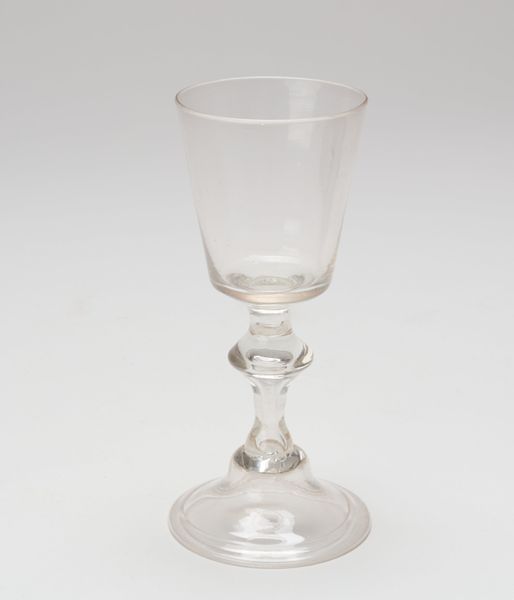
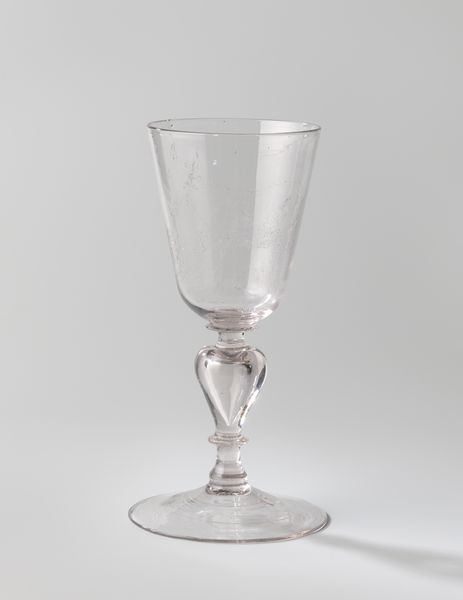
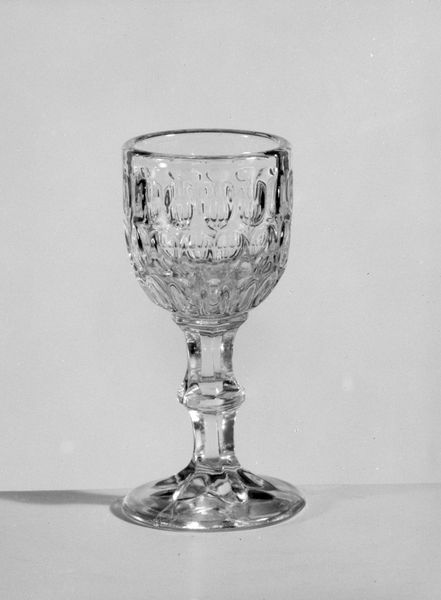
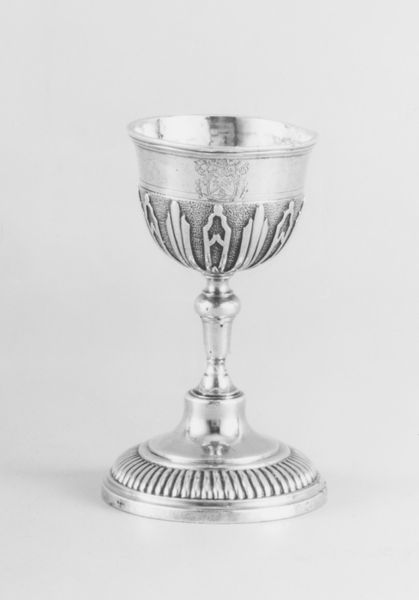
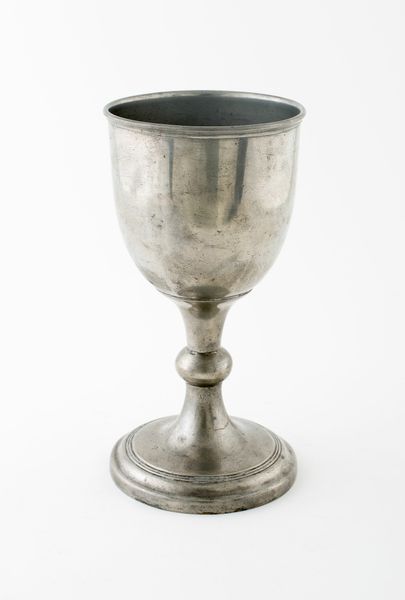
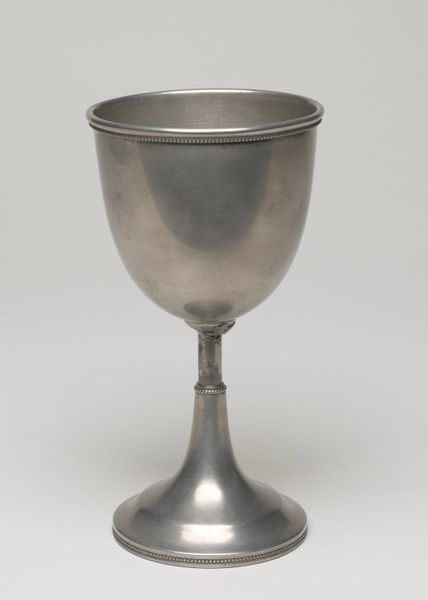
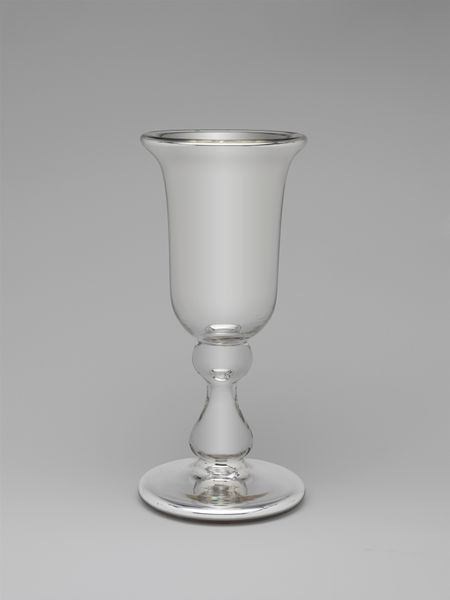
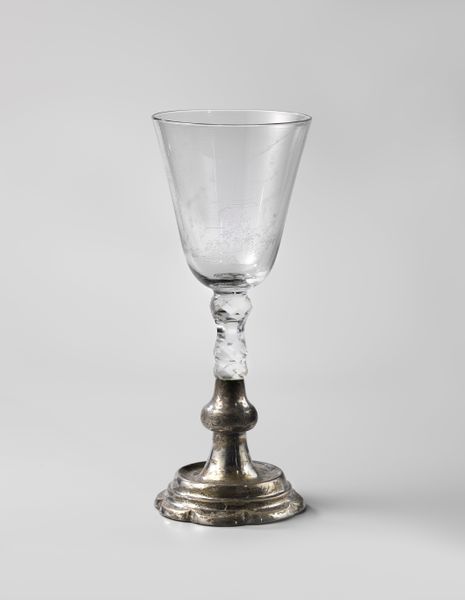
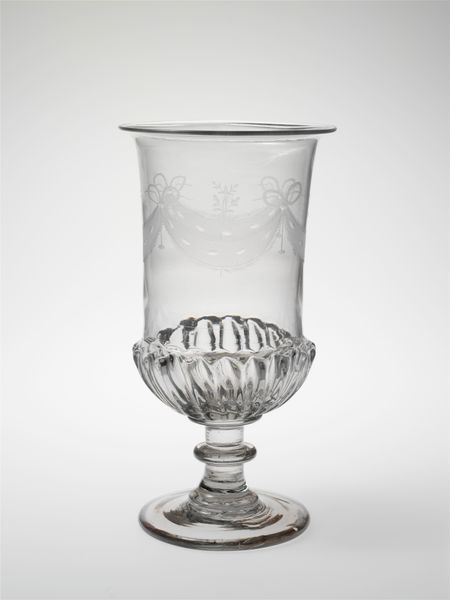
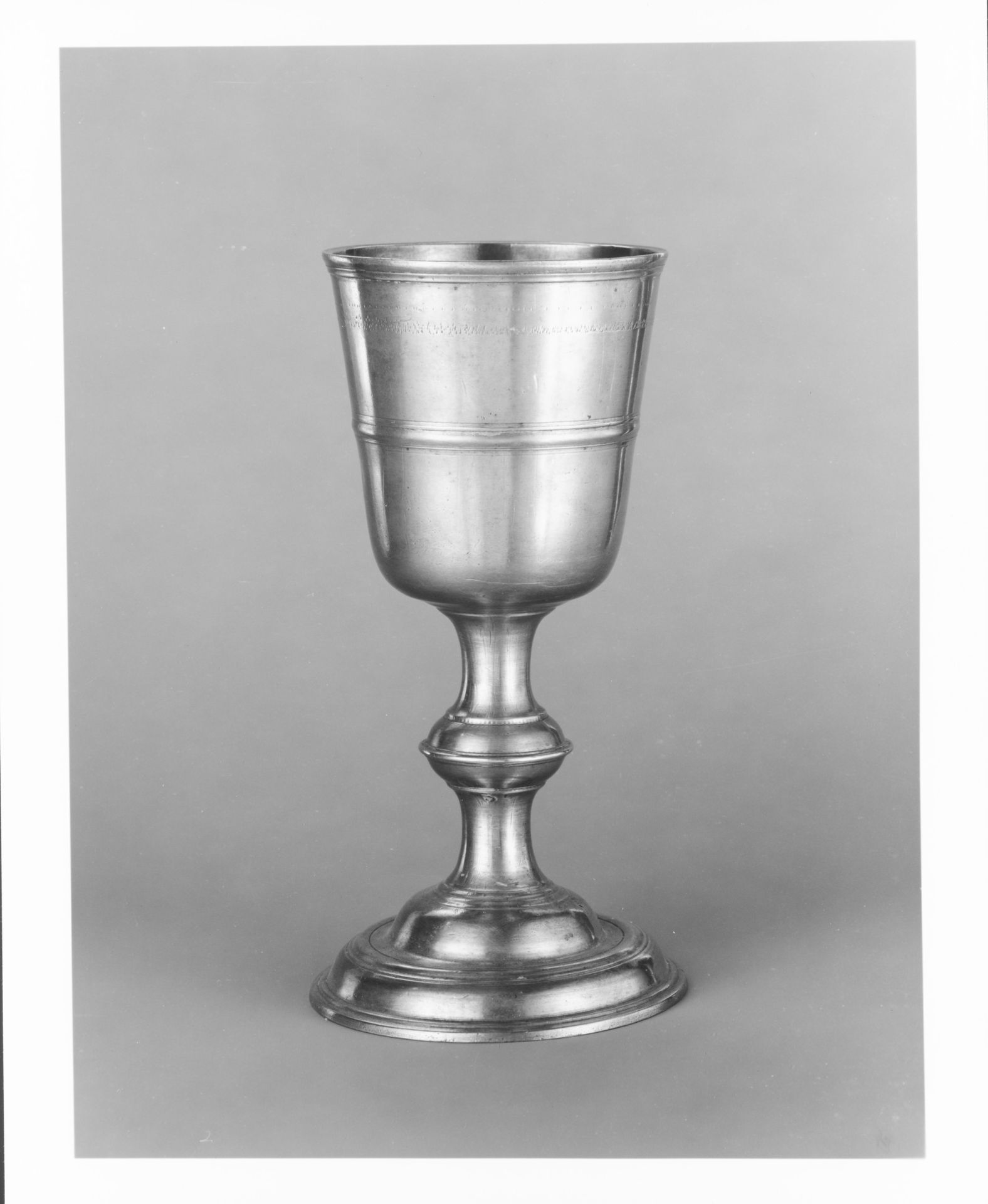
This chalice was made by Johann Christoph Heyne, likely in the mid-18th century, from pewter. Pewter is a humble material, mostly tin alloyed with a bit of other stuff. It has none of the glamour of gold or silver, though like those more precious metals, it can be cast or worked on a lathe. You can see evidence of both processes in this object: the body and foot were probably cast, then tooled to crisp up the details. The stem was likely lathe-turned. What makes this chalice so compelling is its deceptive simplicity. At first glance, it looks like a straightforward, functional object. Yet, the maker’s careful attention to proportion, and the subtle sheen of the pewter, elevate it beyond the purely utilitarian. Heyne ran a Moravian community workshop in Pennsylvania, so there is also a social dimension here: the chalice speaks to the values of that religious group, who prized modesty and honest labor. It is a reminder that beauty can be found in the everyday, and that craft can be an expression of faith.