Dimensions: height 304 mm, width 203 mm
Copyright: Rijks Museum: Open Domain
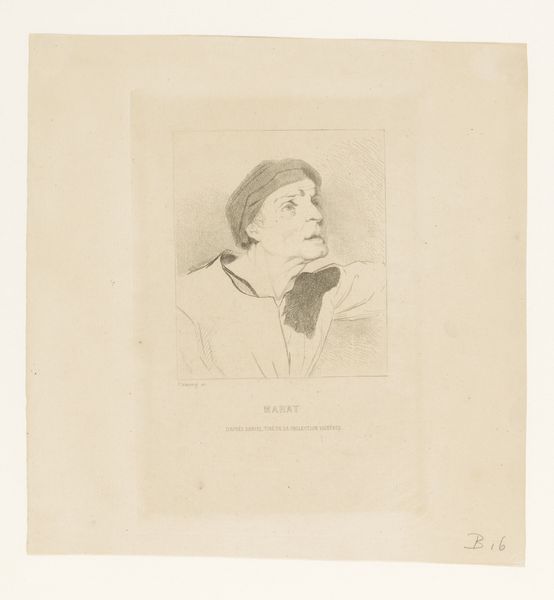
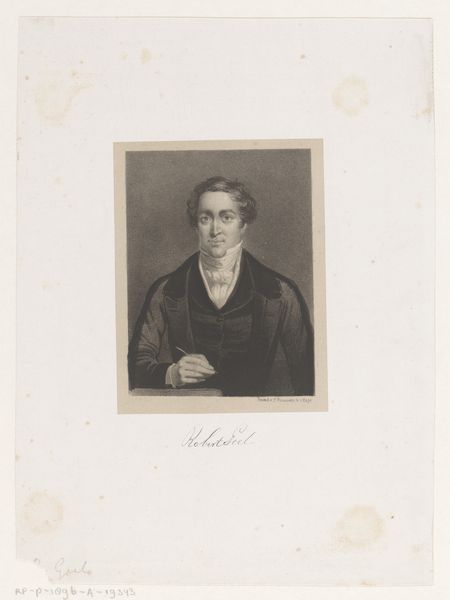
Curator: Standing before us is a fascinating engraving dating to sometime between 1755 and 1805, attributed to Gaetano Vascellini. It's titled "Portret van humanist Pietro del Riccio Baldi." Editor: It’s a striking portrait. The man has a compelling gaze and an almost pleading gesture with his hand. I can't help but wonder about the socio-political climate that shaped the sitter's identity and how it might reflect Renaissance ideas that persisted into this later period. Curator: Indeed. The image presents Pietro del Riccio Baldi, a humanist figure, embedded with symbolic inscriptions surrounding his likeness. Notice how Vascellini utilizes fine lines to create shading, adding depth and realism to his features, reflecting Baroque influences, of course. Editor: Absolutely, but who was this Pietro del Riccio Baldi? It feels crucial to position his portrayal within the larger narrative of the Renaissance's ongoing relationship with ideas like civic humanism and patronage, and also the institutional dynamics of how elites promoted their image through prints. What's implied through the inscription that surrounds his portrait? Curator: Well, it speaks to his scholarly pursuits, aligning him with Florentine circles interested in classical Greek and Latin scholarship. These textual elements frame him not just as an individual, but also within a specific intellectual heritage. Engravings, prints like this, were designed for distribution and aimed to immortalize someone's legacy. Editor: And they also performed very clear social work, which brings us to consider the economic factors at play in commissioning art, its function within political discourse, and to really read and assess Renaissance celebrity culture. In many ways this wasn’t just representing; it was building a recognizable brand. Curator: You're right to bring up social currency; an artwork like this provided social visibility and perpetuated particular ideas about knowledge. It allows a fascinating entry point to further investigate humanist thinking and its effect on art production during the period. Editor: Considering art’s role is not just about aesthetics or depiction, but understanding how its dissemination played a key role in the construction of socio-intellectual elites; I hope we've offered some insightful reflections for others visiting. Curator: Hopefully, it encourages everyone to look more closely, read deeper, and question the established historical narrative as they appreciate such engaging portraits as this.
Comments
No comments
Be the first to comment and join the conversation on the ultimate creative platform.
 Collect
 React
React Comment
More like this