painting, acrylic-paint
cubism
painting
pop art
acrylic-paint
figuration
geometric
abstraction
cityscape
modernism
Copyright: Jean Metzinger,Fair Use
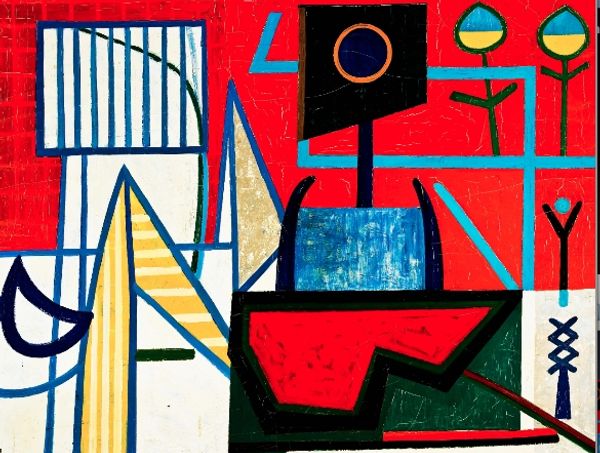
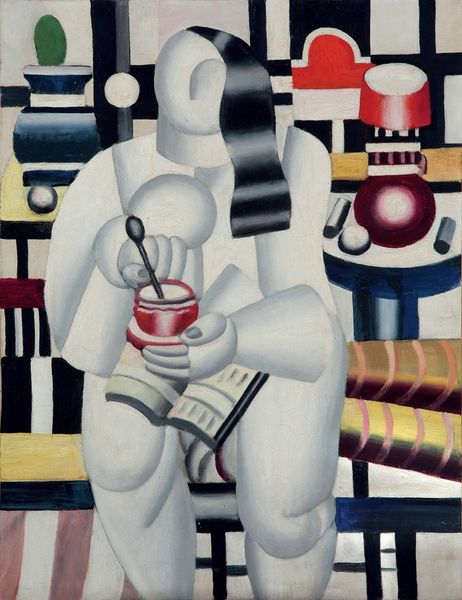
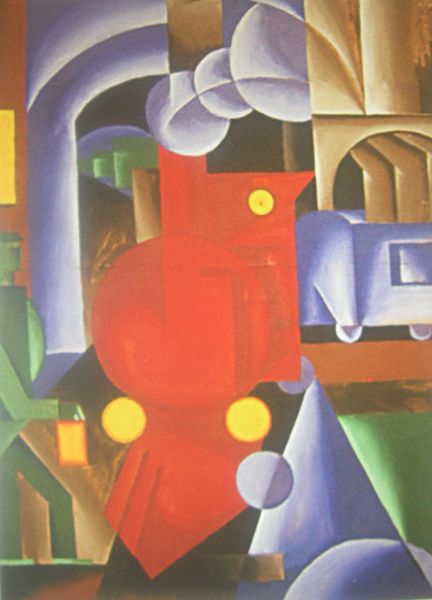
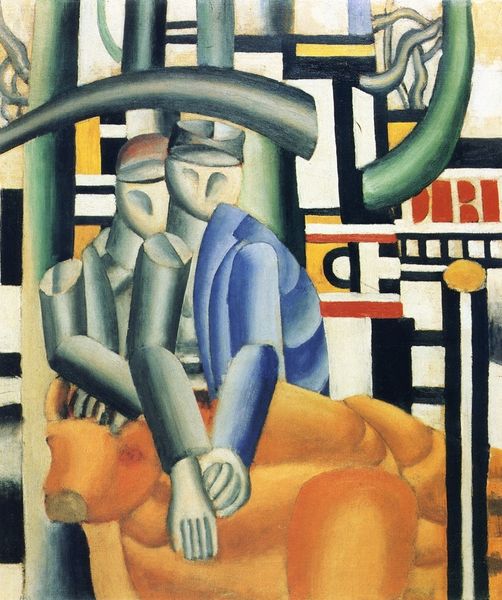
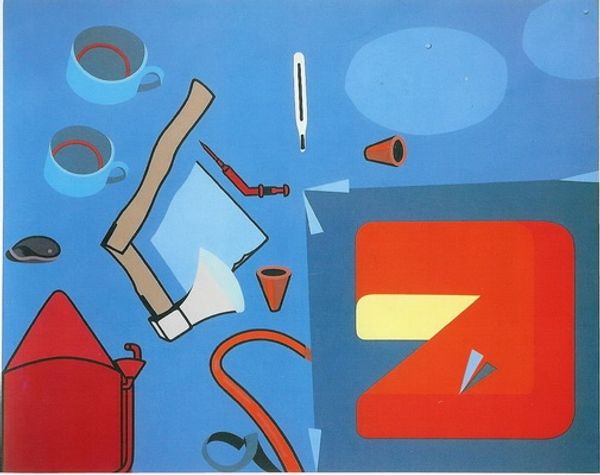
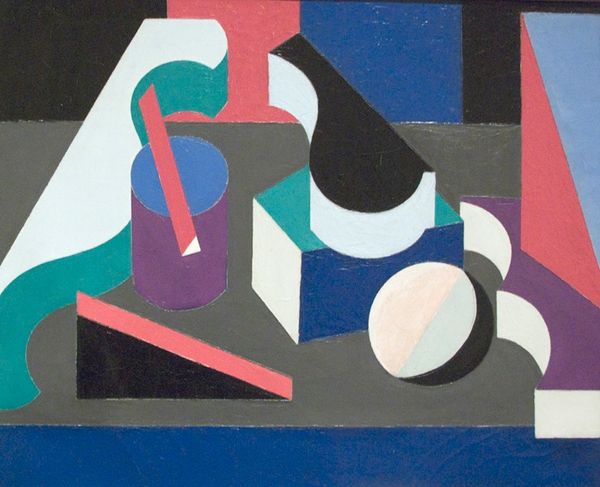
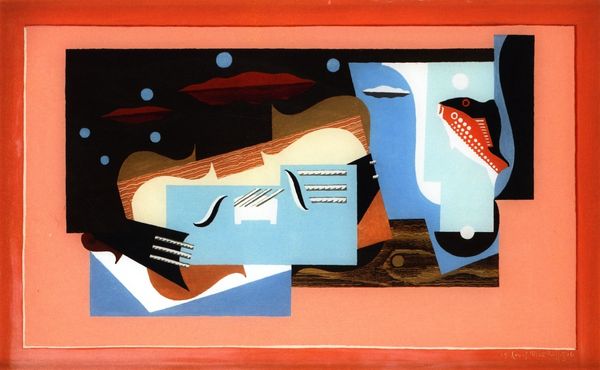
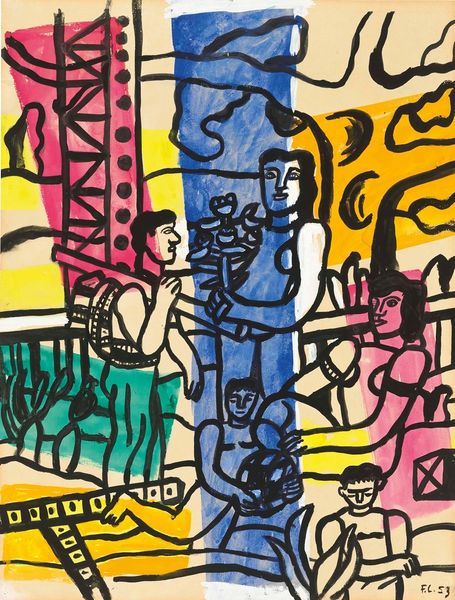
Curator: Oh, I am just captivated by the visual layers! At first glance, it feels like wandering into a fever dream meticulously constructed out of childhood building blocks. Editor: We're looking at Jean Metzinger's "Composition allégorique," a painting from 1929 that exemplifies his brand of Cubist-influenced modernism. There's an interesting collision of figurative and geometric elements here, playing out against this cityscape abstraction. Curator: Exactly! That central, monumental head rendered almost as an ancient ziggurat dominates everything. I sense a dialogue with ancient power structures, particularly those early Mesopotamian civilizations—then boom! A tiny figure peacefully rowing a boat at the base. Is that commentary on the individual spirit triumphing? Editor: Possibly. Metzinger was grappling with complex social and political questions during the interwar period, including themes of technological advancement and the role of individuals within these changing societal landscapes. The juxtaposition of this monumental architectural figure with more industrial-looking shapes surrounding it suggests precisely this tension. Think of it in relation to post-war alienation and questions about human purpose amid mechanization. Curator: That hook suspended in the air contributes to the mystery, too, hovering with that unsettling readiness for...something. It could be anything or nothing! Maybe I’m thinking too much... The ropes twisting around the borders add this wonderful contained tension. It is all carefully considered. Editor: And even formally, Metzinger makes provocative choices, pitting primary colors like these reds and blues, as well as playing with perspectival shifts—nothing feels anchored in one reality. Perhaps this signals to his grappling with both the visual language and ideological narratives of the early 20th century. Is he questioning ways to see—or is it more that his vision itself represents our times? Curator: Well, whether intentionally critical or just purely intuitive, Metzinger stirs in me a potent reminder of the inherent chaos simmering beneath seemingly solid facades—personally or societal! I might think differently of a modern "hero." Editor: Yes, this is the tension between our heroic narratives and what supports them. So many directions to read! Thank you for your fresh perspectives!
Comments
No comments
Be the first to comment and join the conversation on the ultimate creative platform.
 React
React Comment