painting, oil-paint
#
portrait
#
self-portrait
#
allegory
#
baroque
#
painting
#
oil-paint
#
mannerism
#
vanitas
#
chiaroscuro
#
history-painting
Copyright: Public domain
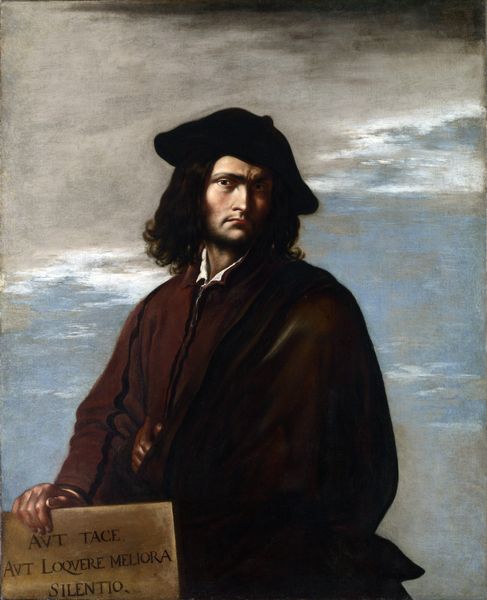
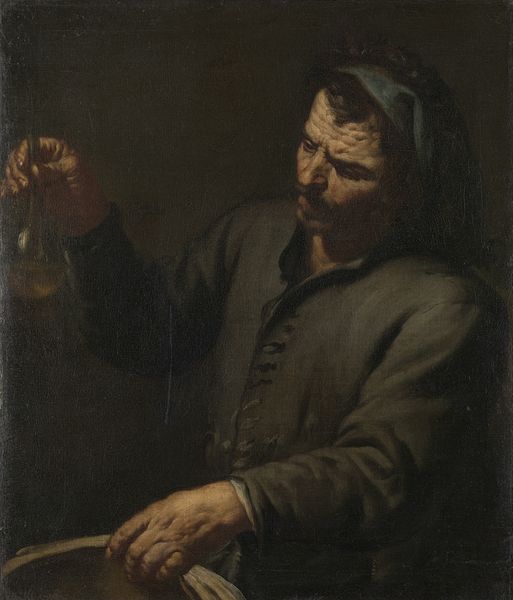
Editor: Here we have Salvator Rosa's self-portrait from 1647, rendered in oil paint. It strikes me as deeply contemplative, even melancholic. What do you see in this piece, particularly the symbolism? Curator: The symbols speak volumes. Notice how Rosa depicts himself seemingly writing on a skull. Consider the laurel wreath adorning his head - traditionally a symbol of victory and poetic achievement, now juxtaposed with mortality. How does that dissonance affect your interpretation? Editor: It definitely complicates it. It suggests a reflection on the fleeting nature of fame and artistic endeavors. Is this a commentary on the "vanitas" theme so prevalent in Baroque art? Curator: Precisely! The skull, of course, is a memento mori, a reminder of death. The act of inscription suggests a grappling with legacy, a desire to leave a mark on the world despite its impermanence. What kind of emotional effect does this have on you as a viewer? Editor: It evokes a sense of empathy. Seeing the artist confront his own mortality makes him more human, more relatable despite the distance of centuries. I initially perceived the painting as simply dark, but the more I consider the symbolism, the more layers I find. Curator: Yes, Rosa’s visual language carries layers of meaning – from the personal struggle with mortality to broader reflections on artistic ambition and the transience of worldly achievements. Has the dialogue revealed any new avenues of consideration for you? Editor: Absolutely! I hadn't considered how powerfully those conflicting symbols - laurel and skull - contribute to the painting's overall message. Curator: It's through such juxtapositions that images truly speak. They resonate through time, sparking dialogues across centuries and cultural shifts.
Comments
No comments
Be the first to comment and join the conversation on the ultimate creative platform.
 Collect
 React
React Comment
More like this