print, textile
#
narrative-art
# print
#
textile
#
text
#
costume
#
genre-painting
#
history-painting
Dimensions: 19.8 × 14.7 cm (7 3/4 × 5 3/4 in.)
Copyright: Public Domain
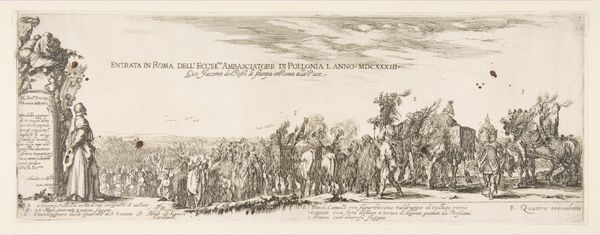
Editor: So, this "Money Pouch" from around 1839 at the Art Institute of Chicago... it's more than just a pouch, isn’t it? The scene depicted looks quite violent; I see what looks like warfare and even an execution, printed on what I assume is some sort of textile. What’s your take on this piece? Curator: For me, it’s about understanding the production of this object itself. Look at the material; this wasn’t some high art canvas, but something functional and reproducible. We need to consider the social context: who made this, for whom, and under what economic conditions? The textile printing suggests a certain level of accessibility and dissemination that a painting wouldn’t have had. Editor: That's interesting. So you're saying the medium is the message, almost? Could this object’s functionality as a ‘money pouch’ perhaps also speak to the economics of warfare? Curator: Precisely! This pouch commodifies a specific historical event. It takes the sack of Warsaw – a politically charged moment – and transforms it into an object of everyday use. The materiality speaks to the power dynamics at play – who profits from the depiction of such events, and who consumes them? How does transforming warfare into craft normalize these conflicts? Editor: I hadn't thought about it that way, focusing on who would *buy* something like this! It's like a souvenir of someone else’s suffering, almost. Curator: Exactly. We must question the relationship between labor, consumption, and the historical narrative depicted here. The pouch isn’t just an image; it's a material artifact that tells a story about 19th-century Polish-Russian relations and the economies surrounding them. Editor: That’s given me a lot to consider; focusing on the object’s materials and context adds so many layers to its story. Thanks for pointing that out.
Comments
No comments
Be the first to comment and join the conversation on the ultimate creative platform.
 Collect
 React
React Comment
More like this