Dimensions: 27.6 x 21.7 cm (10 7/8 x 8 9/16 in.)
Copyright: CC0 1.0
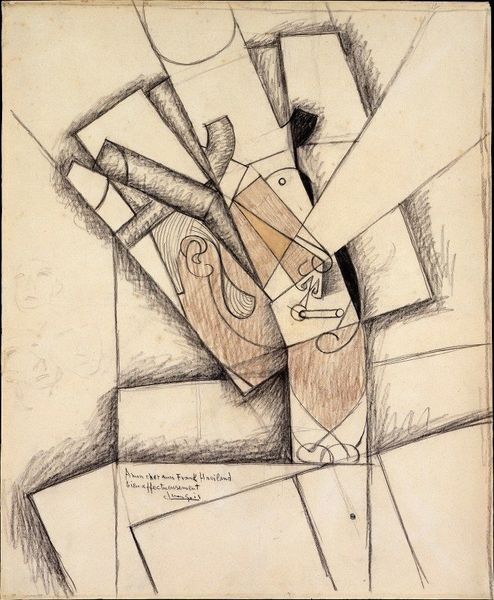
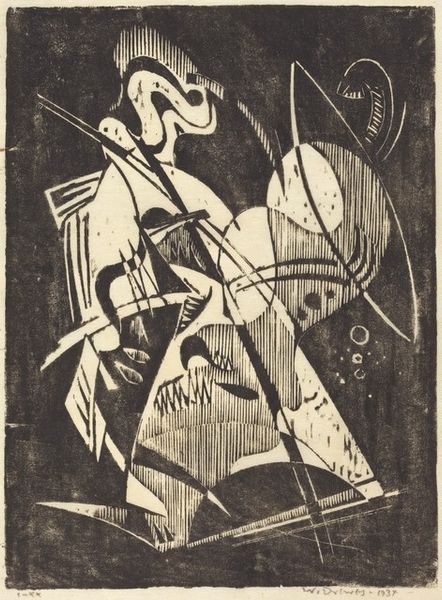
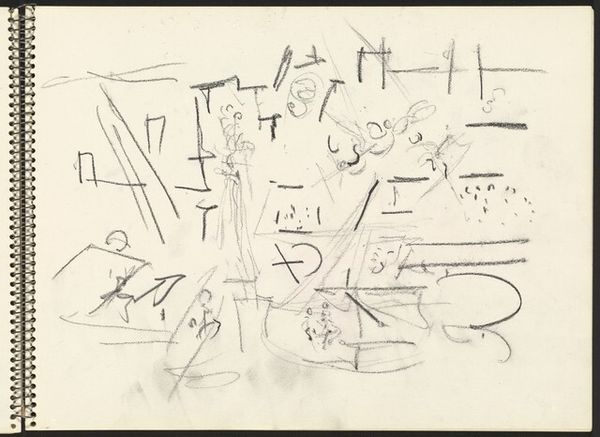
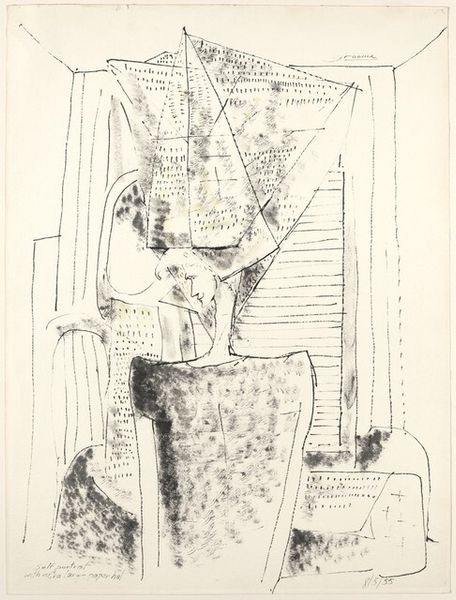
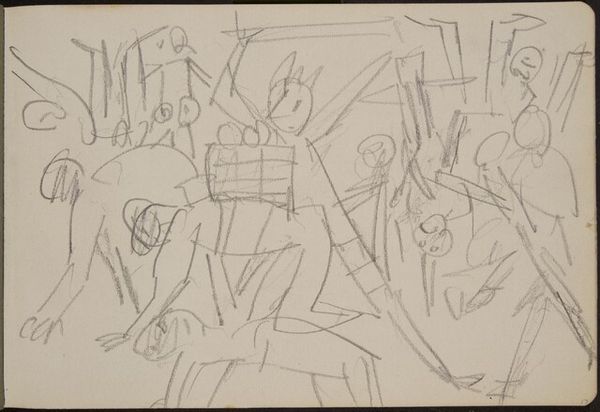
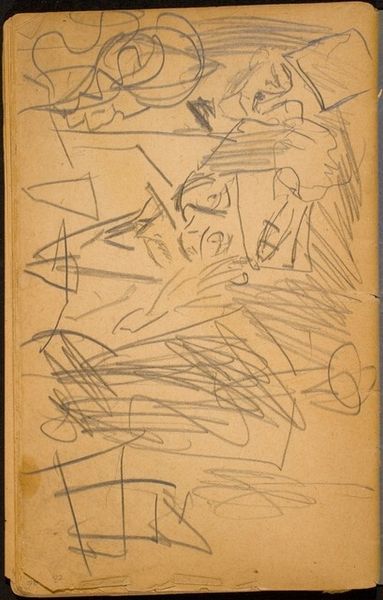
Curator: This is Hans Richter's "To Hardy," a work whose date is unknown. It’s currently housed at the Harvard Art Museums. Editor: It looks like a fractured memory. Angular forms and ghostly faces swim in a wash of ink, almost like a Cubist fever dream. Curator: Given Richter's Dadaist leanings, the abstraction likely symbolizes the chaotic aftermath of World War I. Perhaps "Hardy," the dedicatee, represents lost innocence or a fragmented self. Editor: The stark contrast between the bold strokes and the ethereal washes is striking. The artist builds and obscures, creating depth through erasure, through suggestion rather than explicit form. Curator: The visual language of Dada was meant to dismantle traditional symbols of power and order. It seems Richter uses abstraction to convey the psychological weight of trauma. Editor: Yes, the piece feels like a rejection of clear narratives, mirroring the disorientation of the post-war era. A powerful exploration of materiality. Curator: Exactly, a somber reflection on a broken world.
Comments
No comments
Be the first to comment and join the conversation on the ultimate creative platform.
 Collect
 React
React Comment
More like this