1670
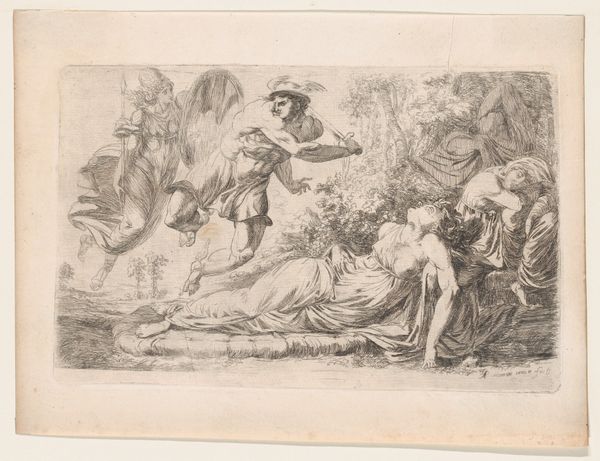
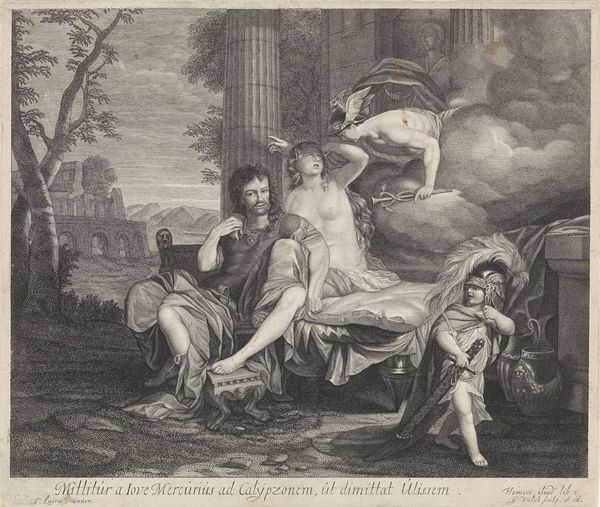
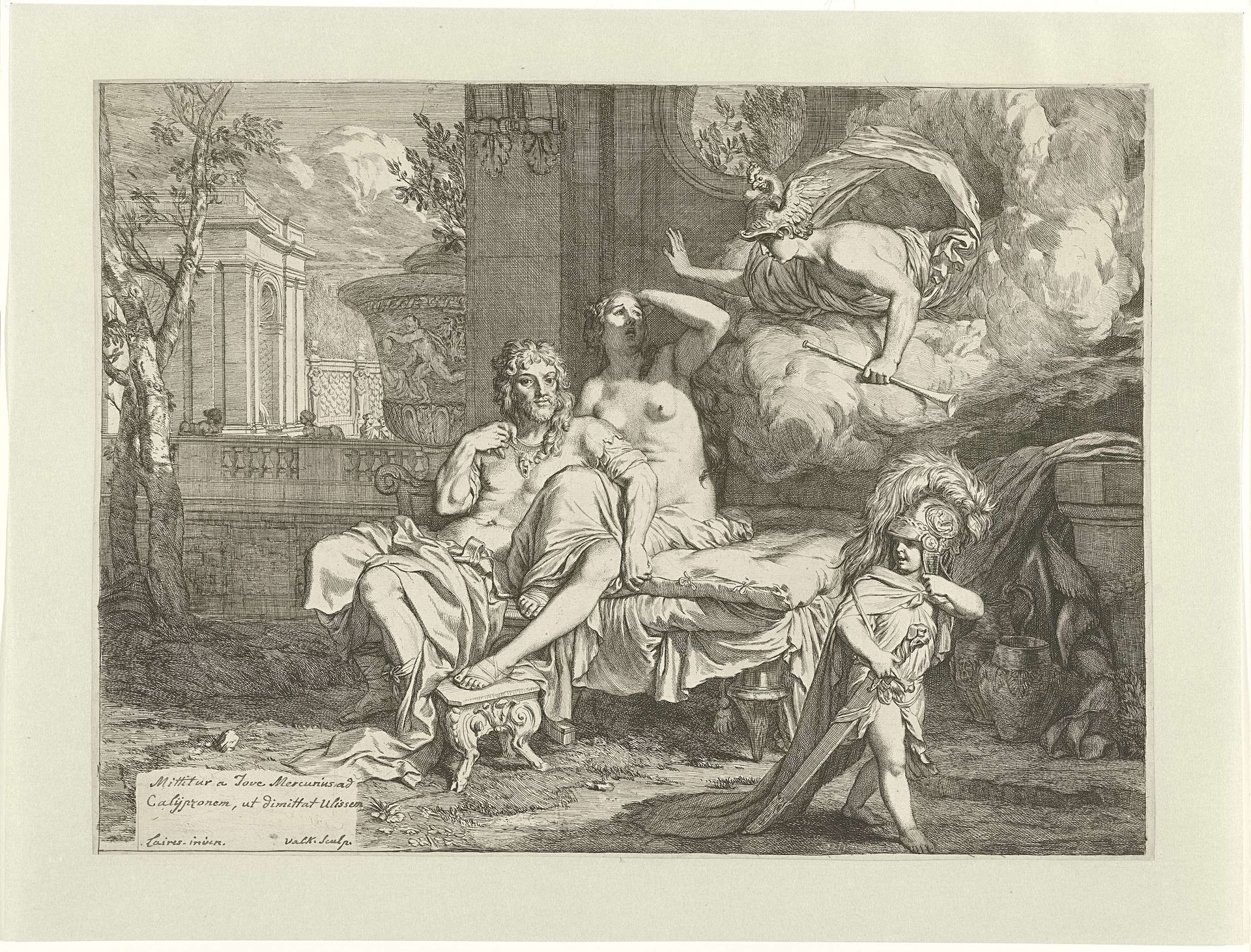
Hermes Orders Calypso to Release Odysseus

Gerard Valck
1651 - 1726Location
RijksmuseumListen to curator's interpretation
Curatorial notes
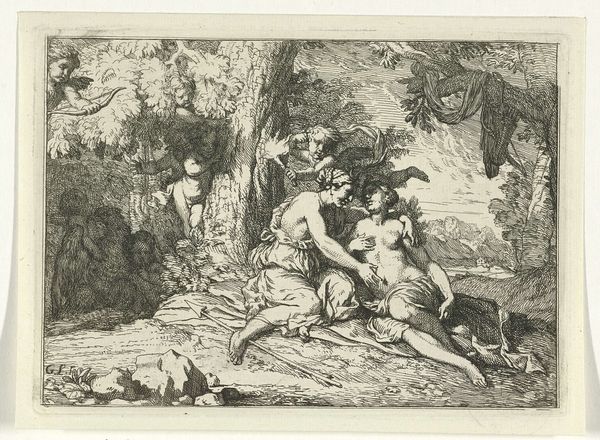
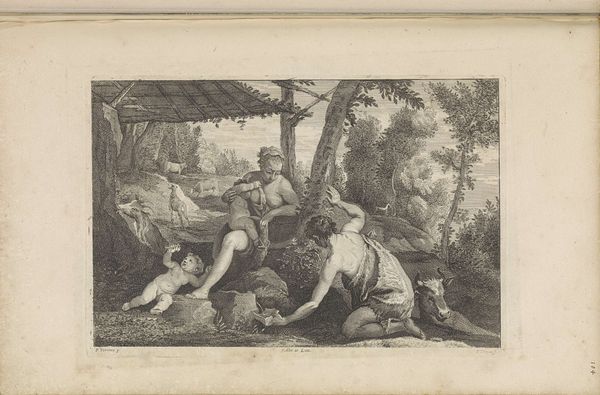
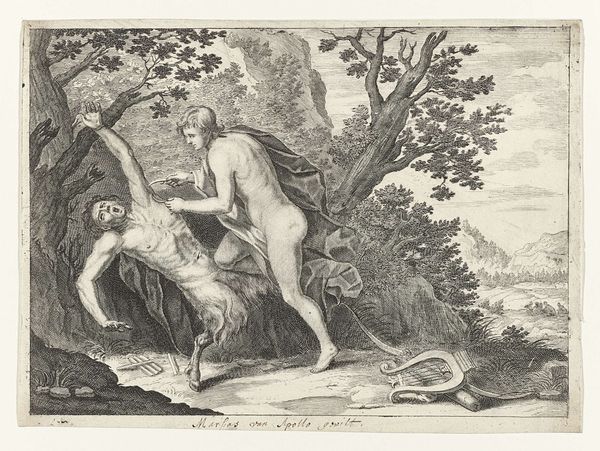
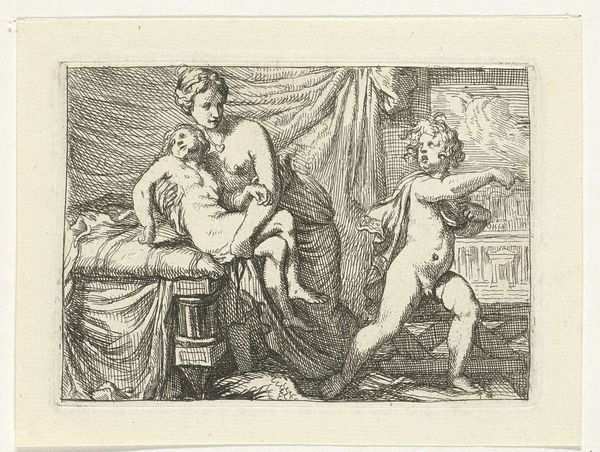
Curator: Look closely at this engraving titled "Hermes Orders Calypso to Release Odysseus." It’s from 1670, attributed to Gerard Valck, and housed here at the Rijksmuseum. Editor: It has a rather languid feeling, even for a Baroque piece. All that draping and reclining... There is an almost bored tension to the poses of these characters. Curator: Indeed. Valck has used linear precision to create a rich interplay between the figures. Note the positioning of Calypso and Odysseus—a study in diagonal lines against the vertical authority of Hermes descending from the heavens. Editor: Speaking of Hermes, what's with the little soldier? The messenger god, shown with his iconic staff, isn't usually presented by the toddler in a plume helmet carrying what looks like a theater prop sword... He appears staged. Curator: The composition invites us to consider the story being told, the pivotal moment where divine intervention disrupts the idyll of Calypso's island. The theatricality highlights the Baroque interest in dramatic narrative. Editor: I find it somewhat unsettling to see a god served by a child dressed for war, it suggests themes about societal roles and expectations of innocence that, in this artistic period, often mirrored, if not enabled, power structures that benefited ruling houses. Curator: That tension you note contributes to the print's dynamism. Also note how the line work gives depth and texture, from the billowing clouds to the sheen of skin and fabric. It's an engraving, remember, and the details achieved here are striking, almost painterly. Editor: Absolutely, this era witnessed a boom in disseminating images widely via print, and artists used mythology to advance ideas and allegories favored by royal patronage... A commentary perhaps on the monarch's right to rule and interfere, similar to these capricious Greek gods! Curator: It is through such attention to these carefully constructed details and symbols that Valck draws us into this world, making us active participants in this dramatic scene. Editor: This piece pushes you to contemplate, I feel, how authority is presented—as divinely inspired but perhaps rooted in social artifice and theater... Curator: Agreed. It gives us an intriguing insight into not just a story, but how stories themselves were politically valuable artifacts, both told and consumed in the 17th Century.