carving, metal, engraving
#
round shape
#
circular oval feature
#
carving
#
3d printed part
#
rounded shape
#
metal
#
asian-art
#
round design
#
curved arc
#
3d shape
#
metallic object render
#
curved surface
#
round circular shape
#
history-painting
#
decorative-art
#
engraving
Dimensions: height 8.4 cm, width 7.8 cm
Copyright: Rijks Museum: Open Domain
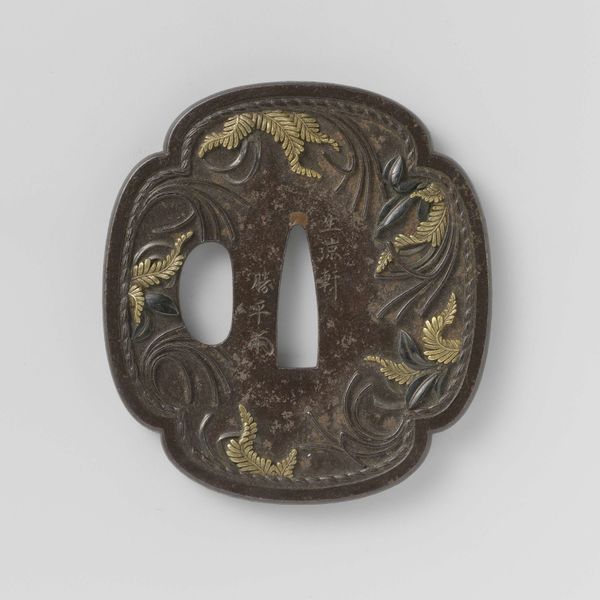
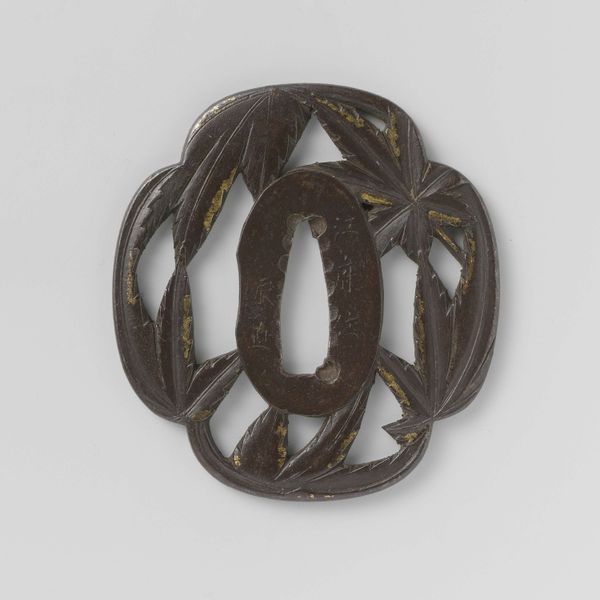
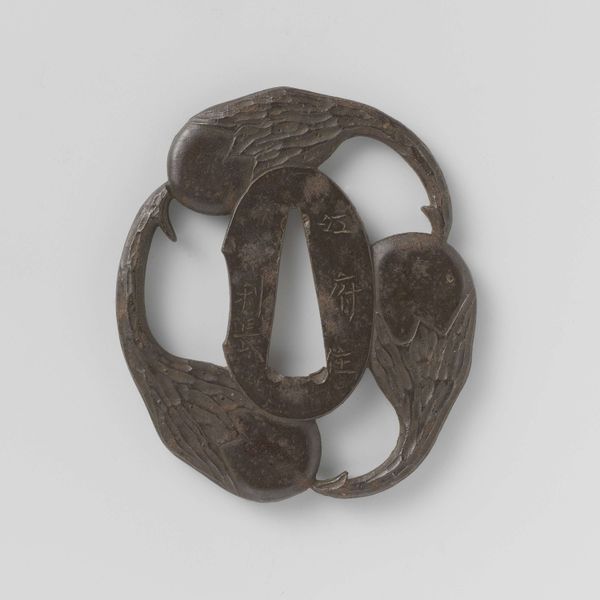
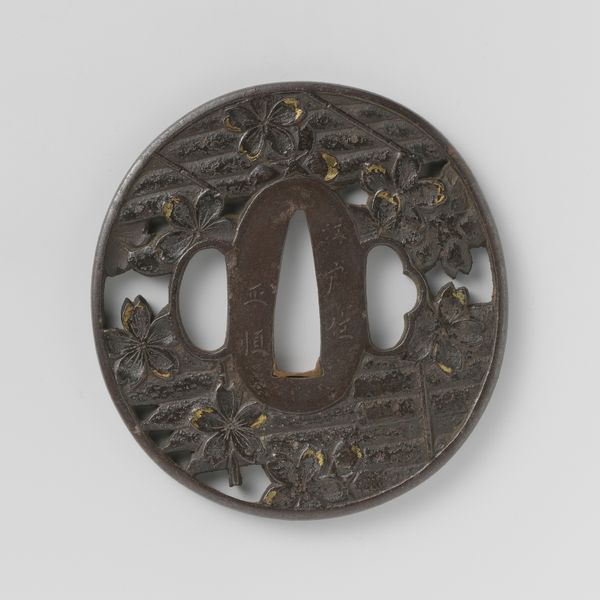
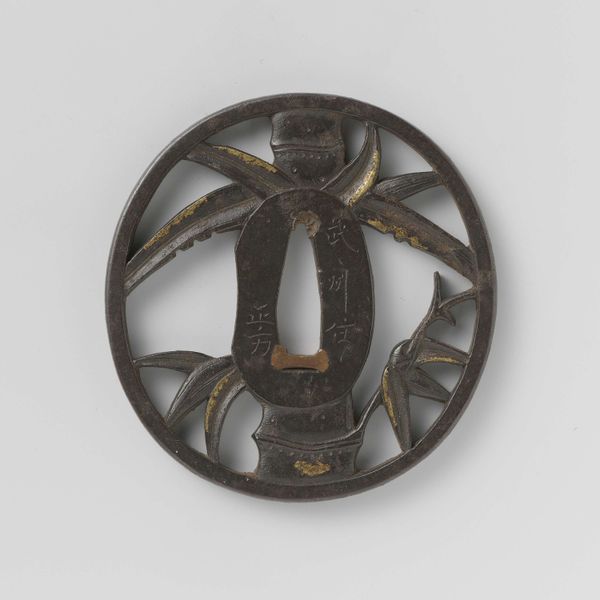
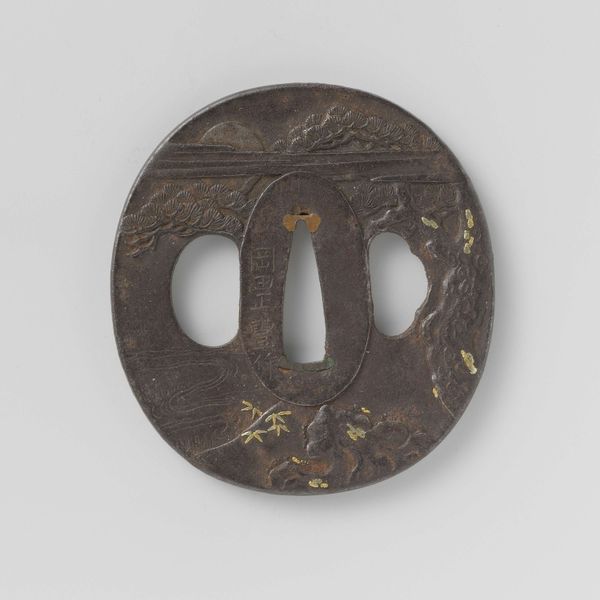
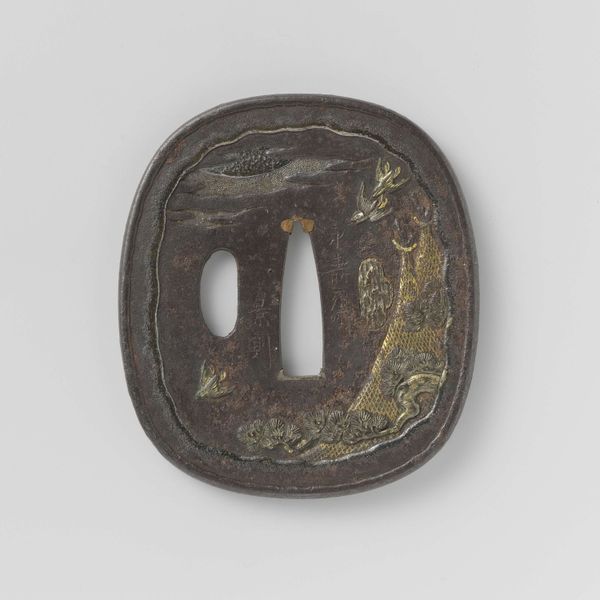
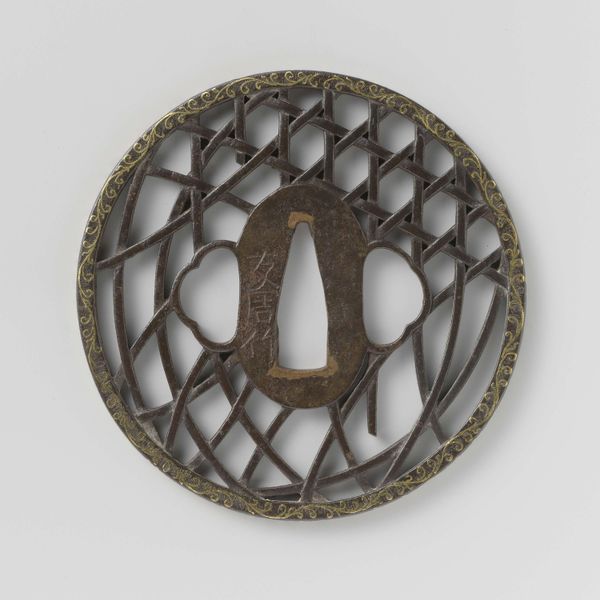
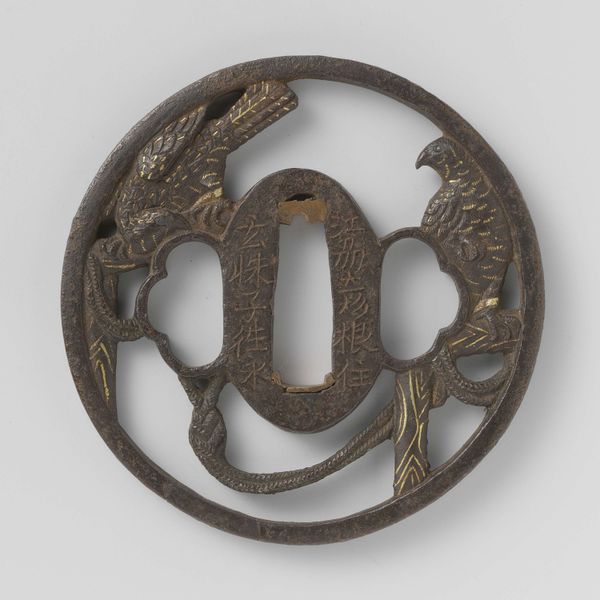
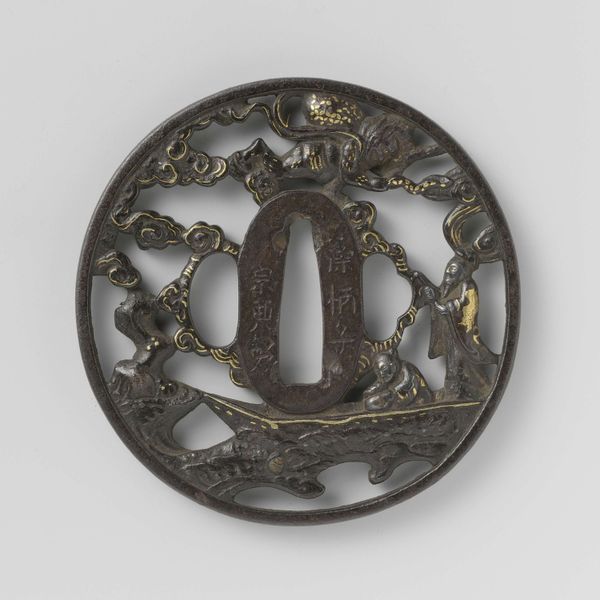
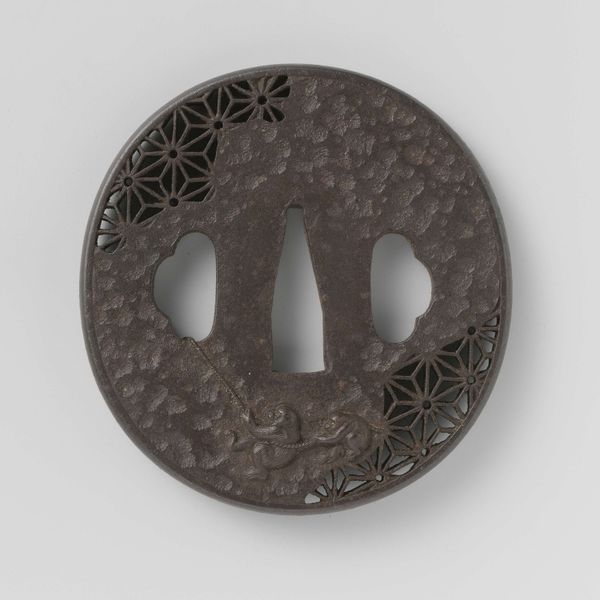
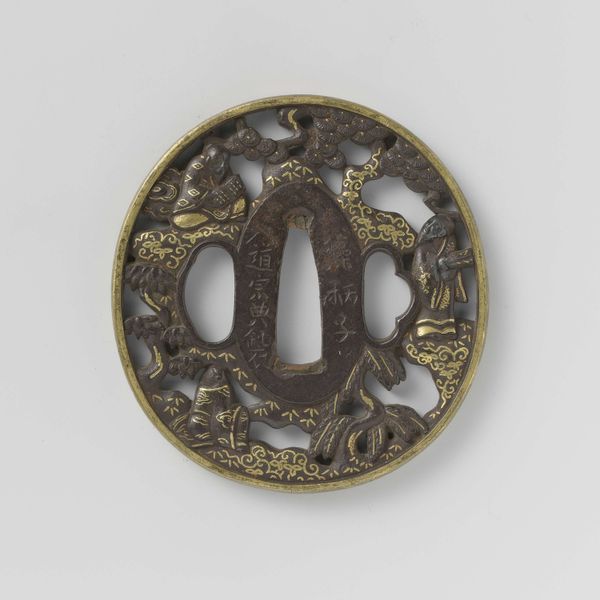
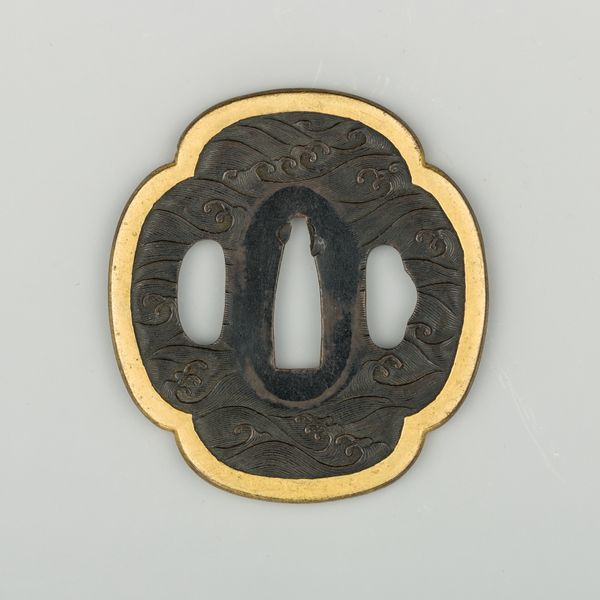
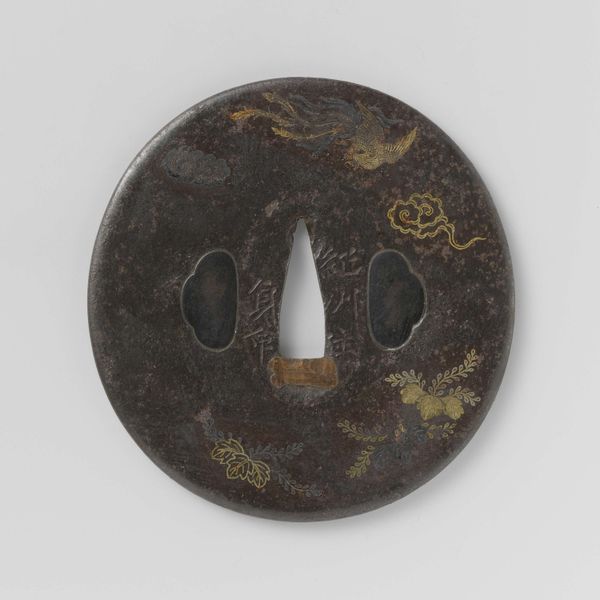
Editor: Here we have an iron hand guard by Iwamoto Konkan, created sometime between 1750 and 1850. I find the insect engravings somewhat unsettling, and yet the object has an undeniable beauty to it. How do you interpret this work, especially given its historical context? Curator: The apparent paradox you’ve noted, between the beautiful craftsmanship and unsettling imagery, speaks volumes. This hand guard, more than just a functional object, is a cultural artifact embedded in the socio-political landscape of its time. Consider the samurai class—their power, their code of honor, and their role in a hierarchical society. Doesn't the meticulous detail suggest a societal value placed on dedication, duty, and perhaps even the aestheticization of violence? Editor: So the insects could symbolize… what, exactly? Curator: It's open to interpretation, but consider the natural world and its metaphorical resonance. Insects can represent everything from fragility and impermanence to resilience and adaptability. In the context of a warrior's hand guard, could these creatures be a commentary on mortality, the ever-present threat of death, or perhaps a hope for transformation? Editor: That’s a really compelling reading. I hadn’t considered the potential for the insects to be more than just decoration. Curator: The choice of insects, rather than, say, powerful mythical beasts, is particularly interesting. Doesn’t it humanize the samurai, acknowledging vulnerability even within a framework of strength and martial prowess? And remember, art from this era wasn't just about aesthetics; it was often a carefully coded form of communication, reflecting, reinforcing, and sometimes subtly subverting social norms. Editor: It really changes how I see the object. It's no longer just a beautiful hand guard; it's a complex statement about power, vulnerability, and the samurai’s place in society. Thanks for illuminating all those fascinating nuances! Curator: Indeed, by viewing historical art through a lens that considers its social and cultural entanglements, we uncover layers of meaning that enrich our understanding not just of the artwork, but of ourselves and the world we inhabit.
Comments
No comments
Be the first to comment and join the conversation on the ultimate creative platform.
 Collect
 React
React Comment
More like this