
Curatorial notes
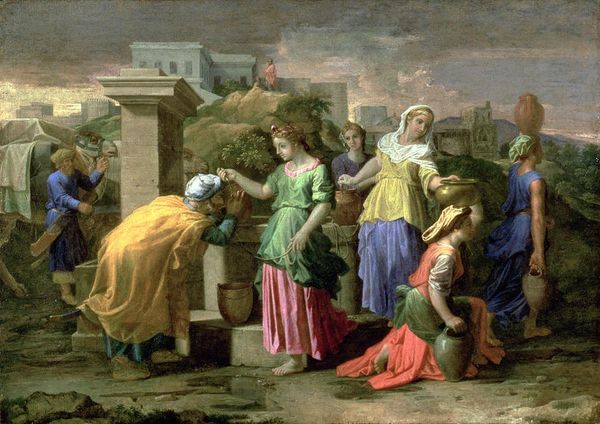
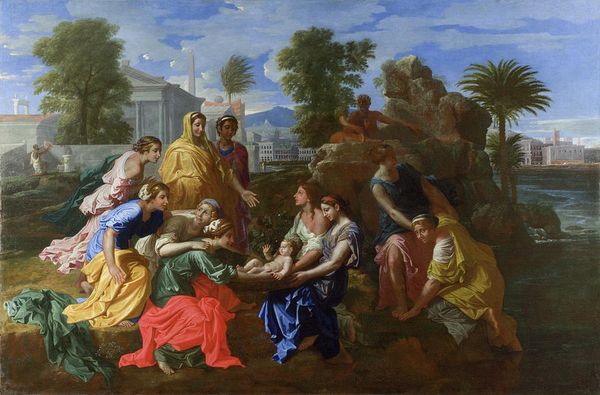
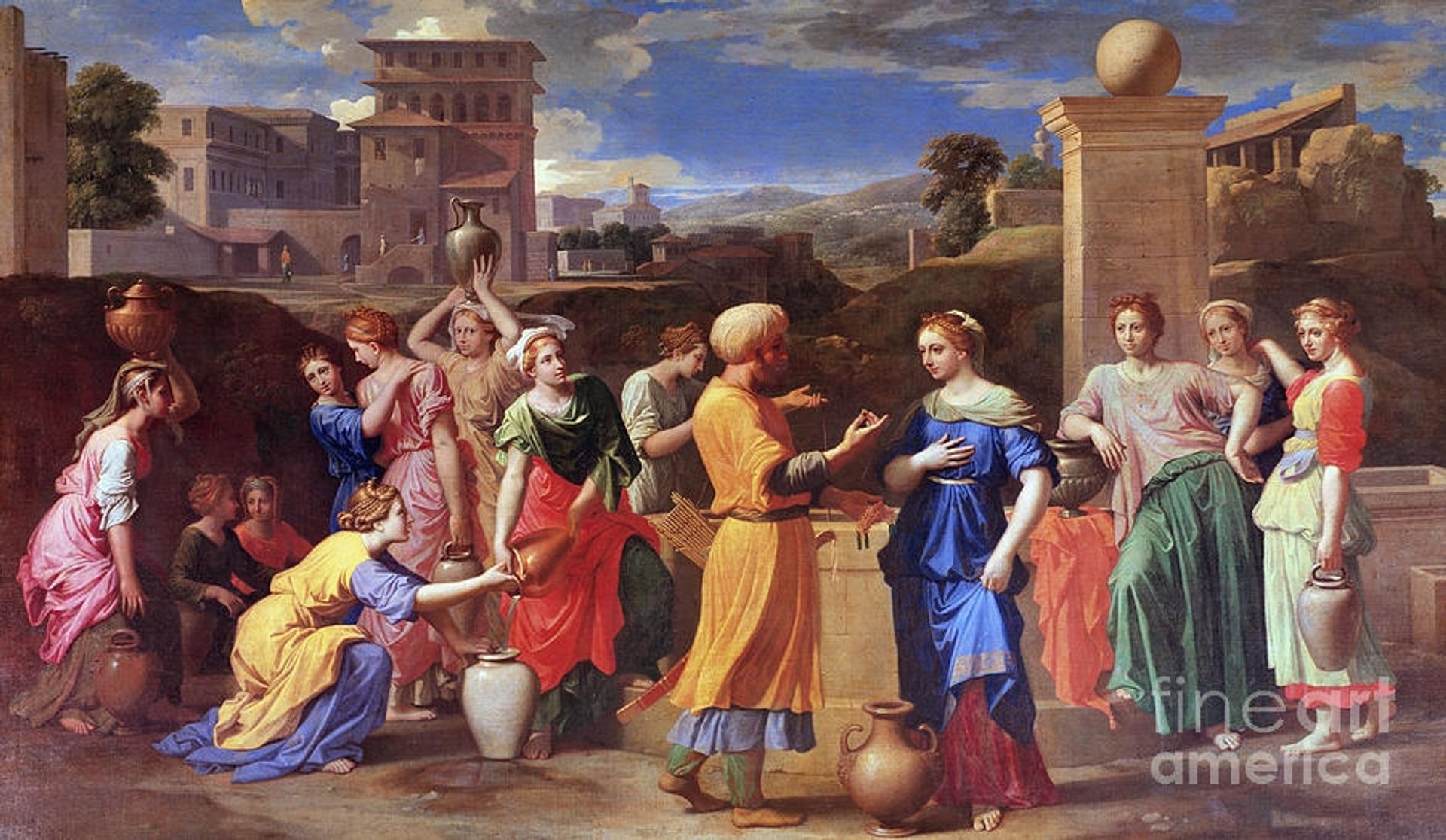
Editor: Take a look at "Eliezer and Rebecca," an oil painting of indeterminate date by Nicolas Poussin. It’s full of figures in a classical landscape, almost like a staged tableau. All these women with urns...there’s a real stillness, but also a kind of underlying drama. How do you read the story unfolding here? Curator: It's funny, isn't it? Poussin really takes biblical scenes and… well, prettifies them! I always imagine him meticulously arranging figurines to get the composition *just so.* But beyond the picturesque surface, the underlying drama resonates, don’t you think? Consider how he places Eliezer and Rebecca in the direct center – a pivotal moment hangs in the balance: will she be chosen? What do you think that solemn backdrop communicates? Does it invite you to reflect on the gravity of fate? Editor: It definitely emphasizes that this isn't just a simple encounter. The classical architecture gives it weight. Are we meant to read something into the placement of those women? Curator: Absolutely! Notice how they are positioned – some leaning, some carrying water, and one woman almost curtsying? Poussin used them to not only enrich the narrative visually but also give commentary on virtue, obedience, and humility - characteristics he considered as paramount importance to womankind. Fascinating, don't you think, how social commentary makes its way into the religious scenes? Editor: That is, and how painting serves multiple roles simultaneously. Thanks for helping me dig deeper! Curator: My pleasure! Art's all about peeling back those layers and finding our own connections. I’m thrilled to see more layers of your readings unfolding!