1836 - 1870
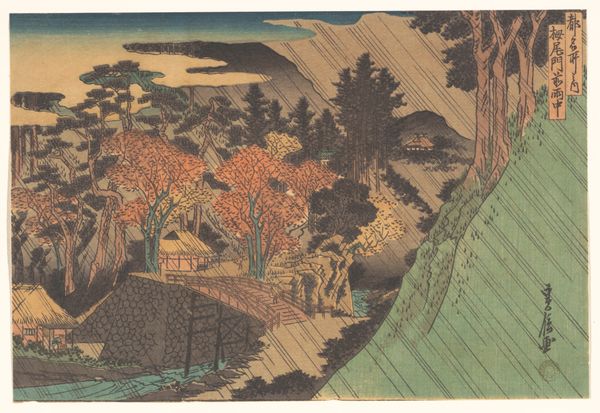
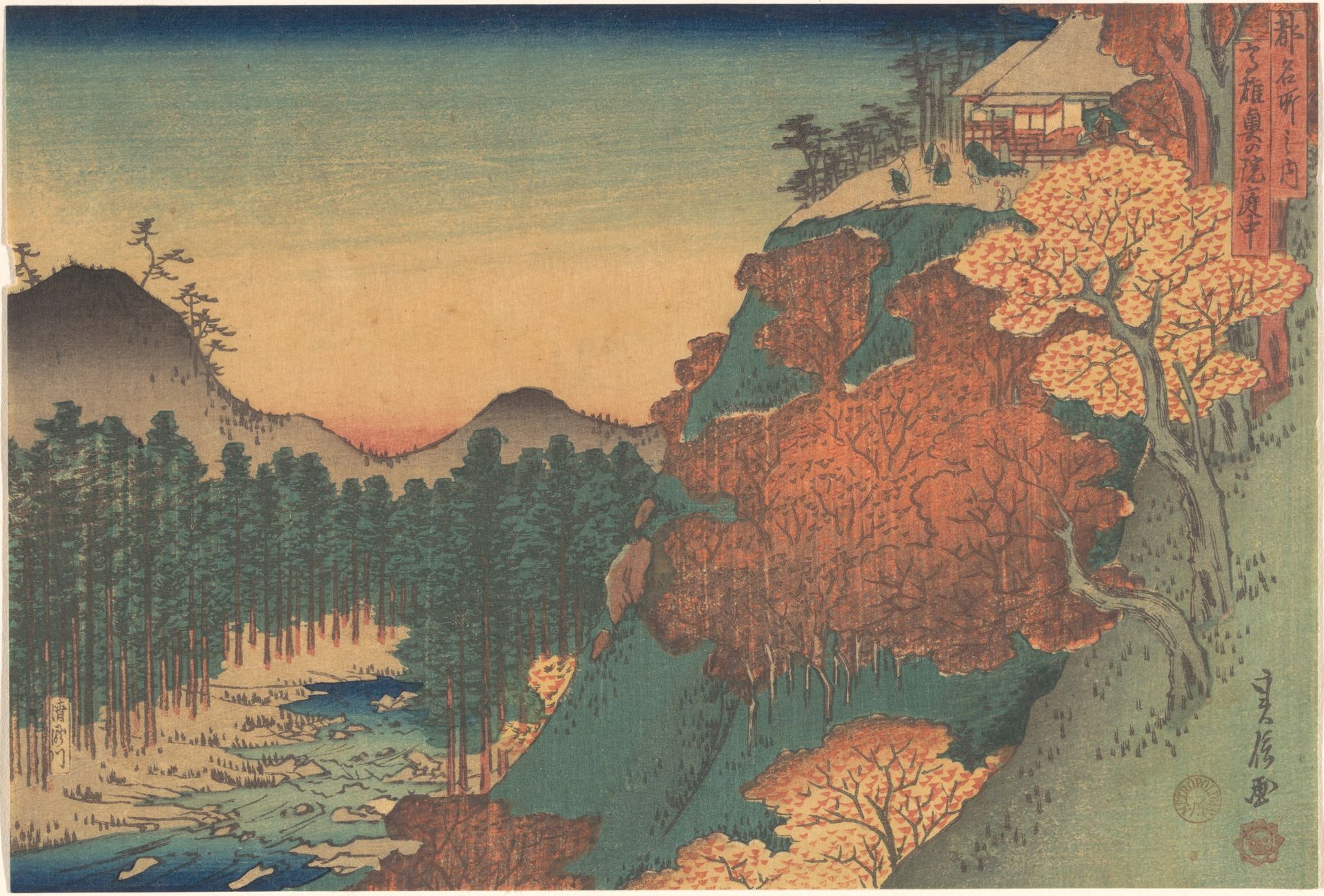
Inside the Garden at Takao


Listen to curator's interpretation
Curatorial notes
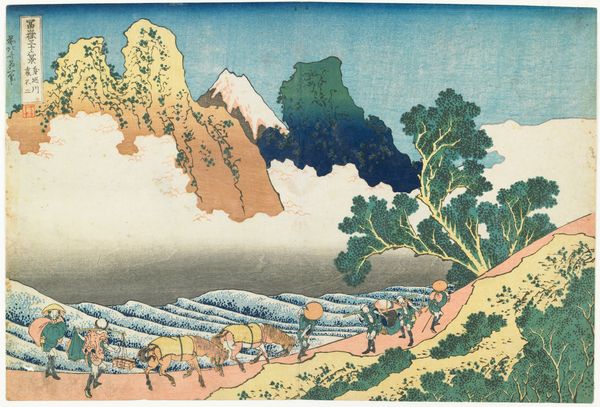
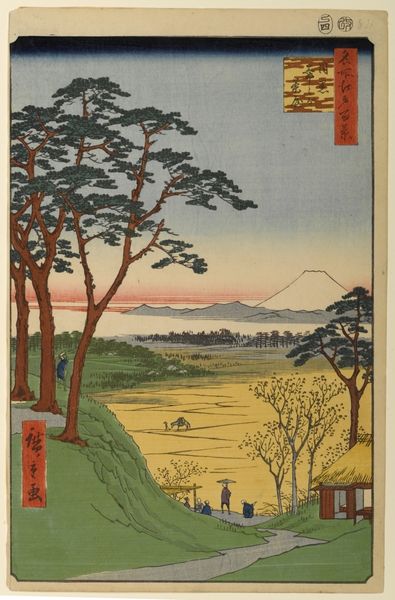
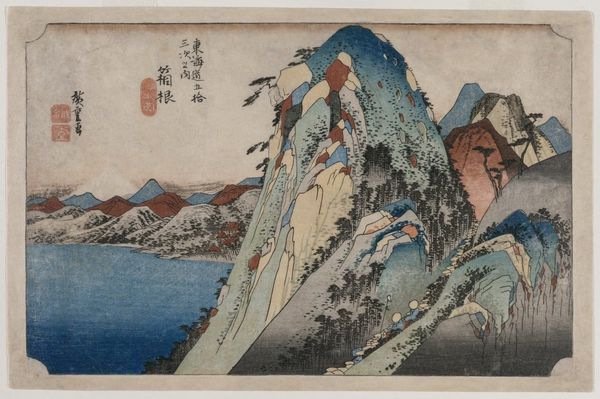
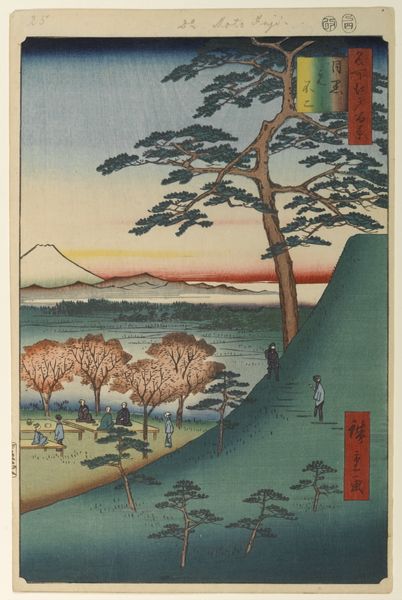
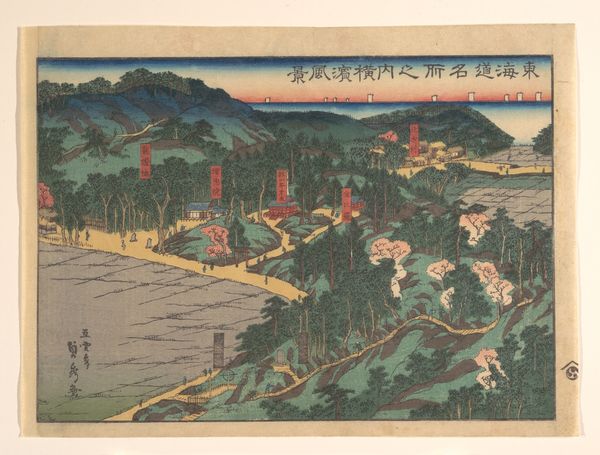
Editor: Hasegawa Sadanobu's "Inside the Garden at Takao," a woodcut print dating back to the mid-19th century, is striking! The autumn colors create a lovely warmth. What specifically stands out to you in this work? Curator: What immediately strikes me is the physical process. Look closely at the woodcut. Consider the labor involved: the carving, the layering of color, each applied meticulously by hand. Does that labor elevate the status of what might otherwise be considered craft? Editor: I hadn’t thought about it that way, but the repetition of the trees, all similar but unique, must have taken a really long time to carve. Curator: Precisely! And consider the social context. Ukiyo-e prints like these were commodities, produced for a growing urban middle class. The beautiful scenes weren’t just art; they were products of a system, available for consumption. Are these prints a form of landscape appreciation? Or were they consumer goods designed for wealthy patrons? How does the knowledge of their manufacturing change the artwork's intent? Editor: So it’s less about the serenity of the garden, and more about its availability, a constructed image mass produced through intense labor. Curator: Exactly! And even the colors— were these natural dyes? How were they sourced? The materiality tells a whole story of production and consumption in 19th-century Japan. It makes you question traditional divisions between "high art" and everyday objects. Editor: That is an important reminder that everything we see on display involves extensive and interconnected choices about material. Thanks, that was so insightful. Curator: Indeed. Thinking about the labor embedded within makes us appreciate these artworks in new ways.