1830 - 1860
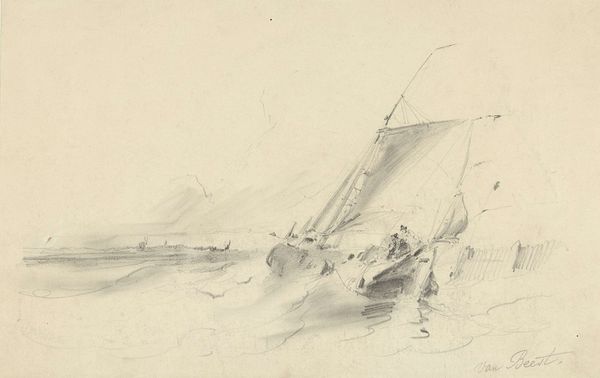
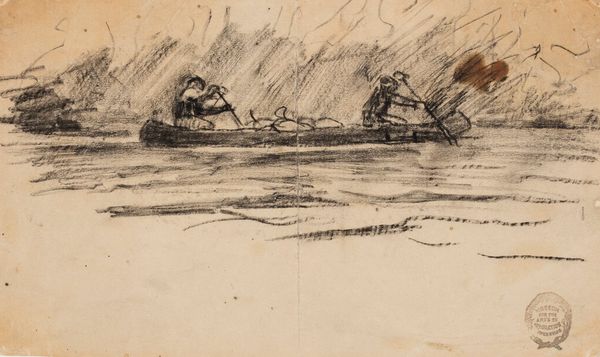
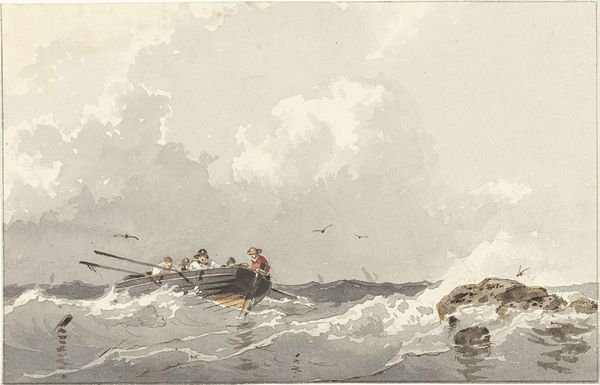
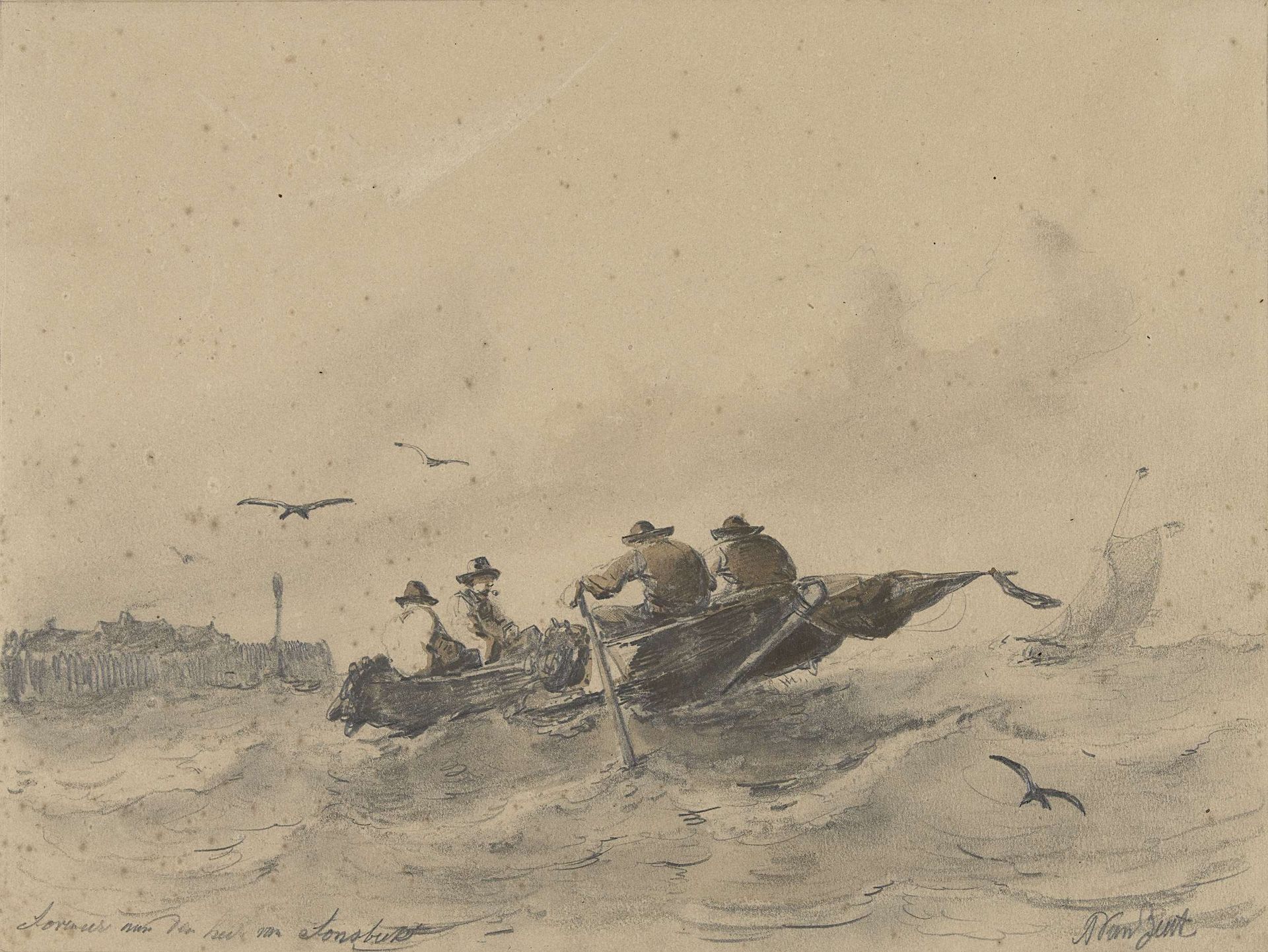
Vier mannen in een roeiboot

Albertus van Beest
1820 - 1860Location
RijksmuseumListen to curator's interpretation
Curatorial notes
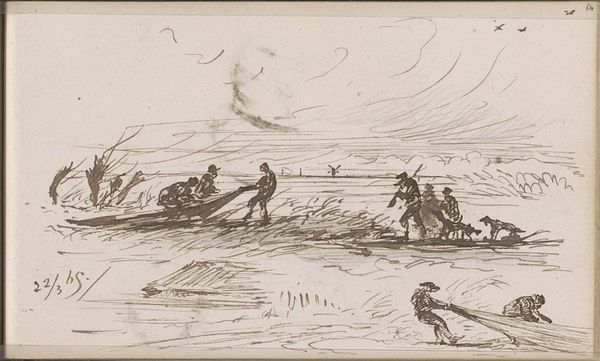
Curator: What a stark and evocative drawing. I am struck by its sense of isolation. Editor: Indeed. Here we have "Four Men in a Rowing Boat" by Albertus van Beest, made sometime between 1830 and 1860. The work, currently residing in the Rijksmuseum, uses pencil to depict figures battling the sea. It gives a glimpse into 19th-century life. Curator: Right. Beyond being just a genre painting, it speaks to a certain masculine ideal: Man against nature, rugged individualism and perhaps even something about class. Rowing as work, as distinct from rowing as leisure. I wonder about labor, solidarity and vulnerability. Editor: Absolutely. The portrayal reflects the public's fascination with the working class during this period, but I agree it can be read with more contemporary lenses, too. You also get a good sense of artistic production through public funding and market economies, both playing significant roles. Van Beest's realism, evident in the rough textures and unidealized forms, served to document a way of life increasingly impacted by industrialization. How was this reality politicized, commercialized, and curated for the Dutch population? Curator: I can see how thinking about those pressures contextualizes its realism. There is a palpable tension between the desire for authenticity and a tendency to romanticize their struggle. How does one ethically represent human experiences of labor and natural forces in this way? Editor: And what impact did state patronage, in addition to growing middle-class art viewership, have on what Van Beest depicted? Curator: These details encourage dialogue that make artwork all the more captivating and socially conscious. Editor: It helps me better see how Van Beest and similar art can inform our perspectives about art's societal influence and cultural function.