About this artwork
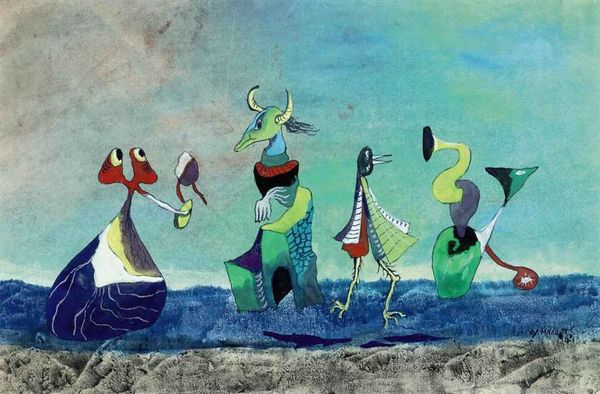
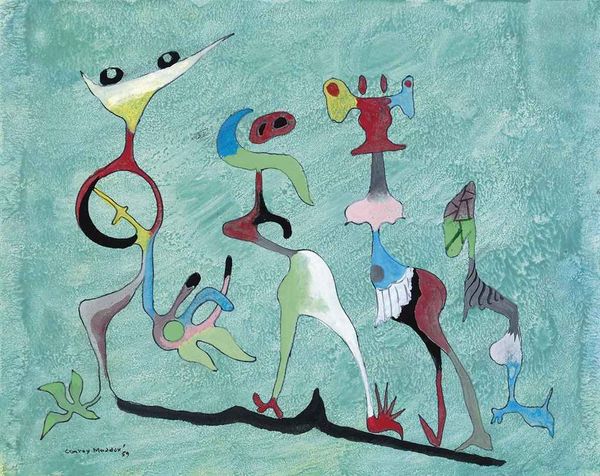
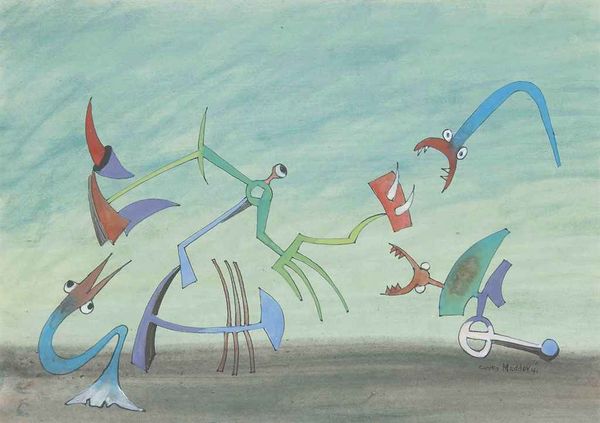
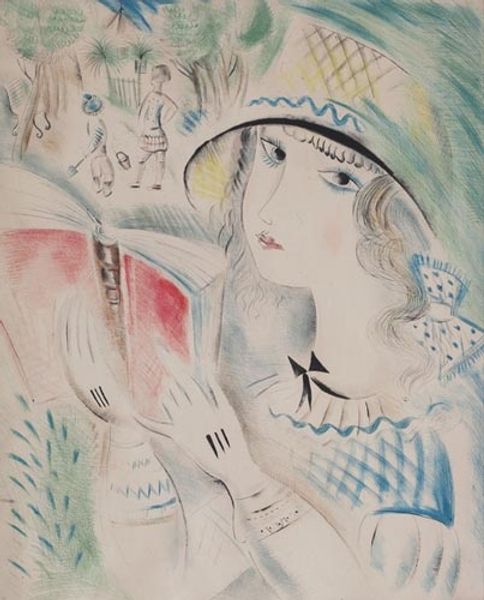
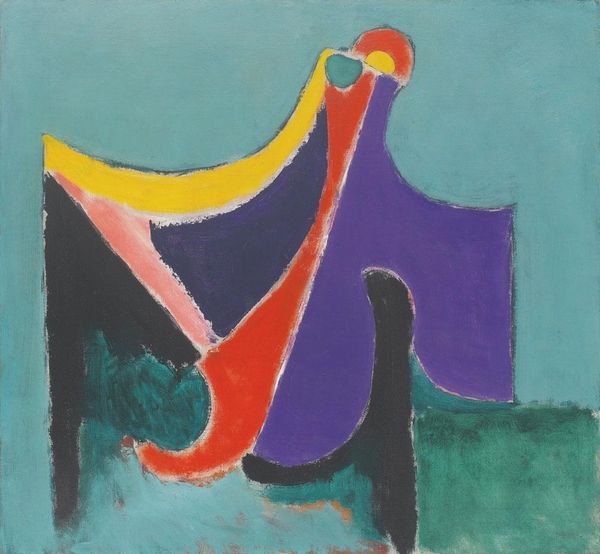
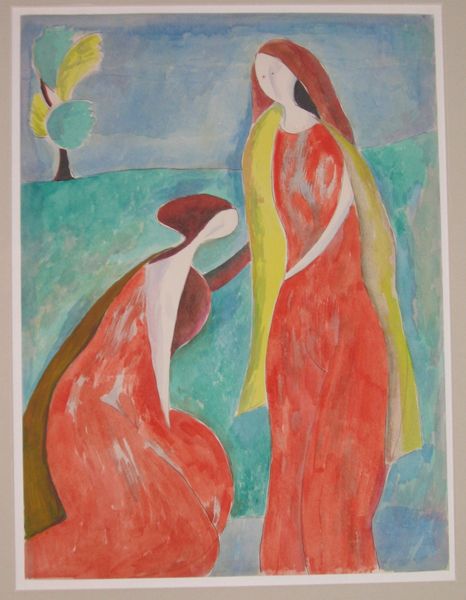
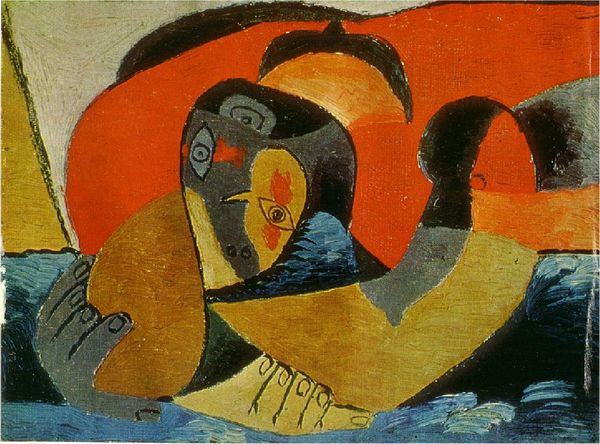
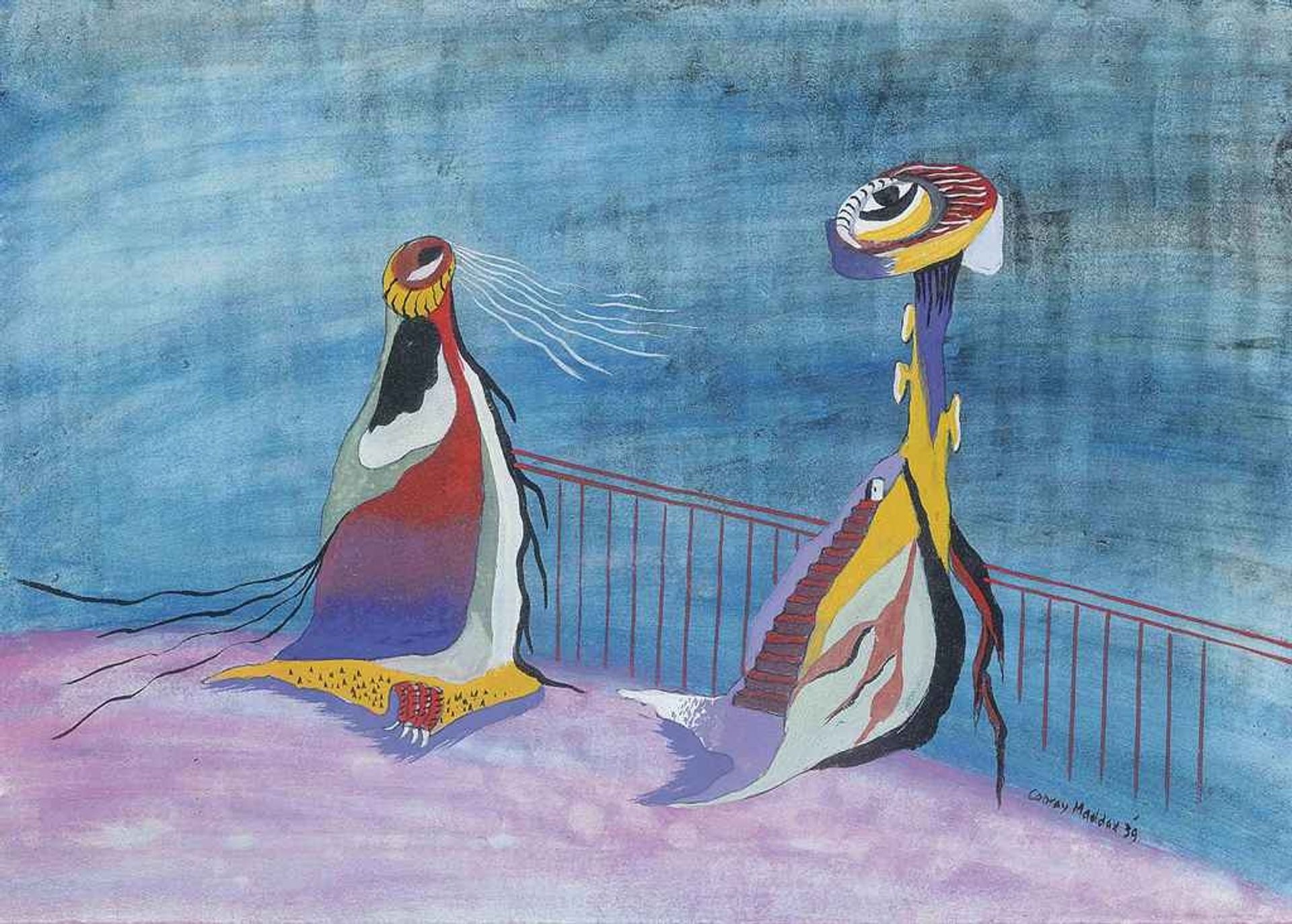
Curator: Let's discuss Conroy Maddox's "Rendezvous" created in 1939. It's an intriguing watercolor and oil painting. Editor: It has a surreal, dreamlike quality, wouldn't you agree? The abstracted forms give off an air of detached melancholy. The color palette certainly aids that mood. Curator: It's true that melancholy might be your initial interpretation, but let’s consider the context. Maddox was a significant figure in the British Surrealist movement, a group deeply affected by the looming shadow of war. This piece, with its bizarre figuration against an oddly calm landscape, speaks volumes about the anxieties of the time and could speak to political themes as well. Editor: From a purely structural point of view, the composition is strikingly balanced. The figures are positioned in a way that leads your eye across the frame, yet they remain strangely isolated. There are the fine linear and delicate details throughout that add dynamism. Curator: Their isolation becomes especially potent when viewed through the lens of pre-war Britain. It’s impossible to ignore the historical significance. We might consider the socio-political tensions percolating at that moment, particularly a certain disassociation stemming from the rapid modernization during this era. I think the painting captures a sense of disconnect so specific to modern life during times of duress and uncertainty. Editor: Even divorced from its historical circumstances, the interplay between light and shadow generates substantial visual tension. How that translates conceptually, I’ll let you figure out. Curator: It’s a reminder of the power of art to act as a mirror to society, to distill complex anxieties and uncertainties into visual form, prompting dialogue that feels relevant even today. Editor: Yes, well, whether one engages with the historical and political narrative or focuses on its purely visual vocabulary, "Rendezvous" offers ample material for thoughtful introspection.

Artwork details
- Medium
- painting, watercolor
- Copyright
- Conroy Maddox,Fair Use
Tags
painting
landscape
fantasy-art
figuration
oil painting
watercolor
neo expressionist
surrealism
expressionist
Comments
No comments
About this artwork
Curator: Let's discuss Conroy Maddox's "Rendezvous" created in 1939. It's an intriguing watercolor and oil painting. Editor: It has a surreal, dreamlike quality, wouldn't you agree? The abstracted forms give off an air of detached melancholy. The color palette certainly aids that mood. Curator: It's true that melancholy might be your initial interpretation, but let’s consider the context. Maddox was a significant figure in the British Surrealist movement, a group deeply affected by the looming shadow of war. This piece, with its bizarre figuration against an oddly calm landscape, speaks volumes about the anxieties of the time and could speak to political themes as well. Editor: From a purely structural point of view, the composition is strikingly balanced. The figures are positioned in a way that leads your eye across the frame, yet they remain strangely isolated. There are the fine linear and delicate details throughout that add dynamism. Curator: Their isolation becomes especially potent when viewed through the lens of pre-war Britain. It’s impossible to ignore the historical significance. We might consider the socio-political tensions percolating at that moment, particularly a certain disassociation stemming from the rapid modernization during this era. I think the painting captures a sense of disconnect so specific to modern life during times of duress and uncertainty. Editor: Even divorced from its historical circumstances, the interplay between light and shadow generates substantial visual tension. How that translates conceptually, I’ll let you figure out. Curator: It’s a reminder of the power of art to act as a mirror to society, to distill complex anxieties and uncertainties into visual form, prompting dialogue that feels relevant even today. Editor: Yes, well, whether one engages with the historical and political narrative or focuses on its purely visual vocabulary, "Rendezvous" offers ample material for thoughtful introspection.
Comments
No comments