print, etching, engraving
#
narrative-art
#
baroque
# print
#
pen sketch
#
etching
#
pencil sketch
#
old engraving style
#
figuration
#
line
#
pen work
#
history-painting
#
engraving
Dimensions: height 201 mm, width 129 mm
Copyright: Rijks Museum: Open Domain
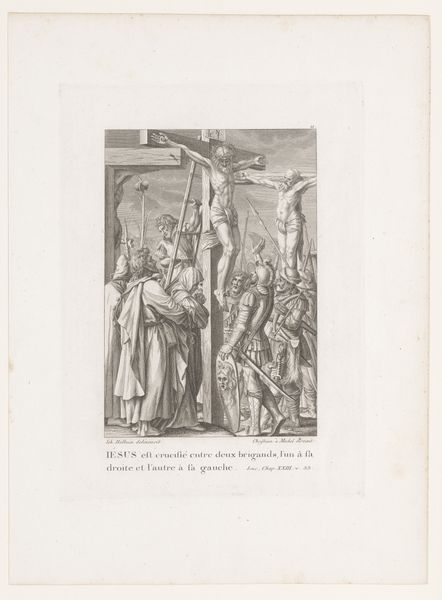
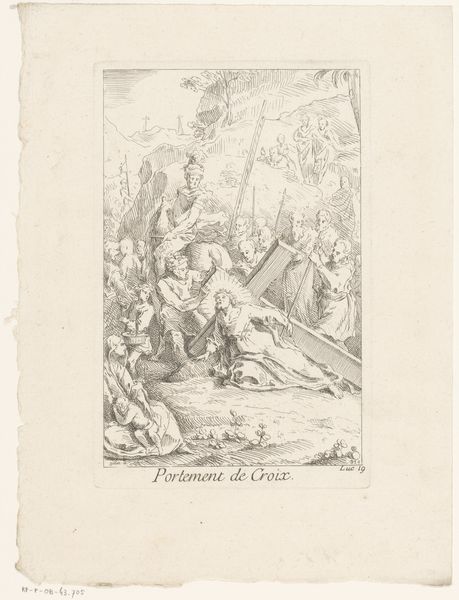
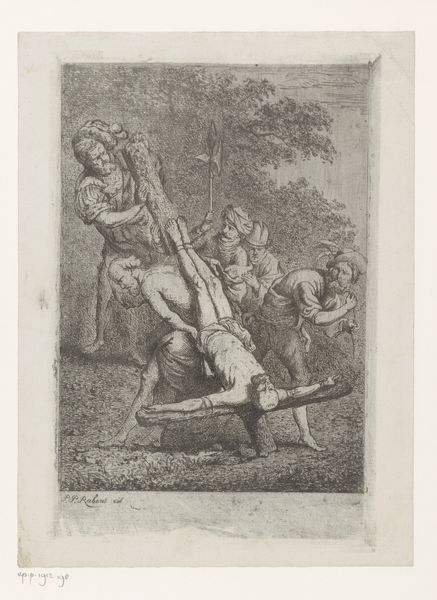
Curator: This print, entitled "Kruisafname", which translates to "Descent from the Cross", dates back to before 1732 and is attributed to Gabriel Huquier. It's currently held here at the Rijksmuseum. Editor: It strikes me as incredibly dramatic. The diagonal lines of the ladders create a powerful sense of instability and urgency, don't you think? Almost like a theatrical stage. Curator: Absolutely, that dynamism is a key characteristic of the Baroque style evident here, and the subject itself — Christ's removal from the cross — was ripe for dramatic interpretations. Such prints played a vital role in disseminating religious narratives during that period, making art accessible to a wider audience beyond the Church walls. Editor: Looking closely, the detail achieved through etching and engraving is impressive, especially in the rendering of the figures’ drapery and musculature. But it’s all in service of a distinct hierarchy—note how light illuminates Christ’s body, while shadows obscure the faces of those assisting him. It focuses our gaze, guiding our emotions. Curator: Yes, and consider the social context. Huquier was part of a network of printmakers who catered to a growing market for religious imagery. These weren't just artistic statements; they were commodities, responding to devotional needs, reinforcing religious doctrine. Their distribution relied on established trade networks, often across national borders. Editor: It's a masterful display of line work creating a range of textures—from the smoothness of Christ’s skin to the rough-hewn texture of the ladders, giving depth and weight to the entire scene. Though monochromatic, the emotional value is amplified. Curator: Prints like these had profound political and cultural implications too, shaping religious sentiments. We tend to see them simply as aesthetic objects, but it’s important to remember their function within a much broader sphere. Editor: Seeing the balance of form and content has really emphasized the power an artwork like this one has over a viewer. Curator: Indeed, appreciating the layered histories imbues a whole new depth and nuance.
Comments
No comments
Be the first to comment and join the conversation on the ultimate creative platform.
 Collect
 React
React Comment
More like this