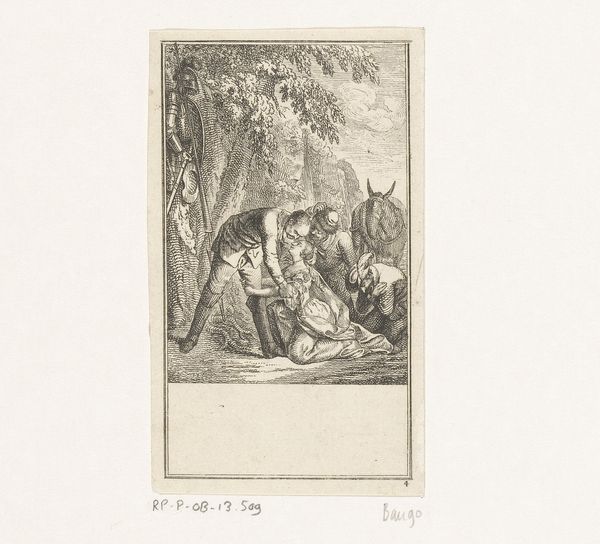
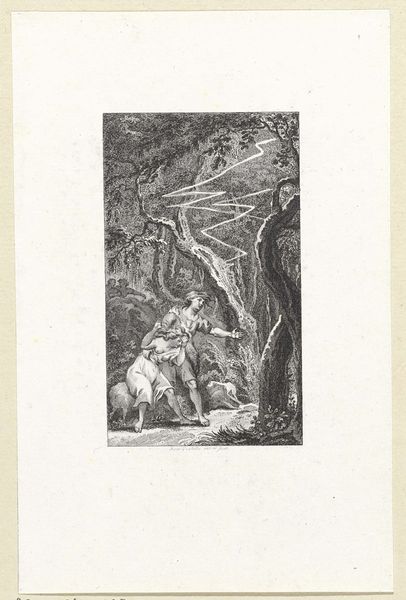
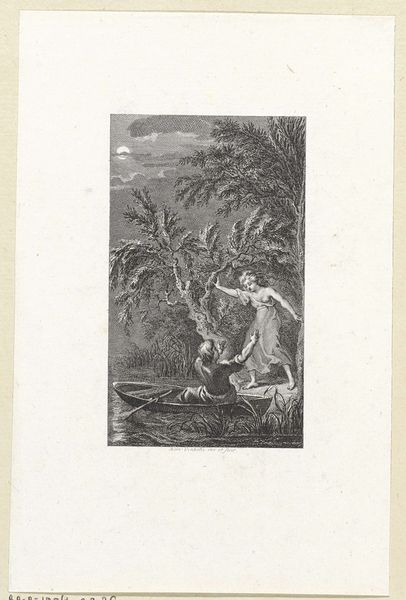
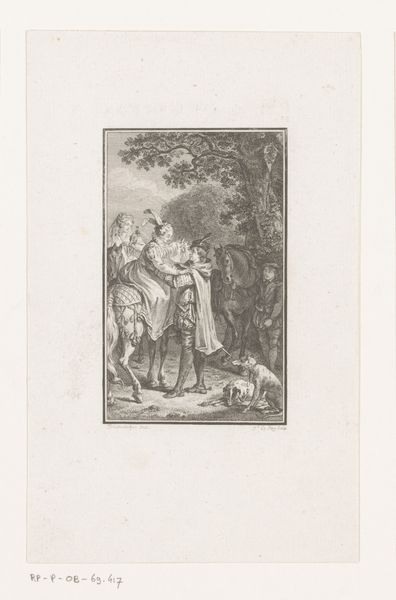
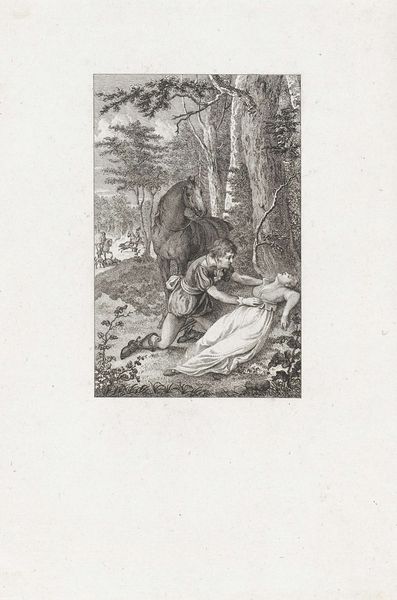
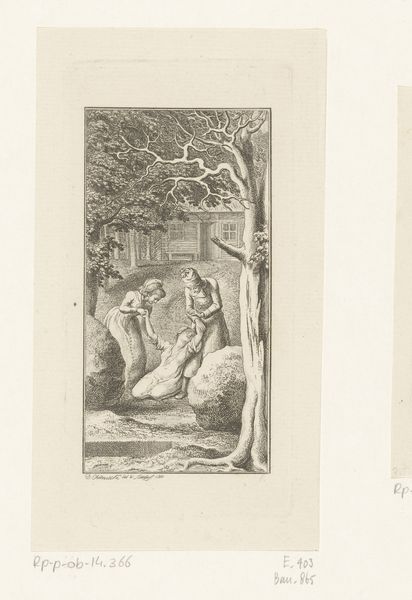
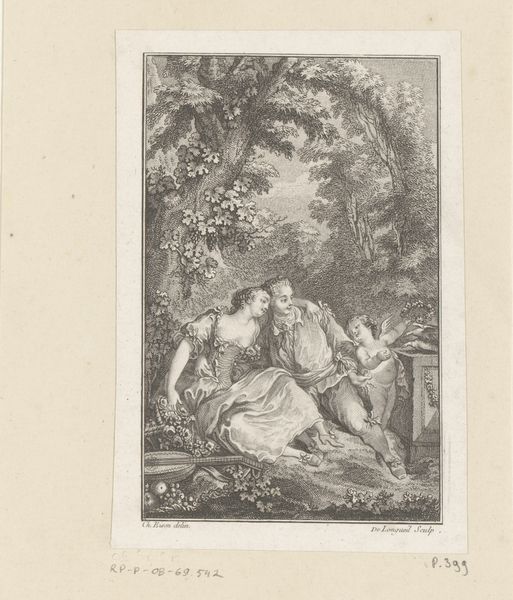
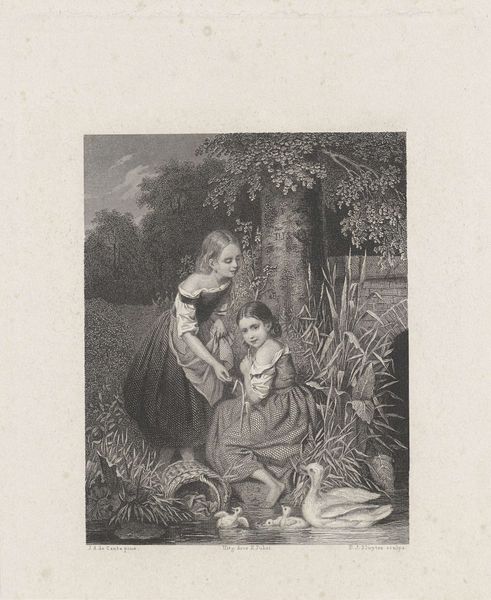
Personificatie en een geknielde man /Kussend paar aan het water/ Vrouw bekijkt twee dode vogels 1789
0:00
0:00

reiniervinkeles
Rijksmuseum
drawing, print, engraving
#
drawing
#
neoclacissism
# print
#
old engraving style
#
landscape
#
bird
#
figuration
#
15_18th-century
#
history-painting
#
engraving
Dimensions: height 104 mm, width 246 mm
Copyright: Rijks Museum: Open Domain
Editor: This print, created in 1789 by Reinier Vinkeles, is titled "Personificatie en een geknielde man /Kussend paar aan het water/ Vrouw bekijkt twee dode vogels." The three scenes, rendered in such fine detail, almost feel like snapshots from a play. What symbols or ideas strike you as most important in this triptych? Curator: Notice how each panel presents a very specific, almost theatrical tableau. The left shows apotheosis, divine intervention lifting a mortal. The center evokes themes of sensual love or perhaps silencing. But look at the rightmost image. Death and mourning—or is it melancholic self-reflection? Editor: That contrast between the panels is so stark. One's rising, one's in passionate embrace, and the other seems steeped in sadness. Curator: Consider birds as symbols – messengers, souls, omens. Their death here can carry complex layers. This isn't simply literal; consider the psychology of loss, innocence destroyed. The weeping woman may represent humanity reflecting on its vulnerability and fleeting beauty. Are we looking at different stages of life or morality allegories perhaps? Editor: It's almost like the artist is presenting love, loss, and aspiration, suggesting they're intertwined somehow. Is there any social critique going on? Curator: It would not be unreasonable. Remember the French revolution. Vinkeles lived in the era when there were changing social and political norms and institutions. There might have been some messages for the intellectual society. Editor: That's given me a lot to think about. I will consider this artwork’s role as an emotional, cultural, and symbolic register in the era of Neoclassicism. Curator: Precisely, it serves as a compelling testament to the enduring power of symbols across eras.
Comments
No comments
Be the first to comment and join the conversation on the ultimate creative platform.
 Collect
 React
React Comment
More like this