1903
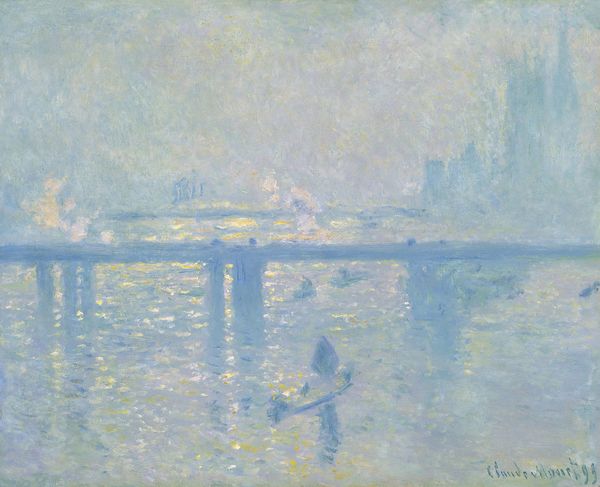
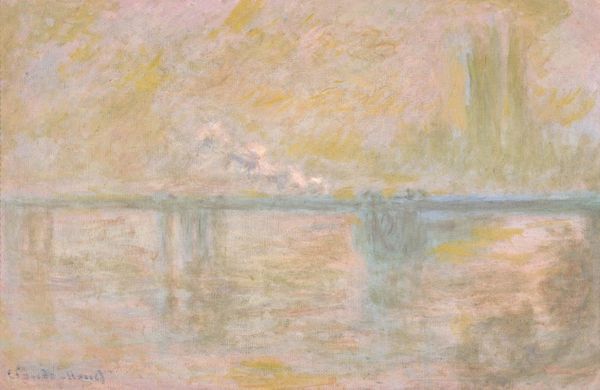
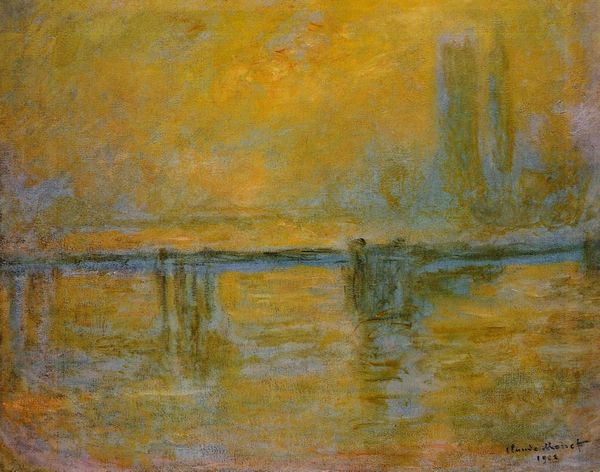
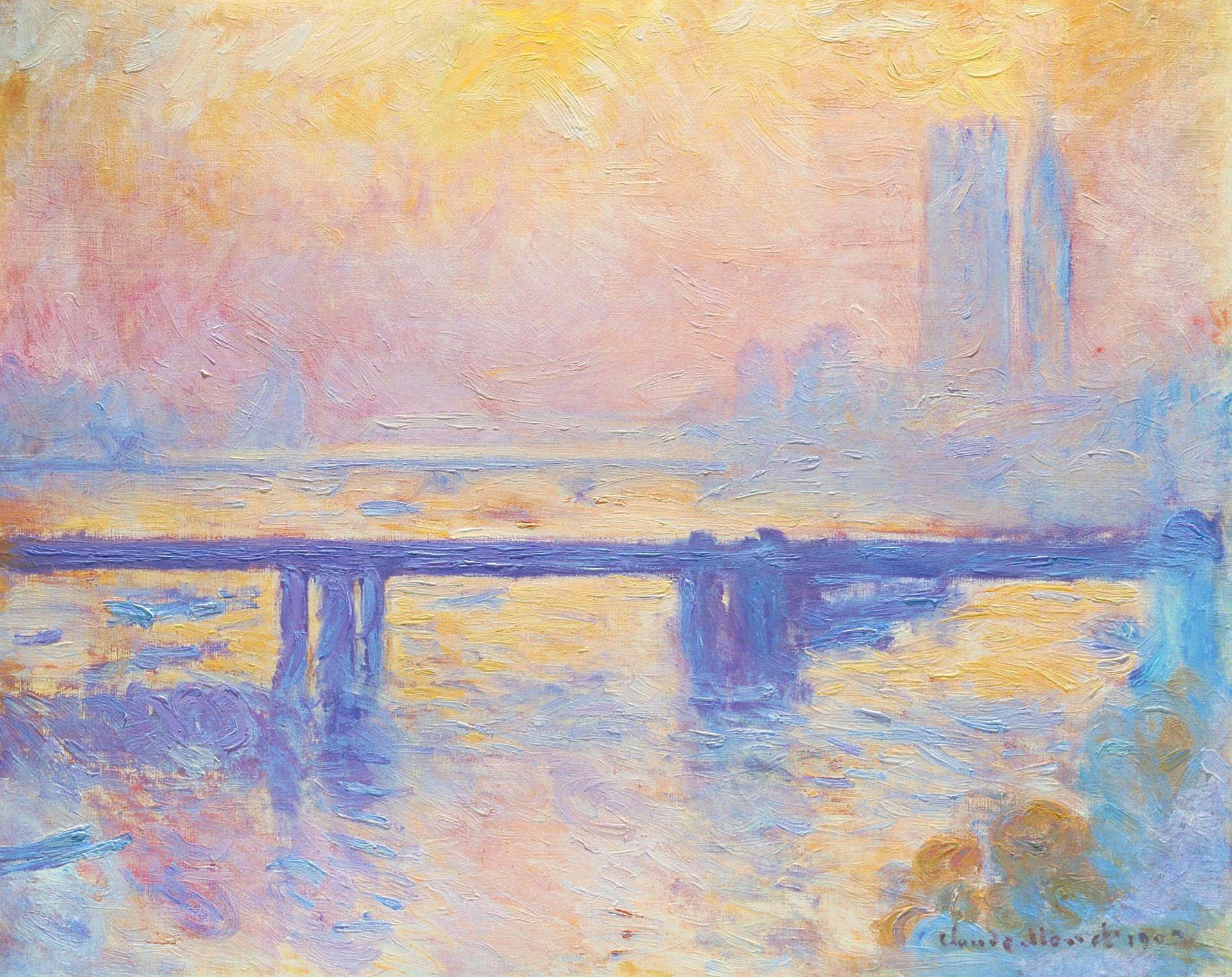
Charing Cross Bridge

Claude Monet
1840 - 1926Location
Private CollectionListen to curator's interpretation
Curatorial notes
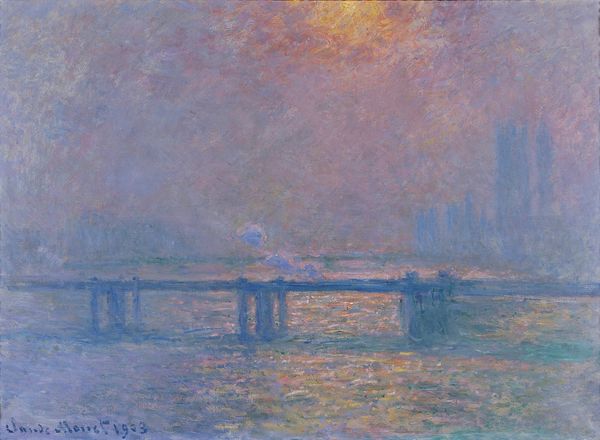
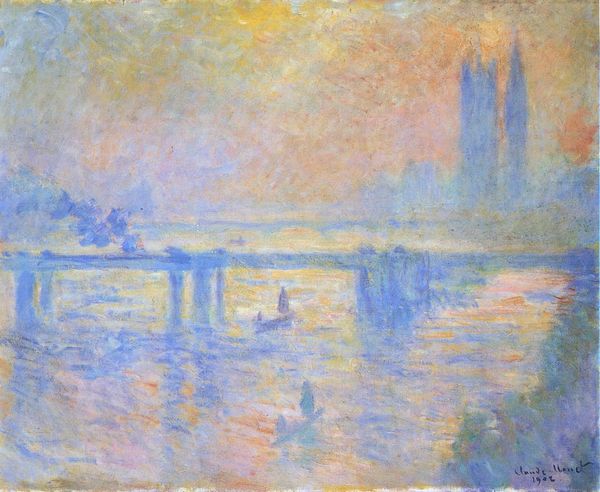
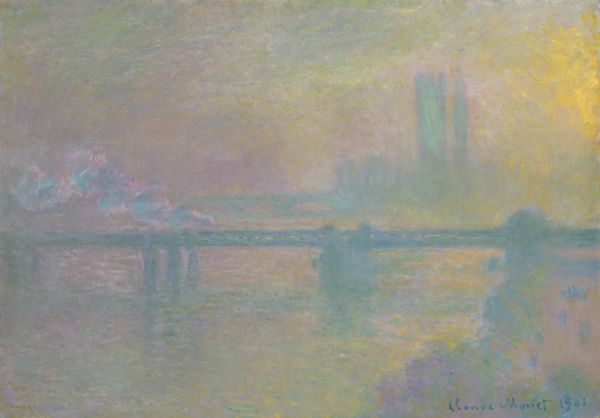
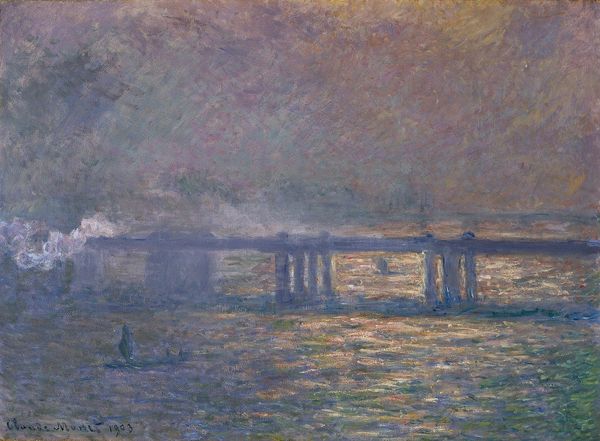
Claude Monet made this painting of Charing Cross Bridge with oil paint on canvas, though the exact date is unknown. The very qualities that define the work, its hazy atmosphere and ephemeral light effects, are achieved through a hands-on process. Thick daubs of paint are layered wet-on-wet, one carefully placed next to the other. This materiality is critical. Without the visible brushstrokes and impasto, the painting would lose its vibrancy. Monet's focus isn't on meticulous detail but on capturing the sensory experience of a scene. The labor involved isn't about rendering reality photographically, but about synthesizing it through color and texture. The work captures the dynamic energy of London, a powerful symbol of industrial progress. Monet’s painting elevates the sensory experience of a bustling, modern metropolis. By embracing the tactile qualities of paint, Monet blurs the lines between representation and abstraction. In doing so, he challenges the traditional hierarchy of art, where the idea often trumps the making.