1917
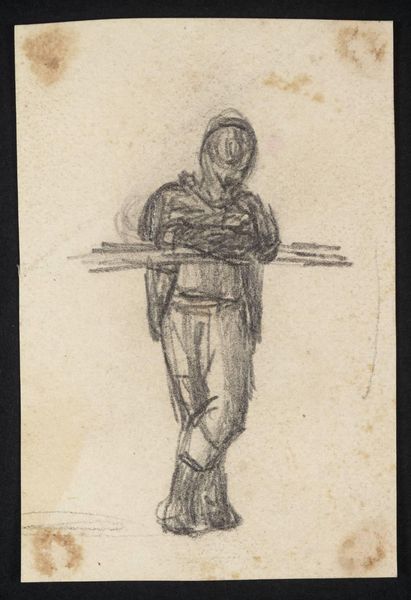
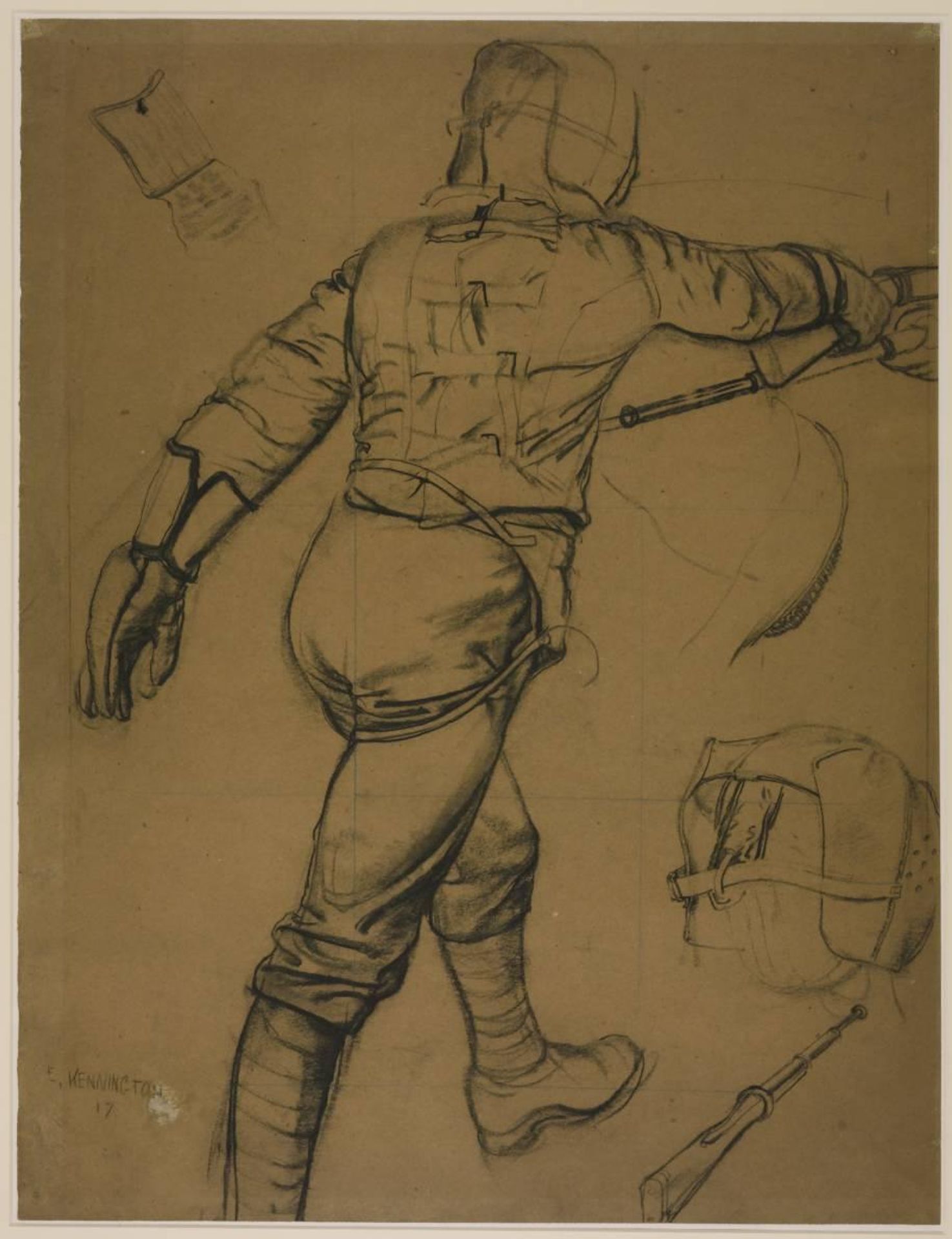
Bayonet Practice

Listen to curator's interpretation
Curatorial notes
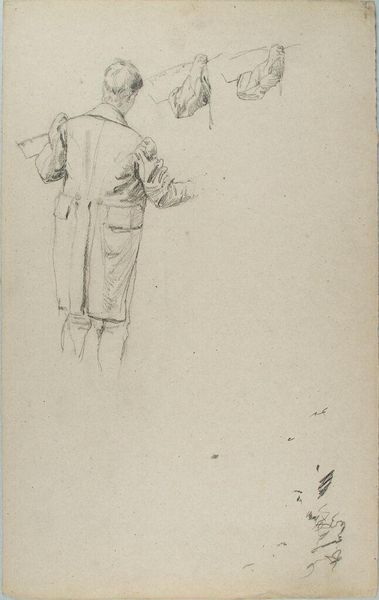
Editor: This is Eric Kennington's "Bayonet Practice," made in 1917. It's a drawing on brown paper, and it feels unfinished, yet incredibly tense. What do you see in it? Curator: It's a striking commentary on the brutal mechanization of warfare. Kennington shows us the dehumanizing process of turning young men into instruments of violence. The sketches surrounding the main figure – the helmet, the rifle – they highlight the reduction of identity. Editor: So it's not glorifying war? Curator: Absolutely not. The facelessness of the figure, the repetition implied by "practice," speaks to the systemic erasure of individuality within the military machine. It's a powerful indictment of the social forces at play during wartime. Editor: I see it now; the drawing’s incompleteness reinforces that sense of something lost, or never fully formed. Curator: Precisely. This piece invites us to reflect on the human cost of conflict and question the narratives that glorify violence.