About this artwork
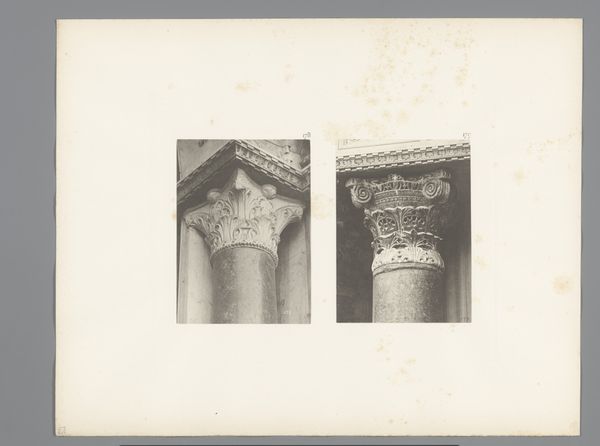
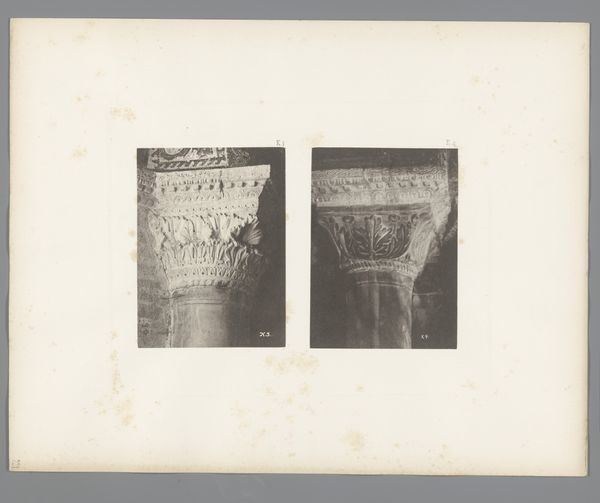
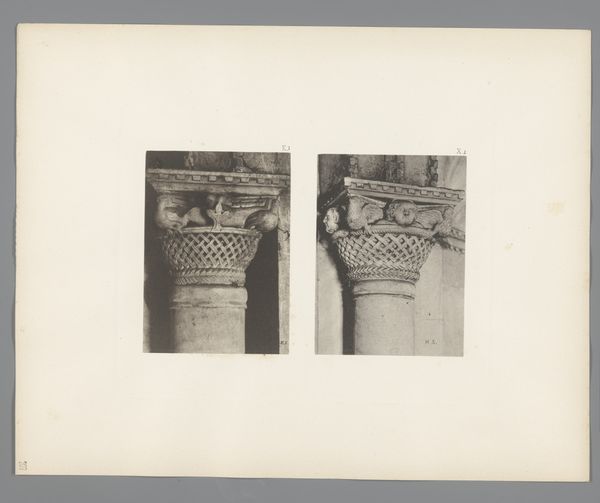
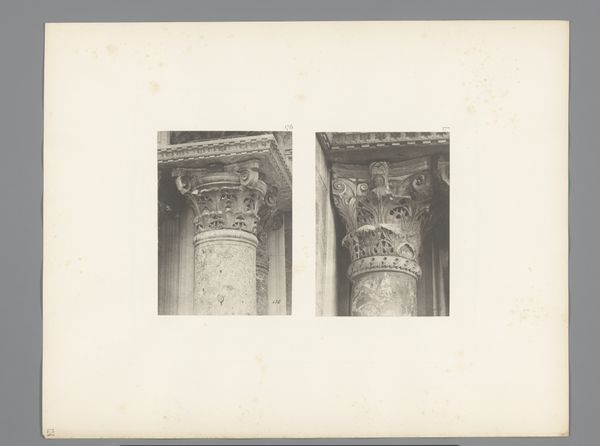
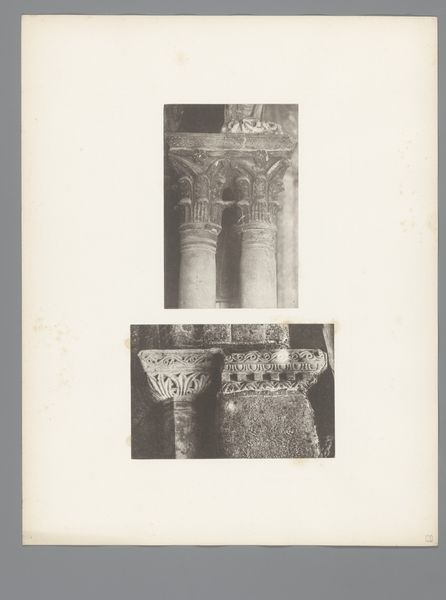
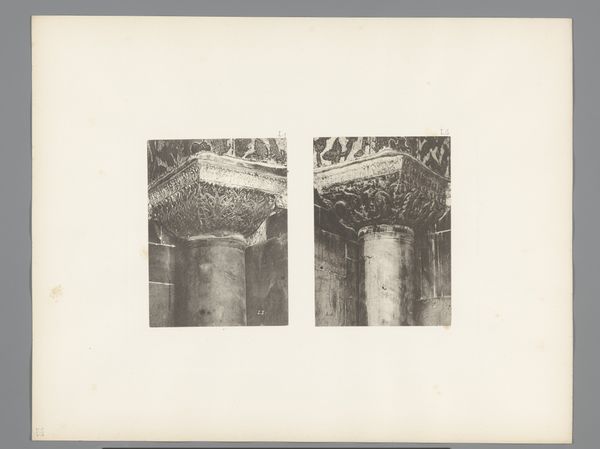
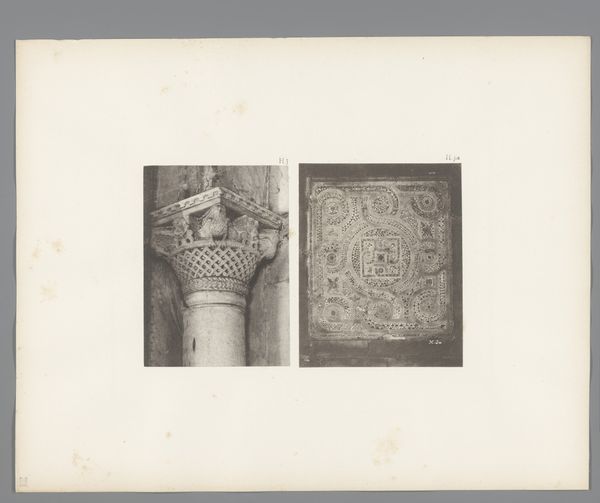
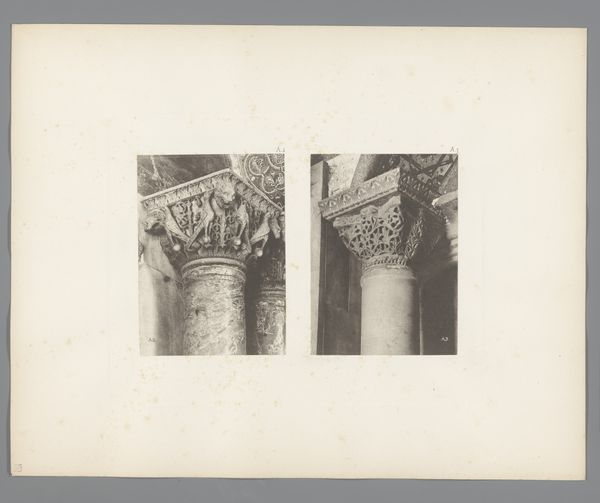
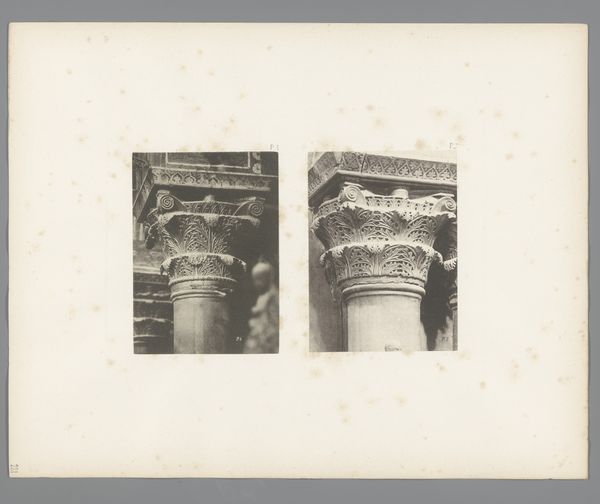
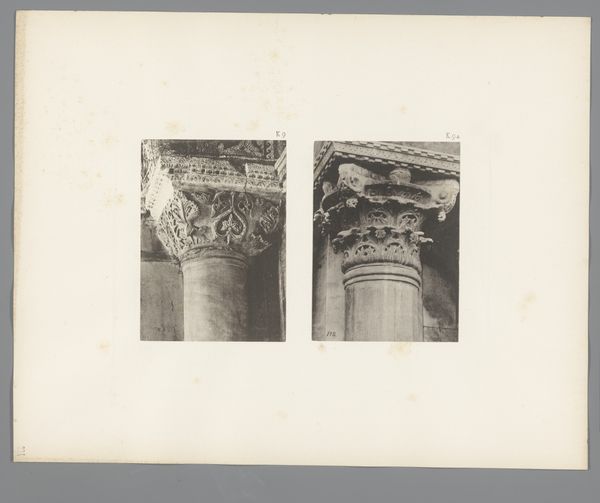
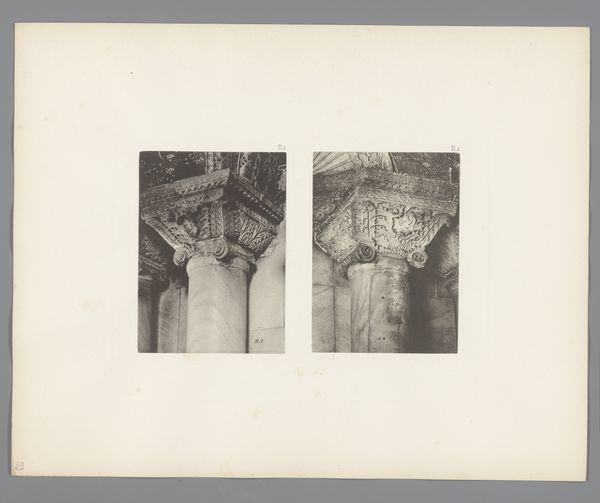
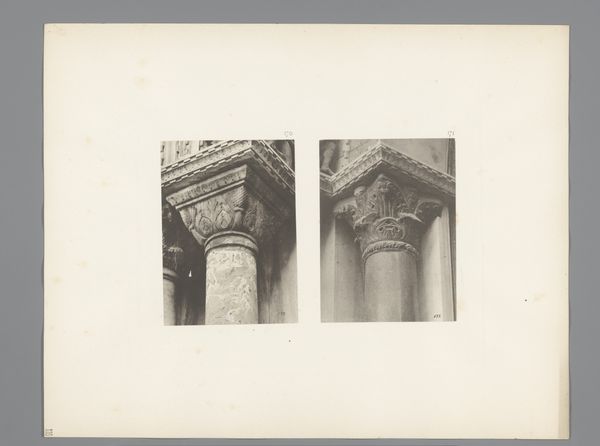
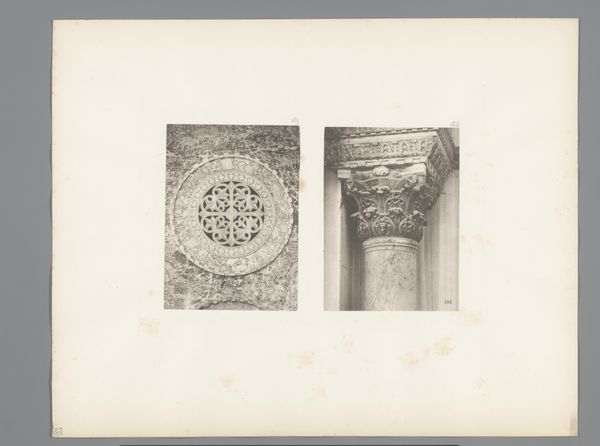
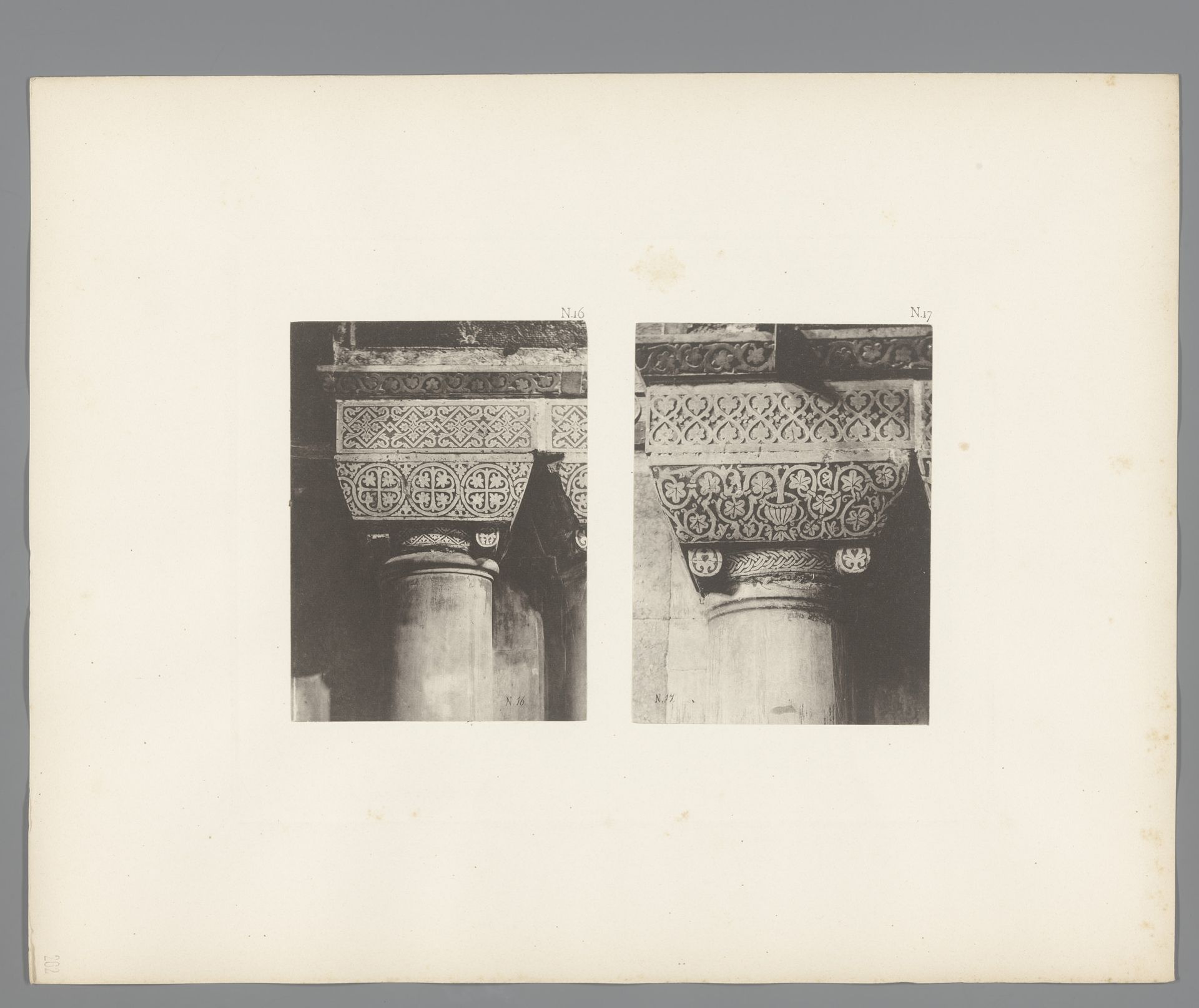
Carl Heinrich Jacobi made these two photographic studies of column capitals in Venice's San Marco, using an albumen silver print process. This technique, popular in the mid-19th century, involved coating paper with egg white and silver nitrate, creating a smooth surface for detailed images. Looking closely, you can see how the process captures the texture of the carved stone, each photograph revealing subtle differences in light and shadow, emphasizing the skill of the original stone carvers. The act of photographing these capitals also transforms them; Jacobi is not just documenting architecture but is framing the labor of countless artisans who contributed to the Basilica's construction. These photographs are therefore more than records, they are a commentary on craft, labor, and the cultural significance embedded within the built environment. By focusing on these details, Jacobi elevates the status of craft, inviting us to appreciate the artistry in something that might otherwise be overlooked.
Twee afbeeldingen van kapitelen van de San Marco in Venetië
before 1885

Artwork details
- Medium
- print, photography
- Dimensions
- height 311 mm, width 393 mm
- Copyright
- Rijks Museum: Open Domain
Tags
Comments
Share your thoughts
About this artwork
Carl Heinrich Jacobi made these two photographic studies of column capitals in Venice's San Marco, using an albumen silver print process. This technique, popular in the mid-19th century, involved coating paper with egg white and silver nitrate, creating a smooth surface for detailed images. Looking closely, you can see how the process captures the texture of the carved stone, each photograph revealing subtle differences in light and shadow, emphasizing the skill of the original stone carvers. The act of photographing these capitals also transforms them; Jacobi is not just documenting architecture but is framing the labor of countless artisans who contributed to the Basilica's construction. These photographs are therefore more than records, they are a commentary on craft, labor, and the cultural significance embedded within the built environment. By focusing on these details, Jacobi elevates the status of craft, inviting us to appreciate the artistry in something that might otherwise be overlooked.
Comments
Share your thoughts