1643 - 1691
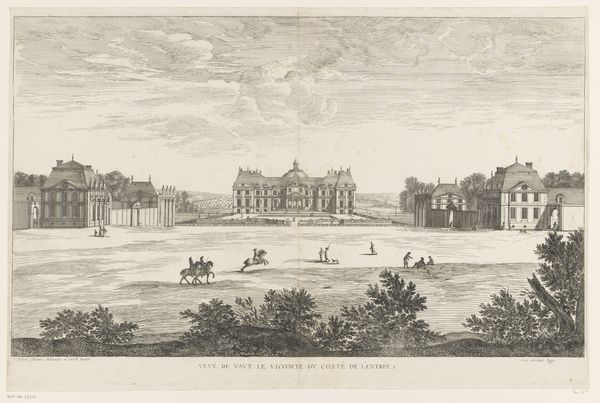
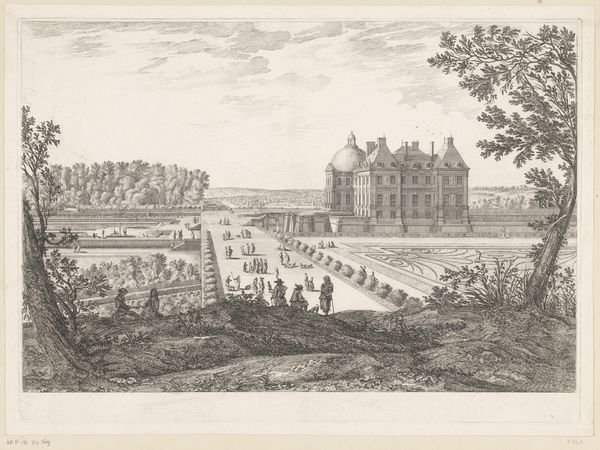
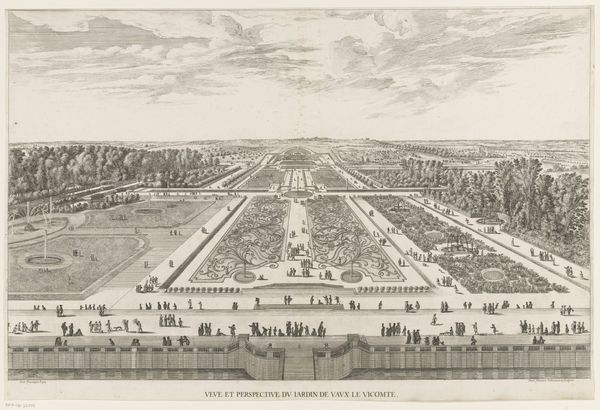
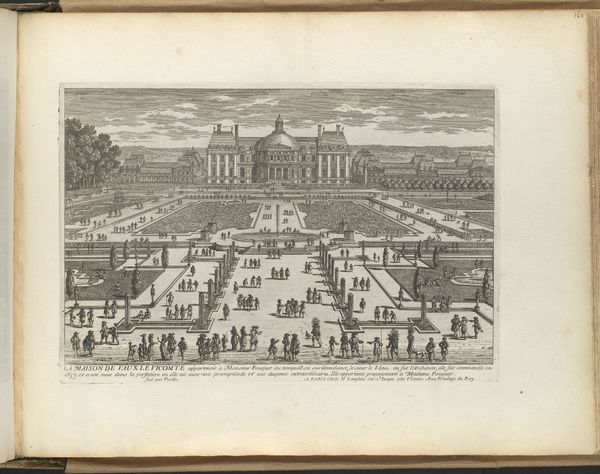
Gezicht op Vaux-le-Vicomte en de tuinen

Israel Silvestre
1621 - 1691Location
RijksmuseumListen to curator's interpretation
Curatorial notes
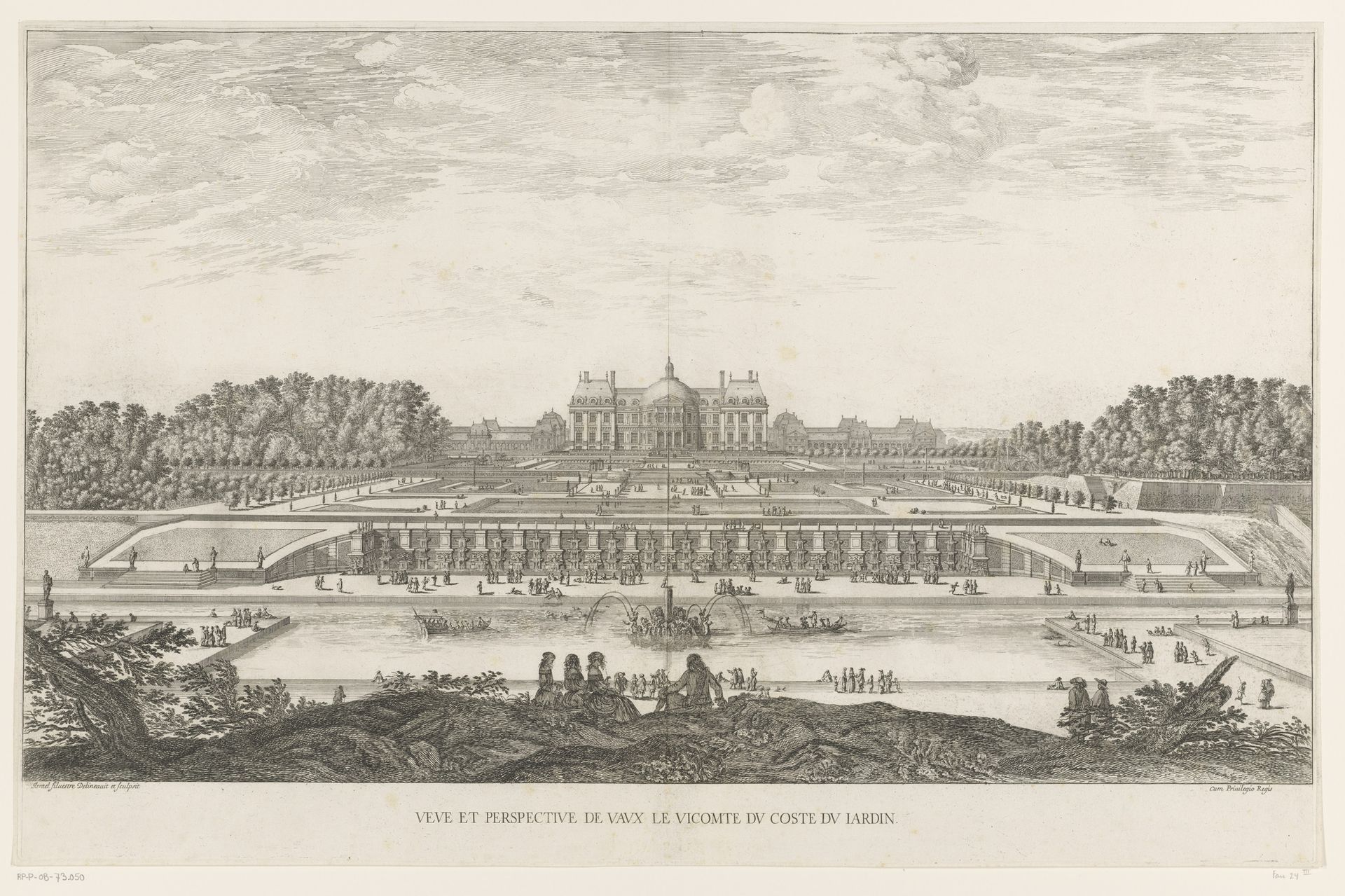
This print depicting the Château de Vaux-le-Vicomte and its gardens was made by Israel Silvestre in the 17th century. The work is an etching, a printmaking technique that relies on acid to cut into a metal plate, in this case likely copper. The graphic effect achieved depends on the precise application of the etching mordant, and the artist’s control of line. Silvestre was an expert in this technique. He used it to capture the scale of this ambitious building project, commissioned by Nicolas Fouquet, Louis XIV’s finance minister. Vaux-le-Vicomte was a display of Fouquet’s wealth, and it eventually led to his downfall. The sheer amount of labor required to build the Chateau and especially its extensive gardens, would have been considerable. Silvestre’s etching captures the magnitude of the project, and by extension, the social context of its creation. By focusing on the making of the print, and the making of the place it depicts, we can appreciate how this image is not just a representation, but a record of power, labor, and ambition.