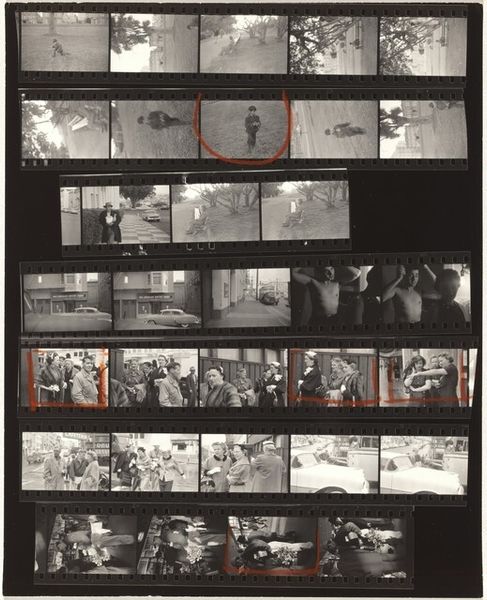
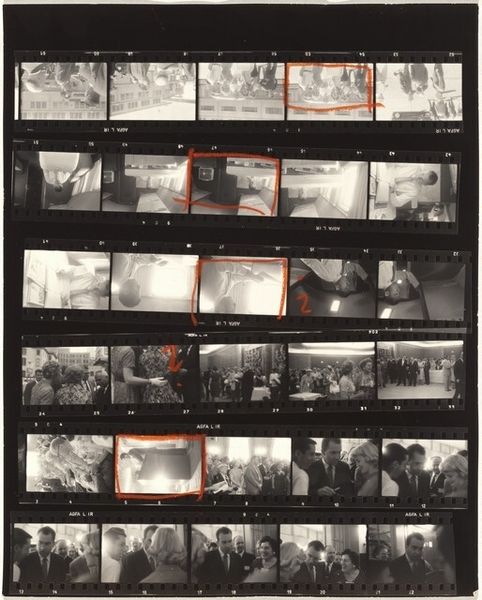
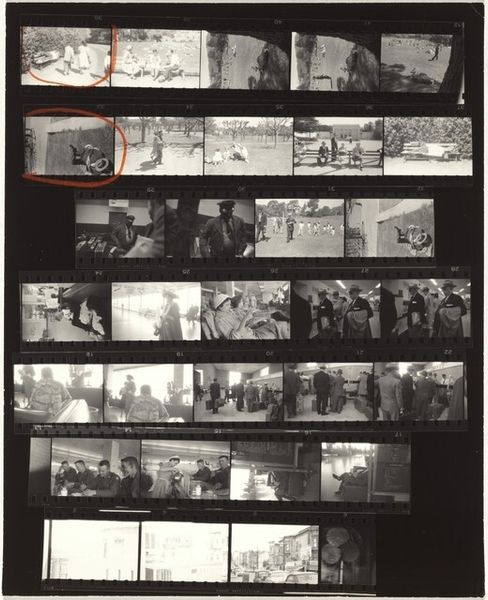
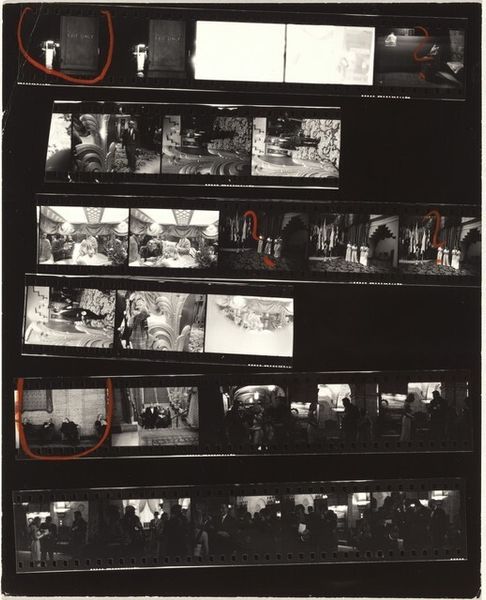
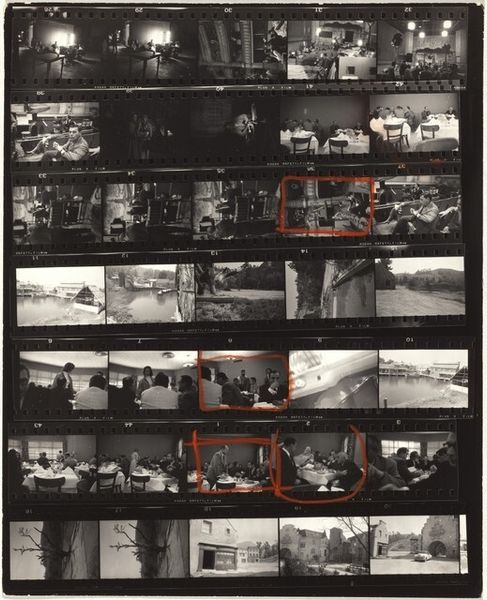
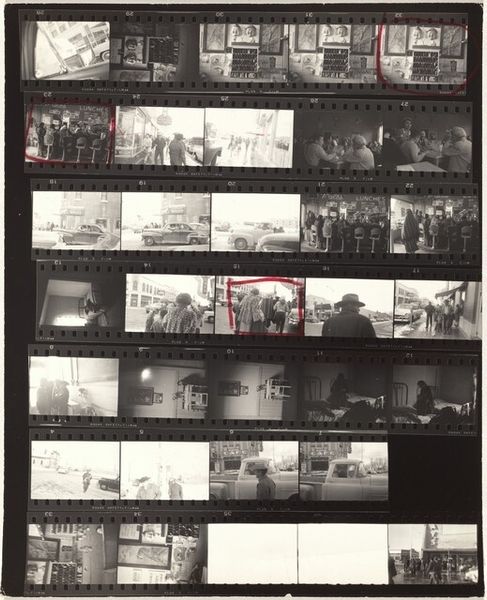
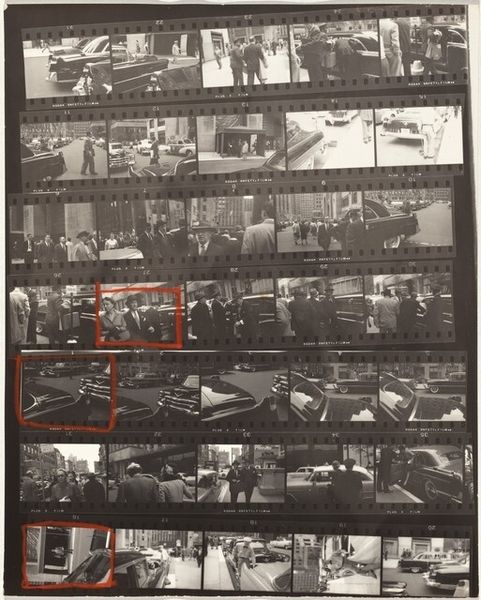
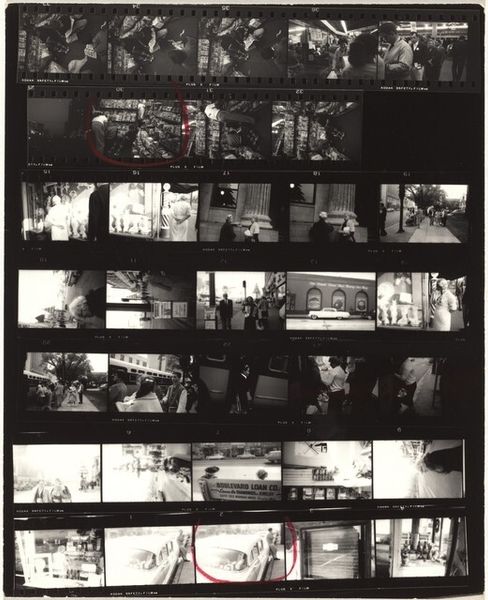
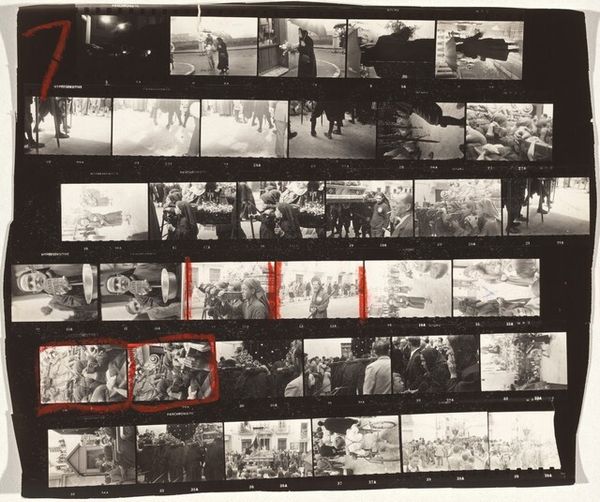
Guggenheim 538--Benediction of the Waters, Long Beach, California 1955 - 1956
0:00
0:00


photography
#
street-photography
#
photography
#
modernism
Dimensions: overall: 25.3 x 20.5 cm (9 15/16 x 8 1/16 in.)
Copyright: National Gallery of Art: CC0 1.0
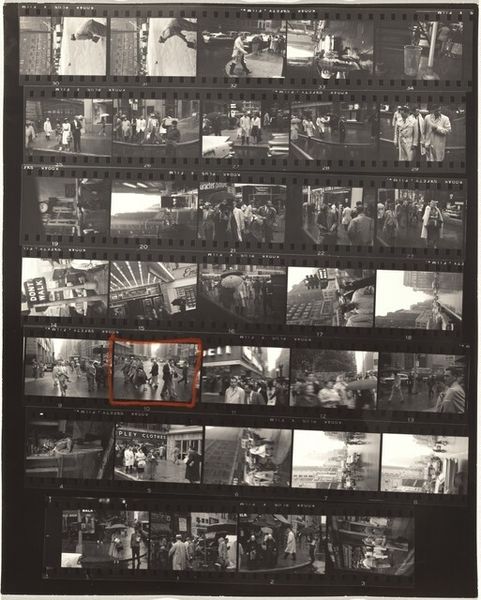
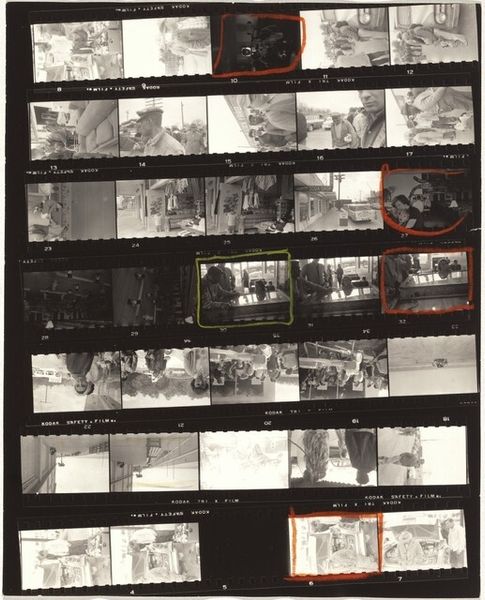
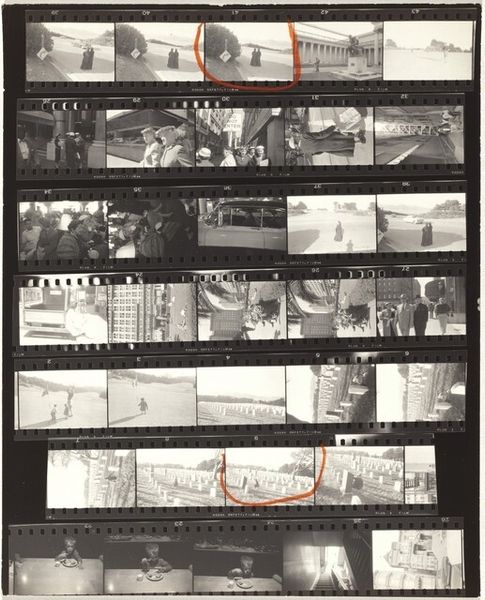
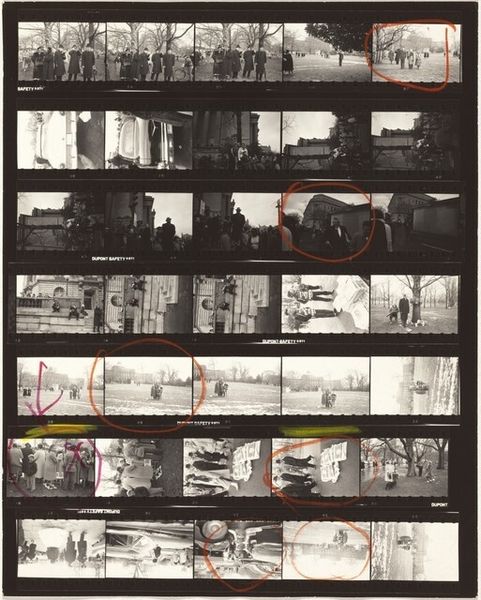
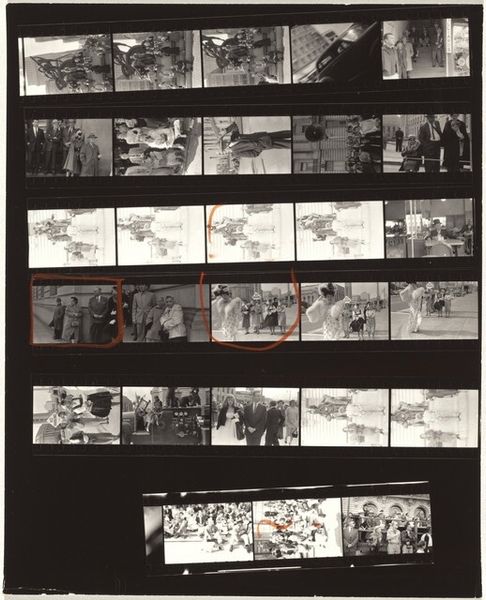
Editor: Here we have Robert Frank’s "Guggenheim 538--Benediction of the Waters, Long Beach, California," a gelatin silver print from 1955-1956. It looks like a contact sheet with many frames. The high contrast and documentary style feel so raw and immediate. What jumps out at you? Curator: Note the texture of the film strip itself, the physicality of the medium is prominent. This accentuates the fragmentary nature of perception. Each frame is meticulously organized, constructing a sequence which demands our attention. We are not merely observers, but active participants deciphering relationships and grasping at meaning within a designed constellation. Editor: So the form itself dictates how we interpret the scenes? Curator: Precisely. Frank challenges traditional photographic representation by presenting the world in a fragmented manner. Observe the arrangement, each frame a distinct composition, yet intimately linked. Light and shadow create contrasts. It is through these relationships of tone and form that Frank communicates not a story, but rather, a sensibility, or emotion. Editor: Is there an underlying system organizing the disparate images? Curator: Consider the concept of repetition and variation. Motifs reappear and shift in subtle ways, forcing a continual process of comparison. The images are linked through shape, contrast, and texture, revealing connections between scenes. It’s this constant play that evokes a sense of continuity and yet also instability. Editor: I never would have thought of approaching photography like that! It shifts my focus to the structure and the arrangement within the image itself. Curator: Exactly! The meaning lies within this visual syntax. We gain insights from exploring the intrinsic relationships on display in front of us.
Comments
No comments
Be the first to comment and join the conversation on the ultimate creative platform.
 Collect
 React
React Comment
More like this