About this artwork
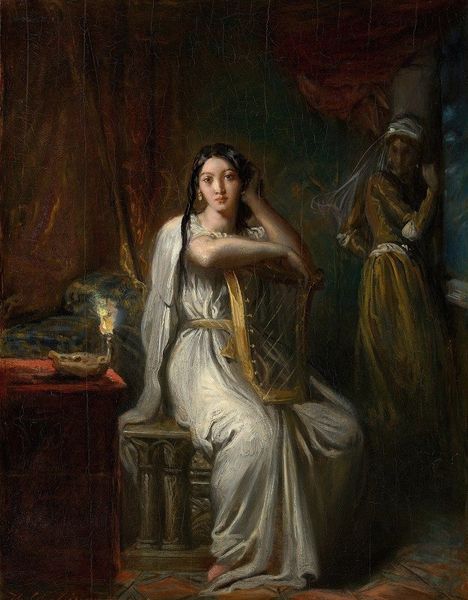
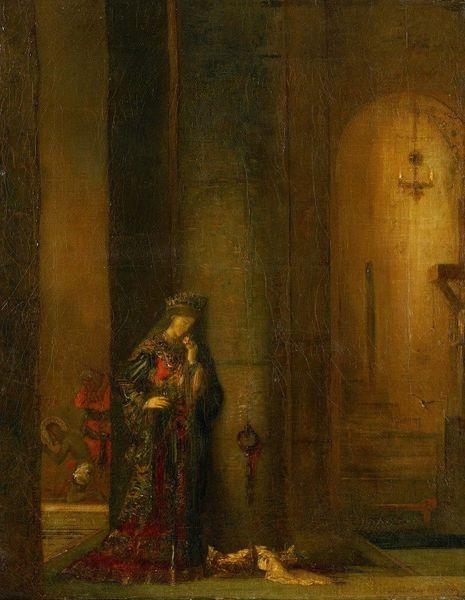
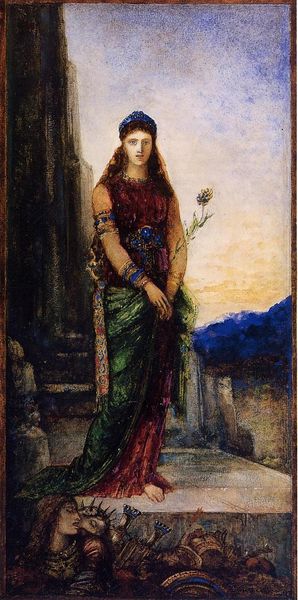
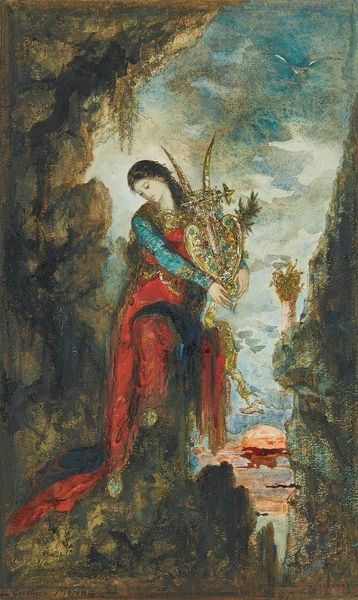
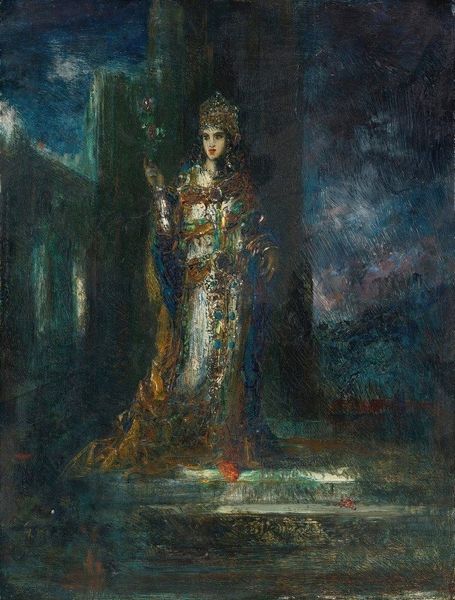
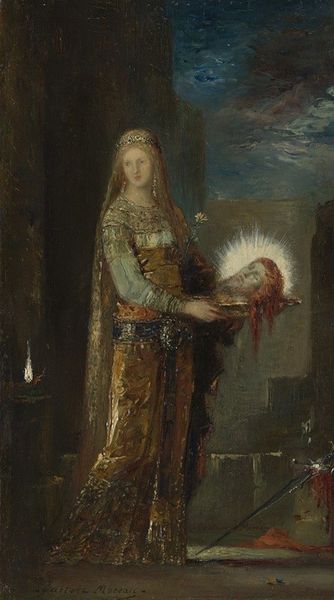
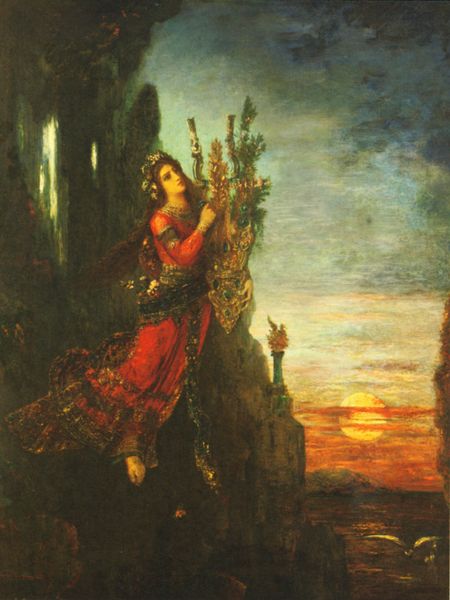
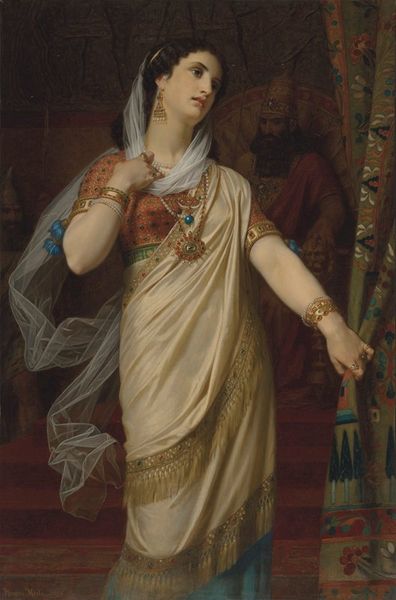
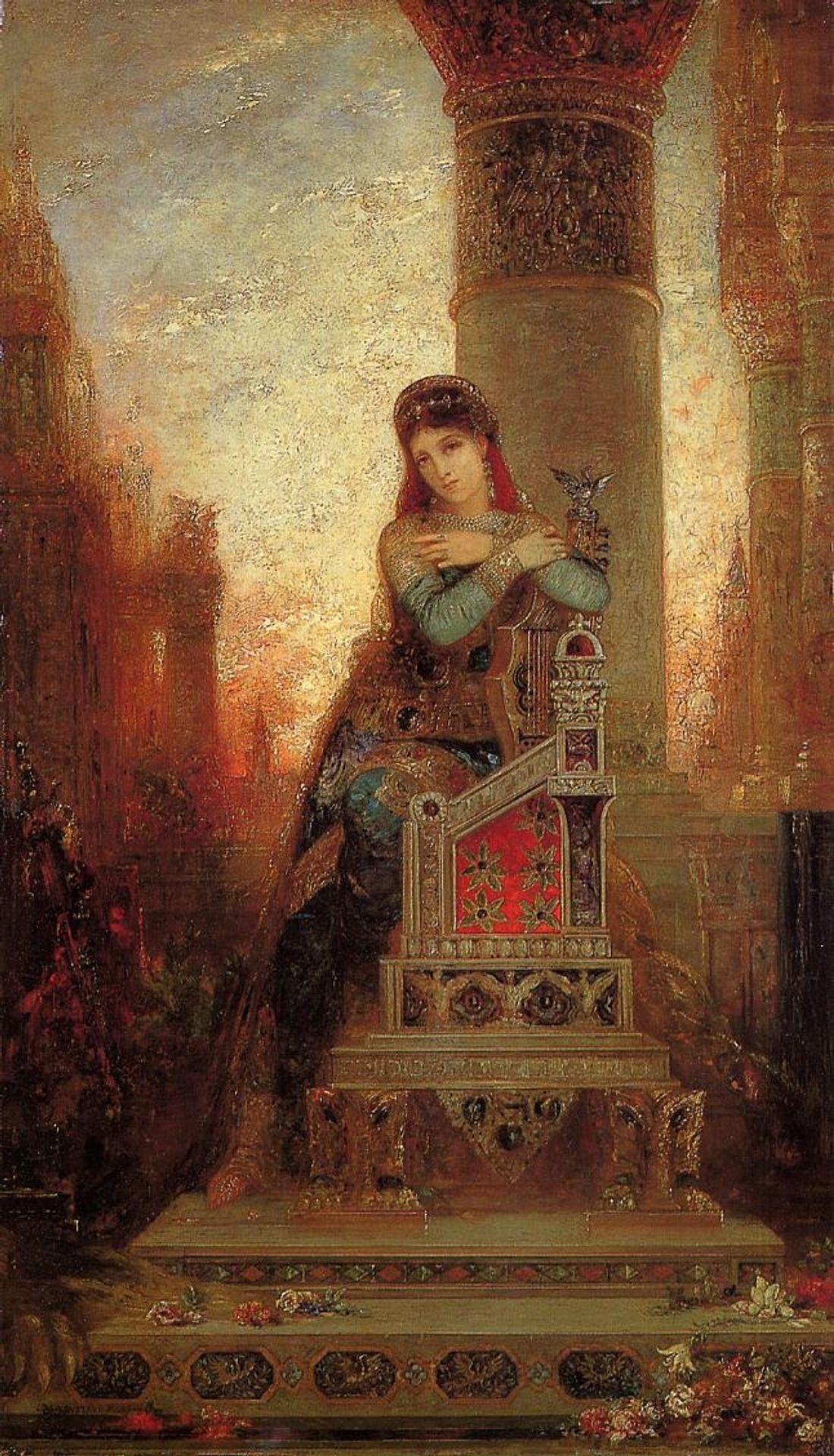
Gustave Moreau painted this Desdemona in oils, capturing a tragic figure from Shakespeare's Othello. Note how the composition is dominated by the figure of Desdemona, seated and posed with an aura of melancholic resignation. The symbols here speak volumes. The ornate throne with what looks like a phoenix may imply power and rebirth, contrasting sharply with Desdemona's fate. Yet, her posture, with arms crossed, almost protectively, hints at vulnerability and foreboding. Consider the motif of the tragic heroine throughout history—from ancient Greek tragedies to medieval Christian martyrs. Desdemona, like them, embodies innocence destroyed. It is a cycle where we see the emotional power of such figures lies in their ability to evoke empathy and terror, a mirror reflecting our own fears of injustice and mortality. See how these gestures and visual cues have been passed down, each era adding its own layer to the collective unconscious. The image stirs a deep, subconscious recognition of mortality. It’s a poignant reminder of how certain archetypes resonate across time, constantly resurfacing and evolving in our cultural psyche.

Artwork details
- Dimensions
- 40 x 68 cm
- Location
- Private Collection
- Copyright
- Public domain
Comments
No comments
About this artwork
Gustave Moreau painted this Desdemona in oils, capturing a tragic figure from Shakespeare's Othello. Note how the composition is dominated by the figure of Desdemona, seated and posed with an aura of melancholic resignation. The symbols here speak volumes. The ornate throne with what looks like a phoenix may imply power and rebirth, contrasting sharply with Desdemona's fate. Yet, her posture, with arms crossed, almost protectively, hints at vulnerability and foreboding. Consider the motif of the tragic heroine throughout history—from ancient Greek tragedies to medieval Christian martyrs. Desdemona, like them, embodies innocence destroyed. It is a cycle where we see the emotional power of such figures lies in their ability to evoke empathy and terror, a mirror reflecting our own fears of injustice and mortality. See how these gestures and visual cues have been passed down, each era adding its own layer to the collective unconscious. The image stirs a deep, subconscious recognition of mortality. It’s a poignant reminder of how certain archetypes resonate across time, constantly resurfacing and evolving in our cultural psyche.
Comments
No comments