


Curatorial notes
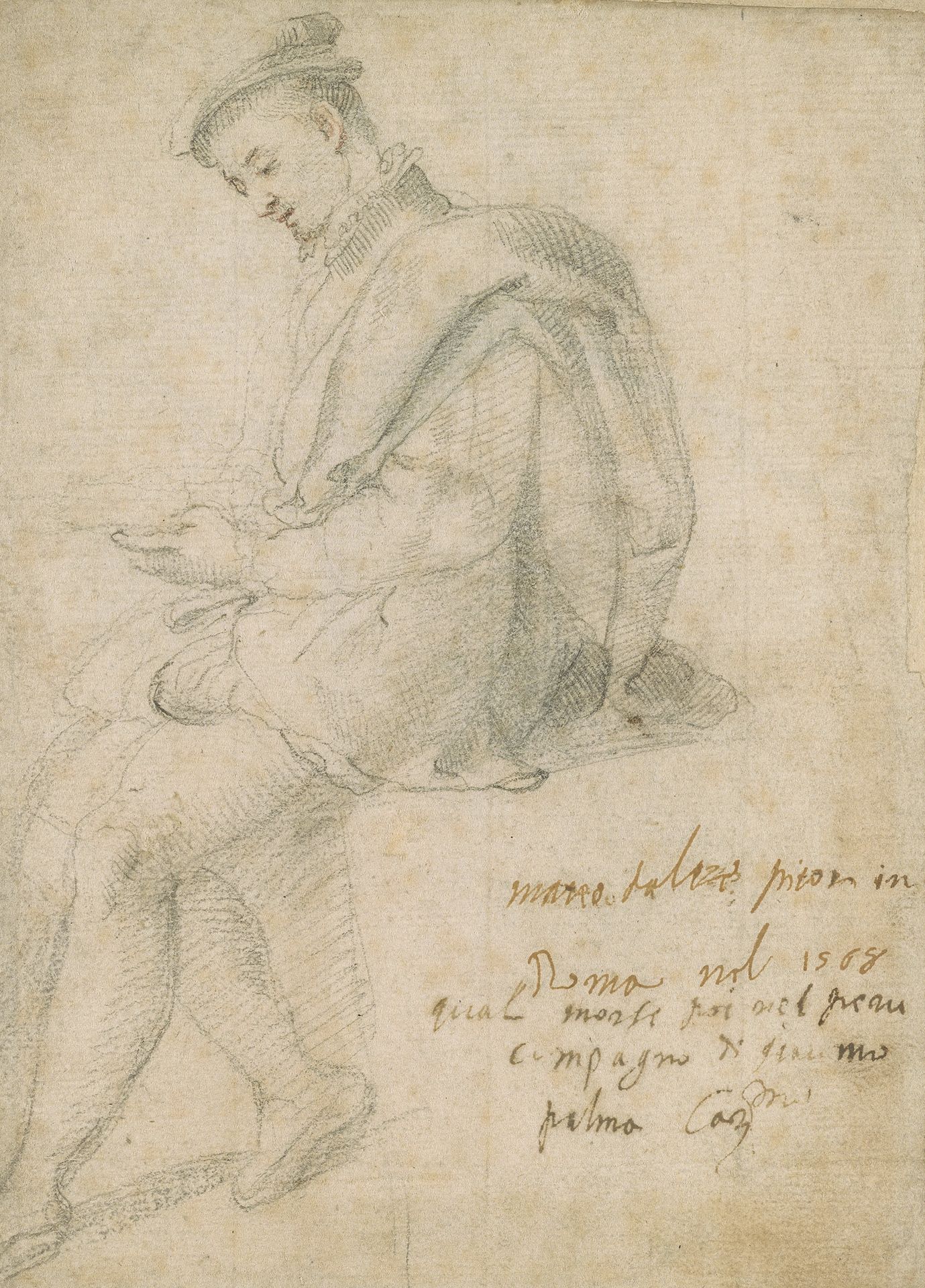
Curator: What strikes me about this drawing is its incredible immediacy. The artist, Palma il Giovane, really captured a sense of lived experience here. Editor: Absolutely. My eye is drawn to the paper itself. The drawing appears to be rendered in graphite, a material easily obtained and manipulated. The weave and slight staining suggest an aged quality that heightens its textural richness. It prompts thoughts on the accessibility and consumption of art during that period. Curator: I agree. And if we look closer, we’ll note that this drawing depicts "The Painter Matteo da Lecce.” This portrayal gives us a rare glimpse into the lives of artists themselves during the Renaissance. Editor: Precisely. And it is key to know who funded Palma il Giovane to commission work, but even who supplied him with the physical goods with which to realize such figuration. Those supply networks also shaped the cultural reach and power of artistic trends at this moment in time. Curator: Definitely. Consider the role of patronage within artistic networks of the time. Who were Matteo da Lecce's patrons? Understanding their status and influence helps illuminate why he might be deemed worthy of depiction by someone of Palma il Giovane's stature. Editor: It also shows an evolving sense of artistic identity and awareness within the culture. The sketch's presence, and how and where it was displayed – and the value society gave to its display - can shape what value was placed upon the artistic class as a whole. The ability for even just wealthy populations to have access to see "The Painter Matteo da Lecce" increased interest in, demand for and prestige in employing talented draughtsmen. Curator: Looking closely, I think we can observe not just a portrait but a commentary on the importance of the artistic life. This portrayal becomes not just a personal likeness but an emblem of the burgeoning role of the artist in Renaissance society. Editor: That's interesting; for me it comes back to that accessible material: graphite. Think of the laborers needed to mine graphite from the earth, manufacture drawing instruments. It’s quite sobering to acknowledge how the making of art like this, of representing this man, relies so much on collective social labor. Curator: A stimulating perspective. I see now the layered relationships and systems implicit even within such a simple, accessible form as this drawing. Editor: Thank you. For me it helps reinforce my initial impression of its power and how artworks are the consequence of economic choices.