1765 - 1775
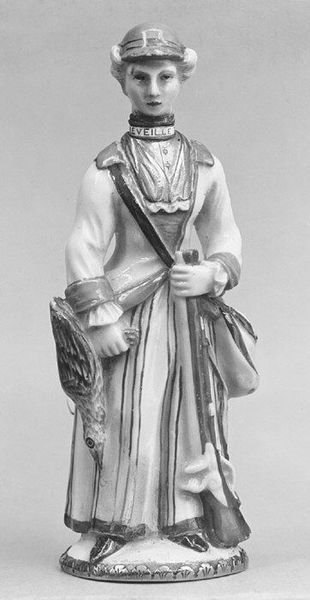
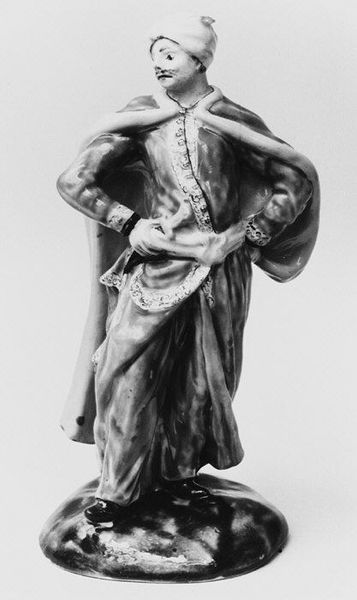
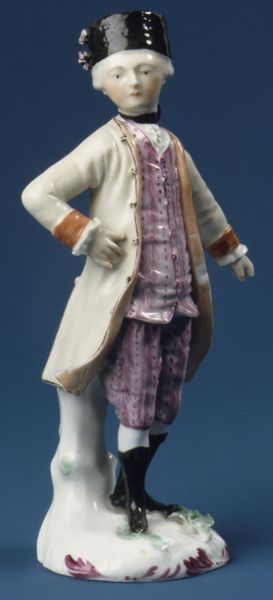
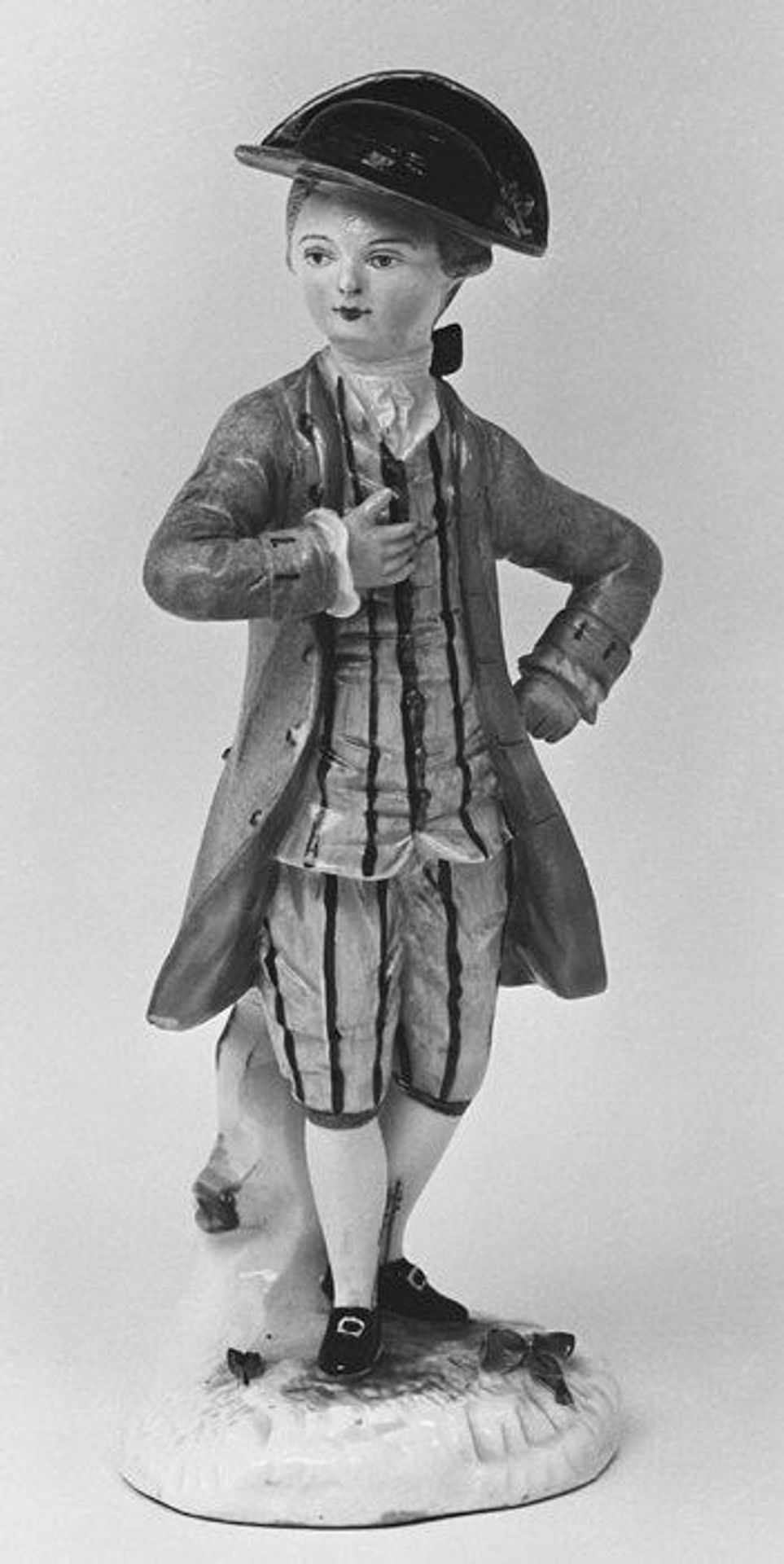
Boy (one of a pair)

Fulda Pottery and Porcelain Manufactory
1764 - 1789
The Metropolitan Museum of Art
Metropolitan Museum of Art, New York, NYListen to curator's interpretation
Curatorial notes
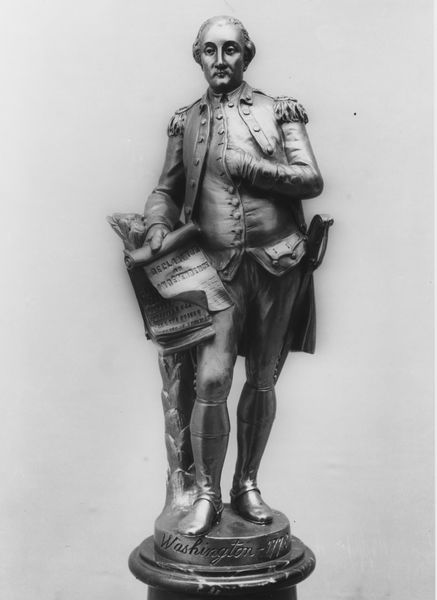
This porcelain figure, a "Boy" made by the Fulda Pottery and Porcelain Manufactory, embodies the visual lexicon of its time. The boy’s hand, deliberately placed inside his waistcoat, speaks volumes. In its most straightforward sense, it echoes gestures of authority and trustworthiness, seen in countless portraits of statesmen and nobles across Europe. Yet, this gesture has deeper roots. Think of ancient orators, their hands posed to command attention, conveying not just power, but also a sense of inner calm. This motif recurs through centuries, shifting in meaning, sometimes signifying integrity, at others, hidden ambition. Consider how the same gesture appears in Renaissance portraiture, conveying a blend of confidence and restraint, revealing how cultural memory shapes our understanding of these symbols. The hand placed over the heart might also be seen as a symbol of honor, a pledge, and the intense psychological weight it carries. This symbolic language engages us on a subconscious level, connecting past and present in a continuous cycle.