About this artwork
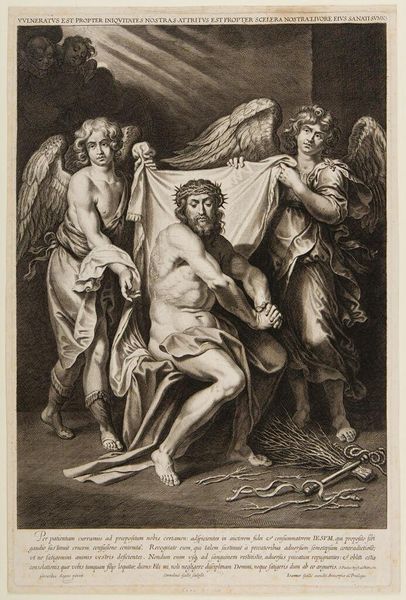
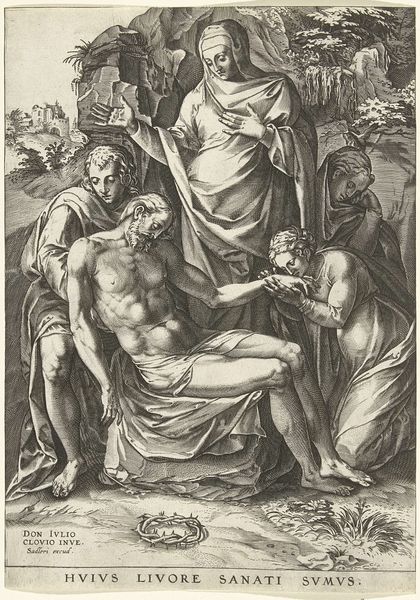
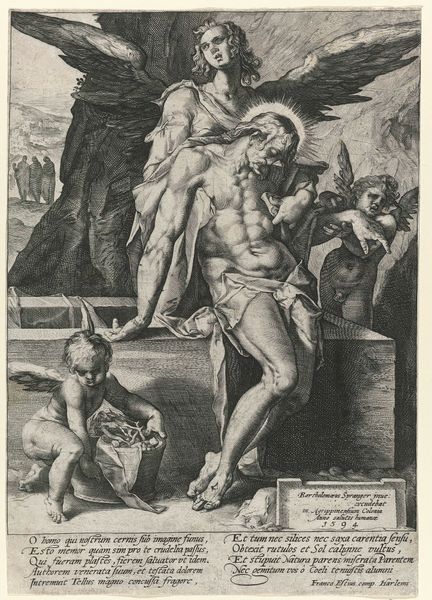
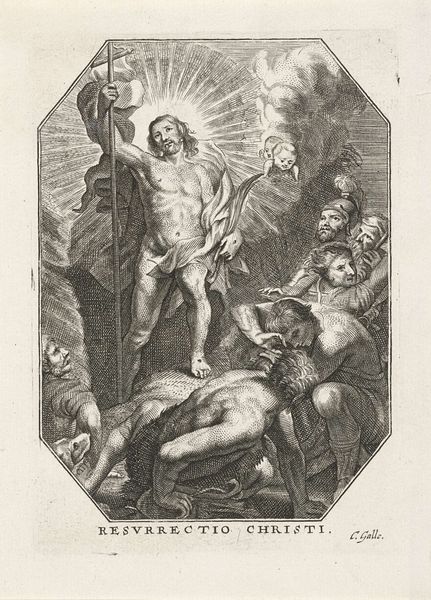
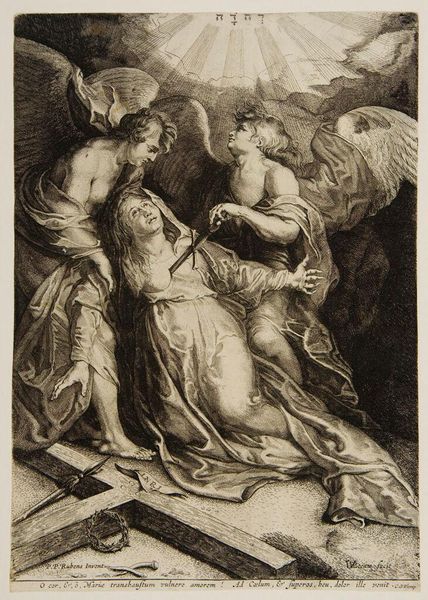
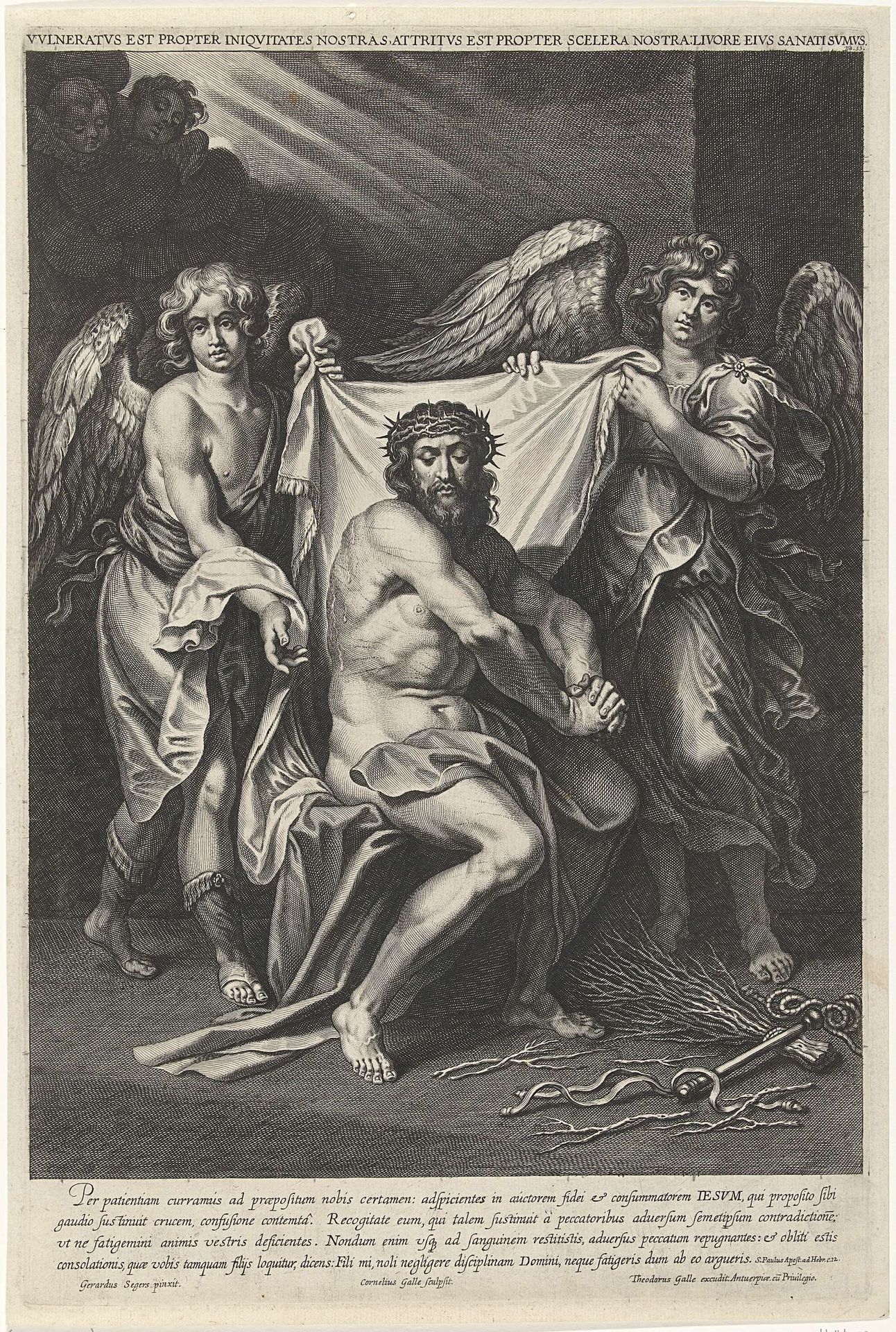
Cornelis Galle I created this engraving, "Christus als Man van Smarten met twee engelen en twee cherubijnen," in the late 16th or early 17th century, a period marked by religious and political conflict in Europe. This image presents a vulnerable, humanized Christ. Stripped bare, with the crown of thorns digging into his brow, he sits supported by angels, their expressions a mix of sorrow and reverence. Galle, working in the tradition of devotional prints, invites the viewer into an intimate, empathetic contemplation of Christ's suffering. The male angels, draped in what seems to be Roman garb, attend to Christ. This choice could reflect an artistic effort to blend classical and Christian imageries, possibly aiming to appeal to a broader, more diverse audience. In doing so, Galle challenges us to consider whose stories are deemed worthy of representation and how these representations uphold or subvert existing power structures.
Christus als Man van Smarten met twee engelen en twee cherubijnen
1586 - 1633

Cornelis Galle I
1576 - 1650Location
RijksmuseumArtwork details
- Medium
- print, engraving
- Dimensions
- height 464 mm, width 312 mm
- Location
- Rijksmuseum
- Copyright
- Rijks Museum: Open Domain
Tags
Comments
Share your thoughts
About this artwork
Cornelis Galle I created this engraving, "Christus als Man van Smarten met twee engelen en twee cherubijnen," in the late 16th or early 17th century, a period marked by religious and political conflict in Europe. This image presents a vulnerable, humanized Christ. Stripped bare, with the crown of thorns digging into his brow, he sits supported by angels, their expressions a mix of sorrow and reverence. Galle, working in the tradition of devotional prints, invites the viewer into an intimate, empathetic contemplation of Christ's suffering. The male angels, draped in what seems to be Roman garb, attend to Christ. This choice could reflect an artistic effort to blend classical and Christian imageries, possibly aiming to appeal to a broader, more diverse audience. In doing so, Galle challenges us to consider whose stories are deemed worthy of representation and how these representations uphold or subvert existing power structures.
Comments
Share your thoughts