About this artwork
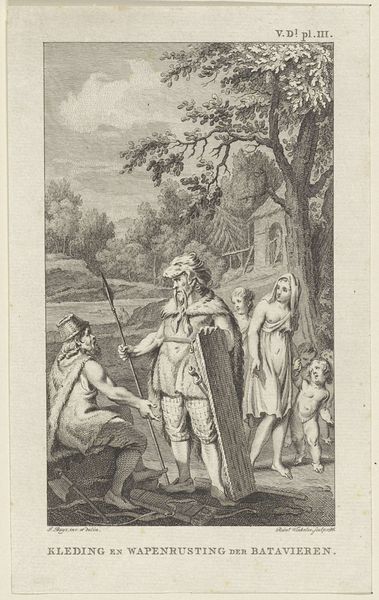
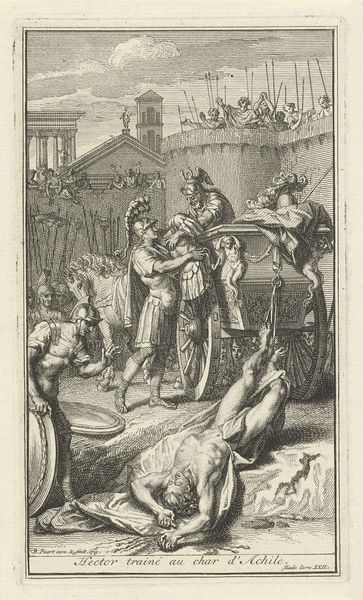
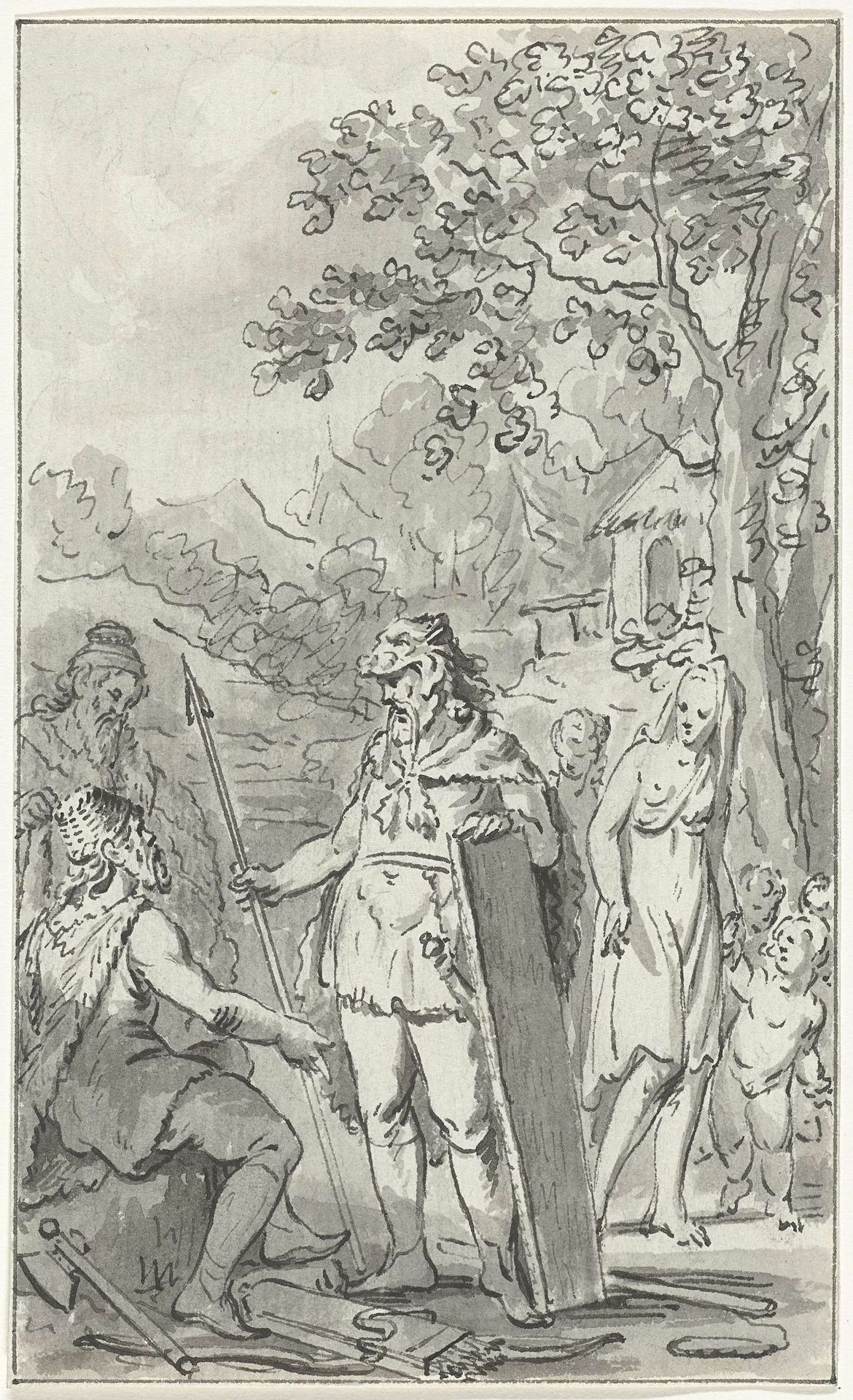
Jacobus Buys created this pen and wash drawing, "Clothing and Armor of the Batavians", in the eighteenth century. Here we see a depiction of ancient Batavian warriors, their attire adorned with potent symbols of strength. Observe the prominent figure cloaked in what appears to be a lion's pelt. This echoes the ancient hero motif, linking the wearer to the ferocity and invincibility associated with the king of beasts. This symbol transcends time; we find similar depictions in ancient Near Eastern art, where rulers donned lion skins to manifest their power. The symbolism is not merely decorative; it speaks to the subconscious desire to embody primal strength. It reminds me of a psychological projection, where attributes are transferred from one entity to another. Note how the symbols of strength have evolved, continuing to shape how we perceive our leaders and heroes, reflecting an ongoing dialogue between our present and ancestral past.
Kleding en wapenrusting van de Bataven 1784 - 1786

Jacobus Buys
1724 - 1801Location
RijksmuseumArtwork details
- Dimensions
- height 148 mm, width 90 mm
- Location
- Rijksmuseum
- Copyright
- Rijks Museum: Open Domain
Comments
No comments
About this artwork
Jacobus Buys created this pen and wash drawing, "Clothing and Armor of the Batavians", in the eighteenth century. Here we see a depiction of ancient Batavian warriors, their attire adorned with potent symbols of strength. Observe the prominent figure cloaked in what appears to be a lion's pelt. This echoes the ancient hero motif, linking the wearer to the ferocity and invincibility associated with the king of beasts. This symbol transcends time; we find similar depictions in ancient Near Eastern art, where rulers donned lion skins to manifest their power. The symbolism is not merely decorative; it speaks to the subconscious desire to embody primal strength. It reminds me of a psychological projection, where attributes are transferred from one entity to another. Note how the symbols of strength have evolved, continuing to shape how we perceive our leaders and heroes, reflecting an ongoing dialogue between our present and ancestral past.
Comments
No comments