About this artwork
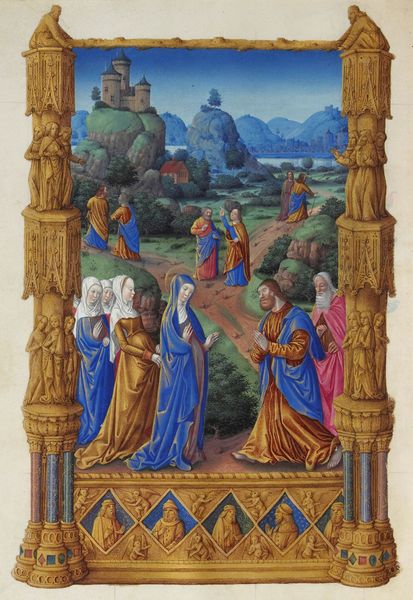
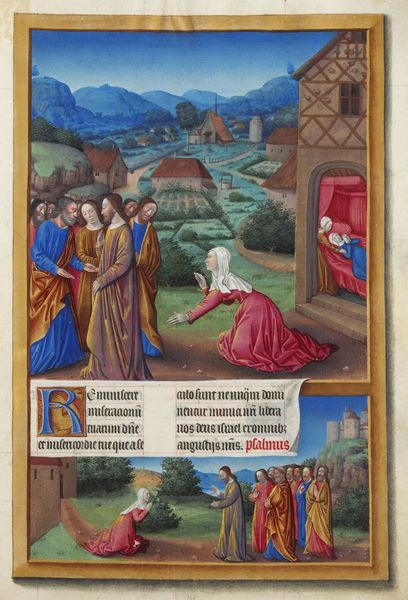
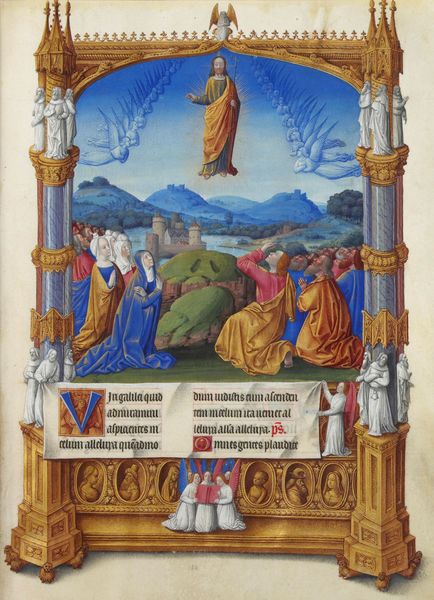
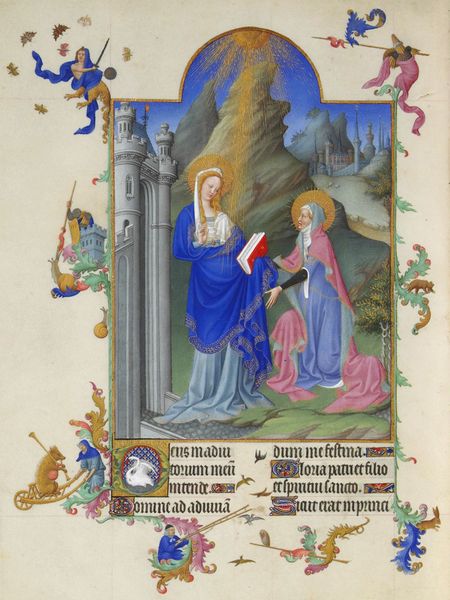
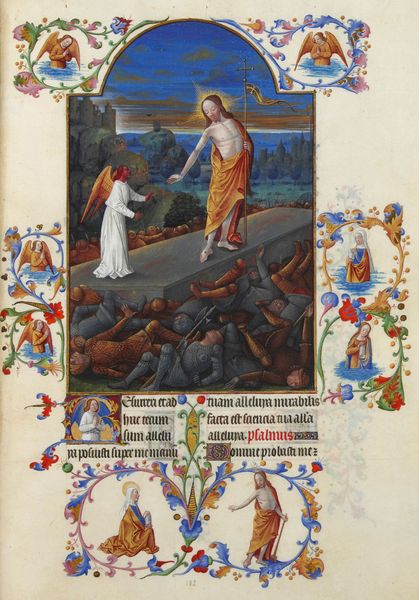
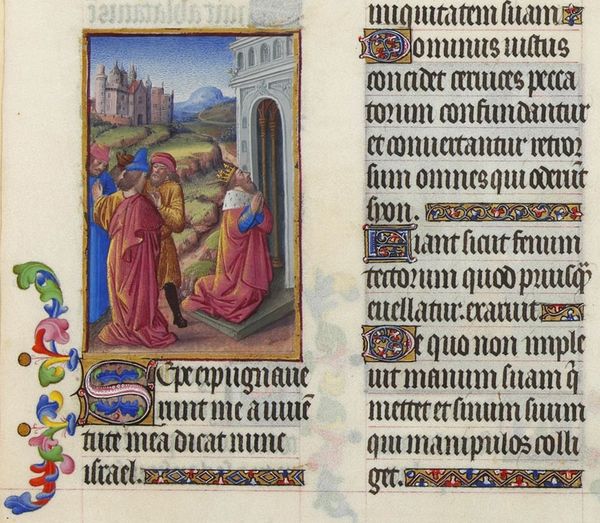
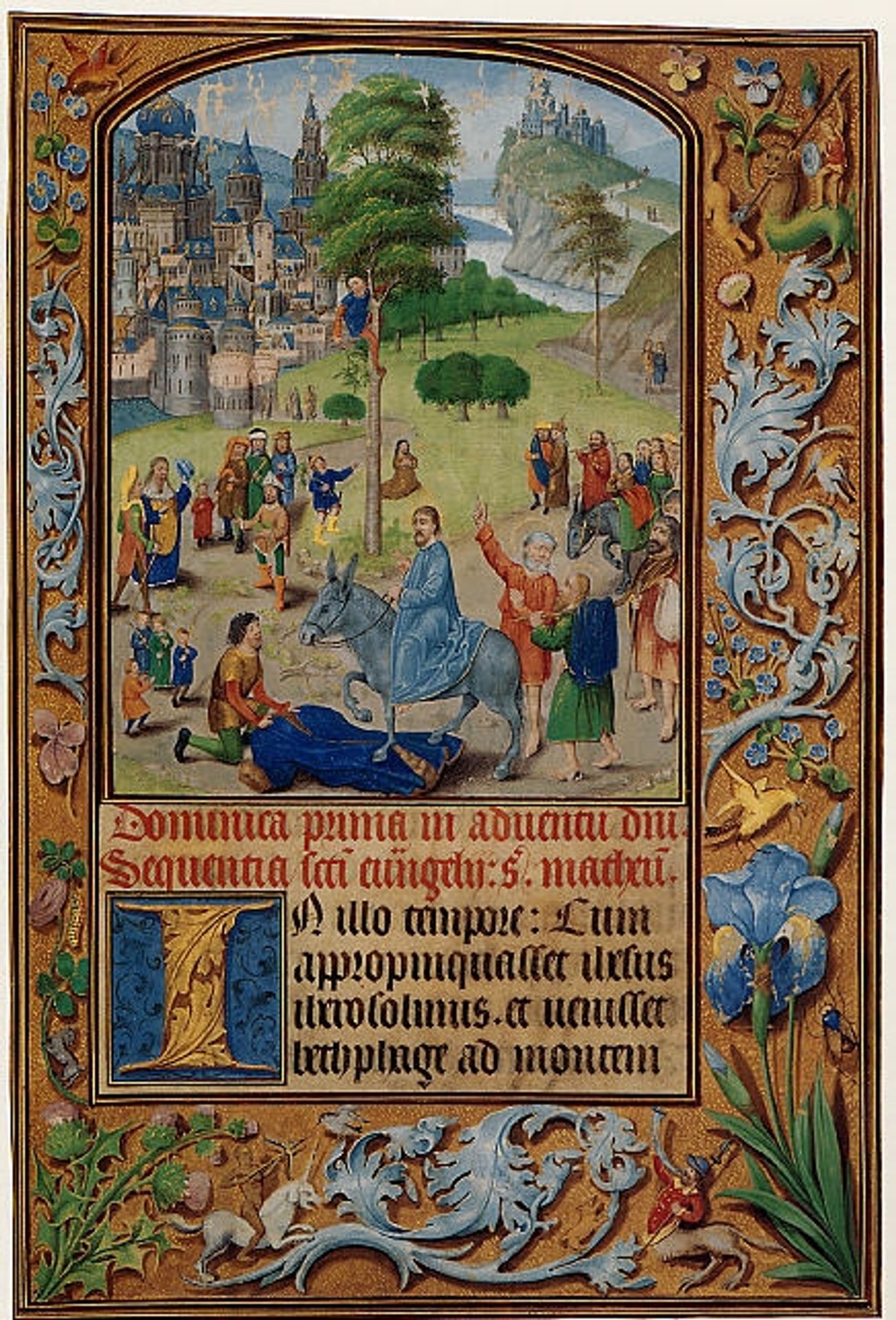
"Christ's Entry into Jerusalem" was created in the Southern Netherlands. Its unknown maker used ink and tempera, perhaps with gold, on vellum. Imagine yourself in the late medieval period, where religious narratives weren’t just stories, but a reflection of the social and political order. This image is part of a prayer book, meant to guide devotion. But look closer: Whose Jerusalem is this? The architecture reflects the towns of the Netherlands rather than ancient Jerusalem. The people are dressed in contemporary clothing from the region, making the story of Christ both familiar and immediate to its viewers. The choice to represent Christ's entry in this way collapses time, and allows for a merging of the biblical narrative with everyday life. There is an emotional complexity: as we reflect on the narratives of faith, how do we also acknowledge the power dynamics inherent in religious representation? How does this piece invite its audience to reflect on their place within both their faith and society?
Christ's Entry into Jerusalem
1480 - 1490

Southern Netherlands
@southernnetherlands
The Metropolitan Museum of Art
Metropolitan Museum of Art, New York, NYArtwork details
- Medium
- tempera, painting
- Dimensions
- 10 13/16 x 7 1/4 in. (27.4 x 18.4cm) Miniature: 6 1/8 x 4 7/8 in. (15.6 x 12.4cm)
- Location
- Metropolitan Museum of Art, New York, NY
- Copyright
- Public Domain
Tags
Comments
Share your thoughts
About this artwork
"Christ's Entry into Jerusalem" was created in the Southern Netherlands. Its unknown maker used ink and tempera, perhaps with gold, on vellum. Imagine yourself in the late medieval period, where religious narratives weren’t just stories, but a reflection of the social and political order. This image is part of a prayer book, meant to guide devotion. But look closer: Whose Jerusalem is this? The architecture reflects the towns of the Netherlands rather than ancient Jerusalem. The people are dressed in contemporary clothing from the region, making the story of Christ both familiar and immediate to its viewers. The choice to represent Christ's entry in this way collapses time, and allows for a merging of the biblical narrative with everyday life. There is an emotional complexity: as we reflect on the narratives of faith, how do we also acknowledge the power dynamics inherent in religious representation? How does this piece invite its audience to reflect on their place within both their faith and society?
Comments
Share your thoughts