About this artwork
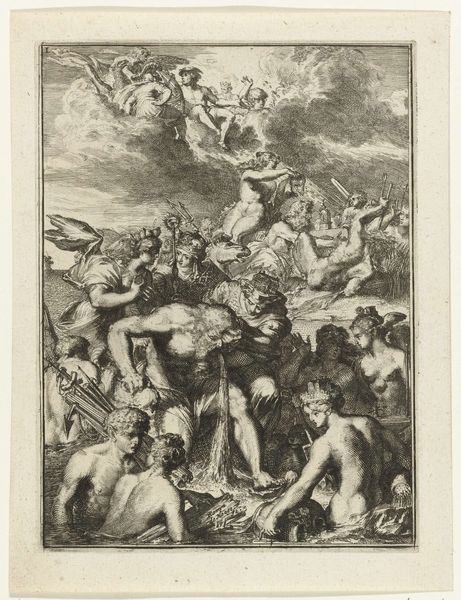
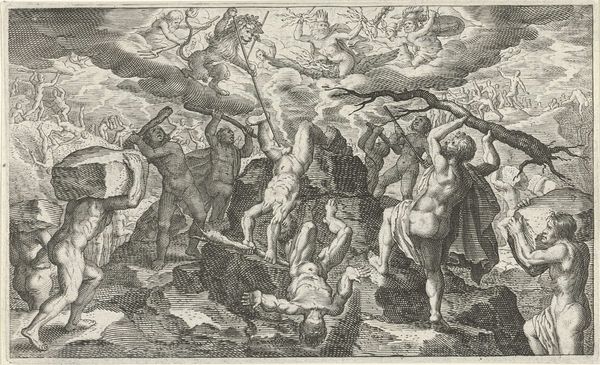
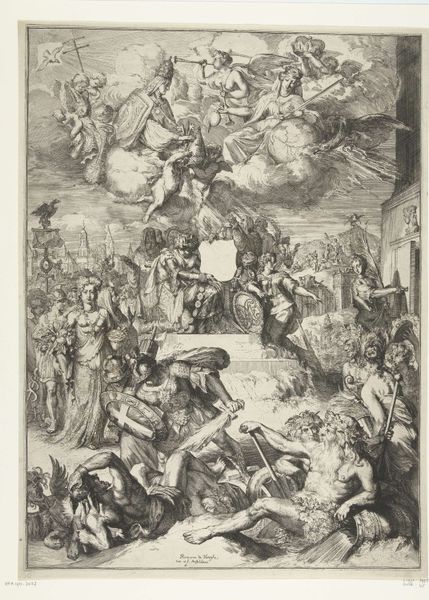
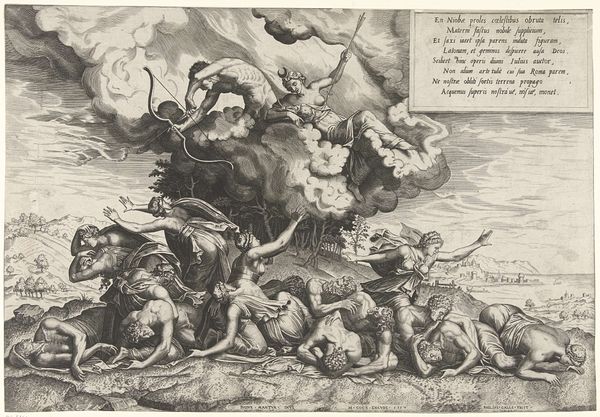
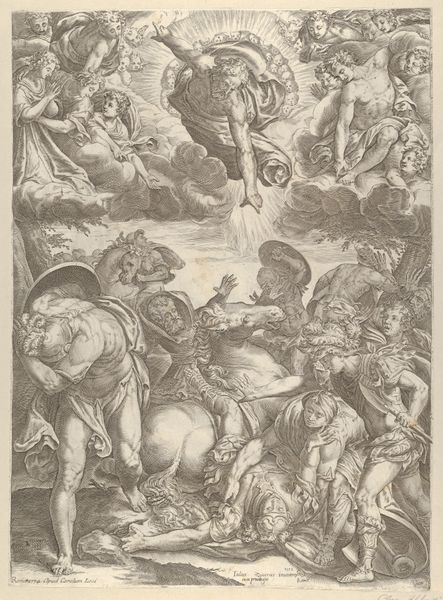
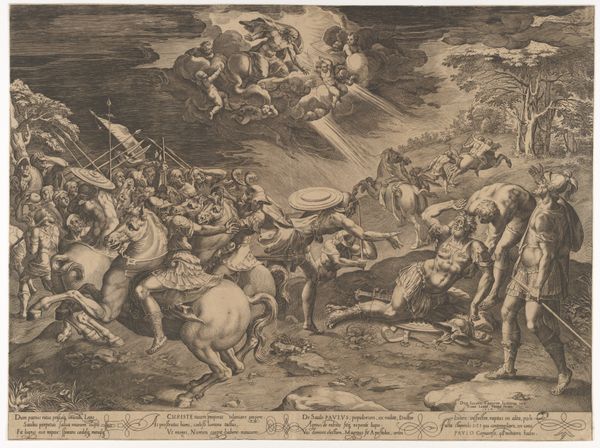
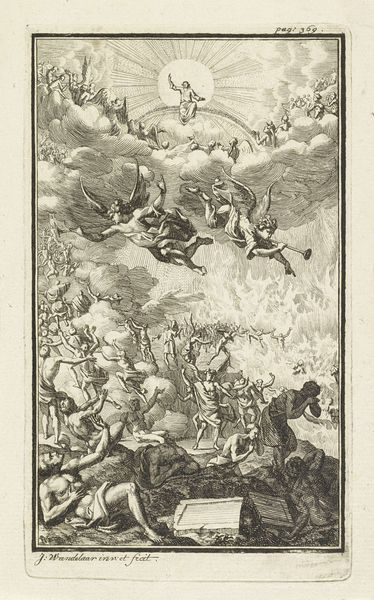
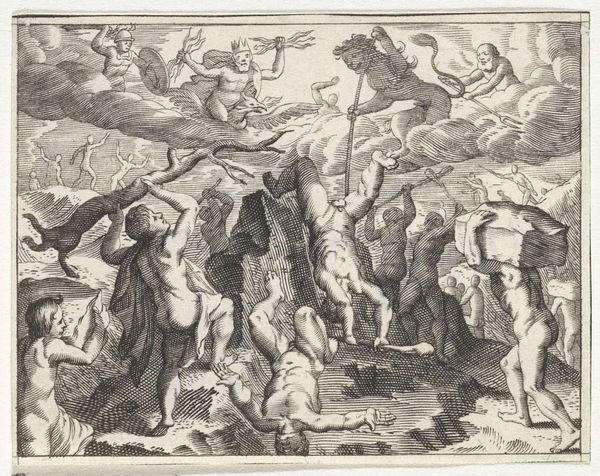
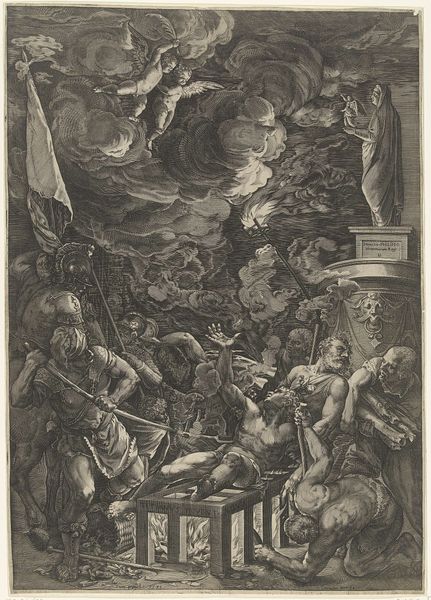
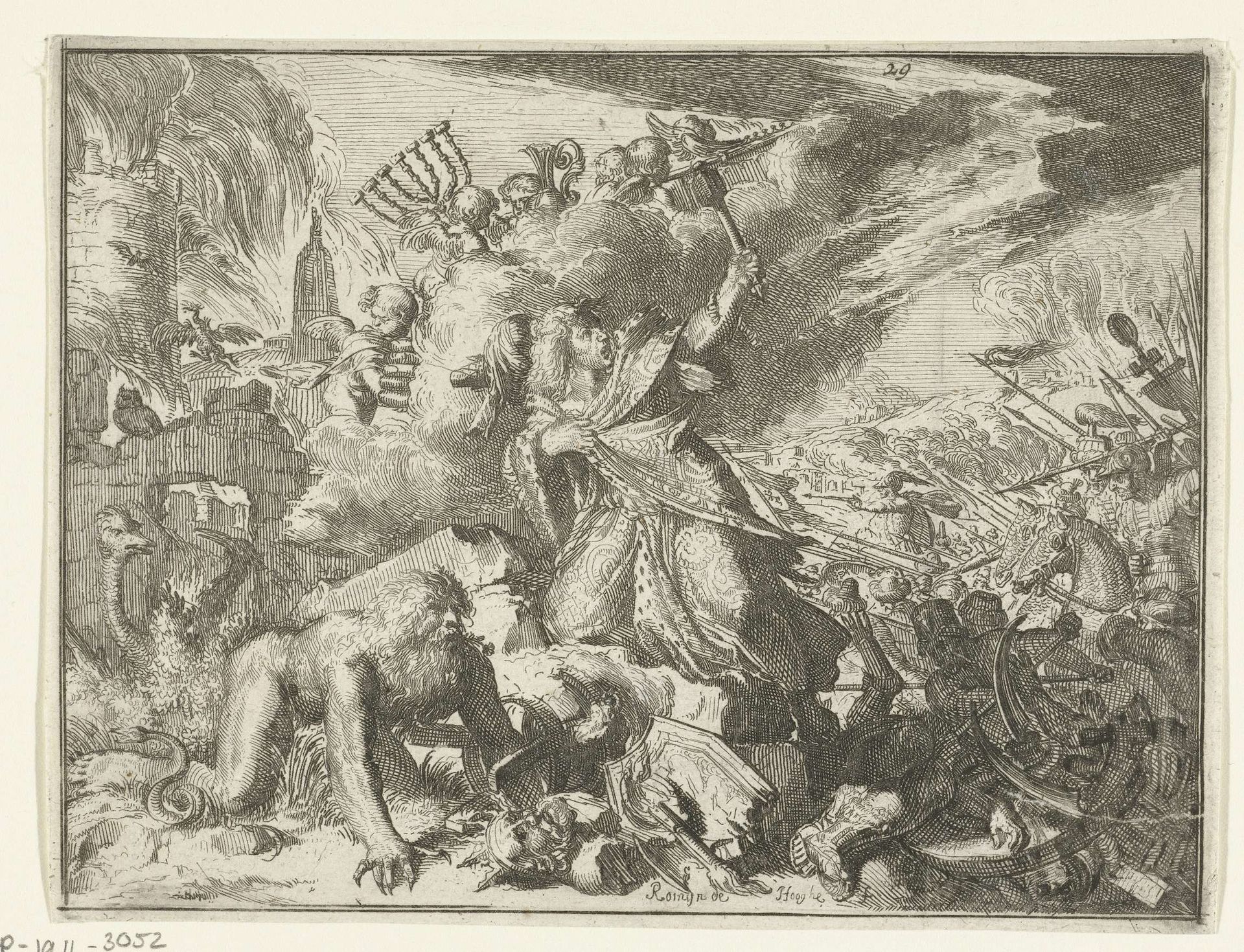
Romeyn de Hooghe created this print, "Man gehuld in mantel wordt aangevallen door ruiters", sometime between 1660 and 1708 using etching. It's an allegorical scene, thick with political commentary, reflecting the tumultuous period of Dutch history. The central figure, draped in a mantle, is under attack by horsemen. A monster lurks nearby, while in the background, a city burns. Above, figures float in the clouds, seemingly offering support or perhaps judgment. De Hooghe was a master of propaganda, and his prints often served to sway public opinion during the Franco-Dutch War and other conflicts. The visual codes in this etching—the burning city, the attacking horsemen, the allegorical figures—speak to the political and social upheavals of the time. By examining historical texts, pamphlets, and other visual materials from the period, we can decode the specific events and figures that De Hooghe was referencing. Art like this demonstrates how deeply intertwined art is with the social and institutional forces of its time.
Man gehuld in mantel wordt aangevallen door ruiters
1655 - 1708

Romeyn de Hooghe
1645 - 1708Location
RijksmuseumArtwork details
- Medium
- print, engraving
- Dimensions
- height 127 mm, width 168 mm
- Location
- Rijksmuseum
- Copyright
- Rijks Museum: Open Domain
Tags
Comments
Share your thoughts
About this artwork
Romeyn de Hooghe created this print, "Man gehuld in mantel wordt aangevallen door ruiters", sometime between 1660 and 1708 using etching. It's an allegorical scene, thick with political commentary, reflecting the tumultuous period of Dutch history. The central figure, draped in a mantle, is under attack by horsemen. A monster lurks nearby, while in the background, a city burns. Above, figures float in the clouds, seemingly offering support or perhaps judgment. De Hooghe was a master of propaganda, and his prints often served to sway public opinion during the Franco-Dutch War and other conflicts. The visual codes in this etching—the burning city, the attacking horsemen, the allegorical figures—speak to the political and social upheavals of the time. By examining historical texts, pamphlets, and other visual materials from the period, we can decode the specific events and figures that De Hooghe was referencing. Art like this demonstrates how deeply intertwined art is with the social and institutional forces of its time.
Comments
Share your thoughts