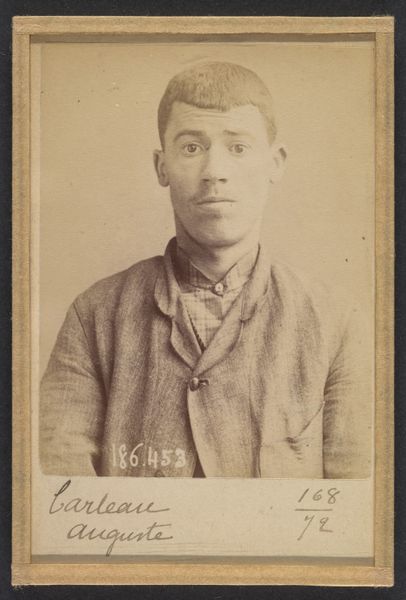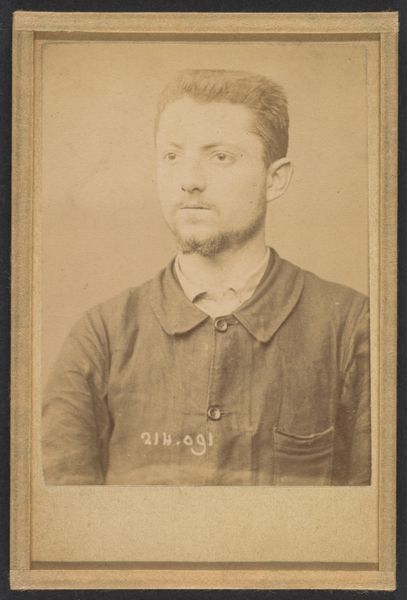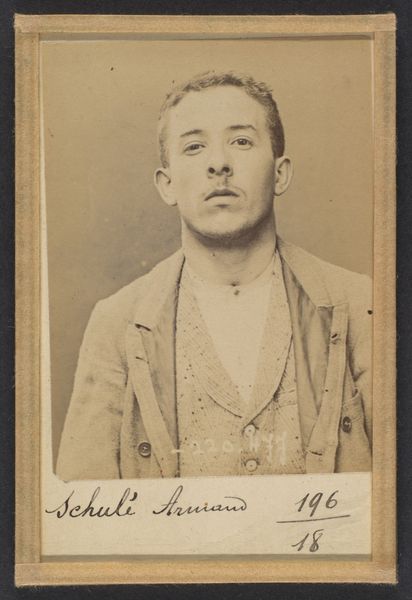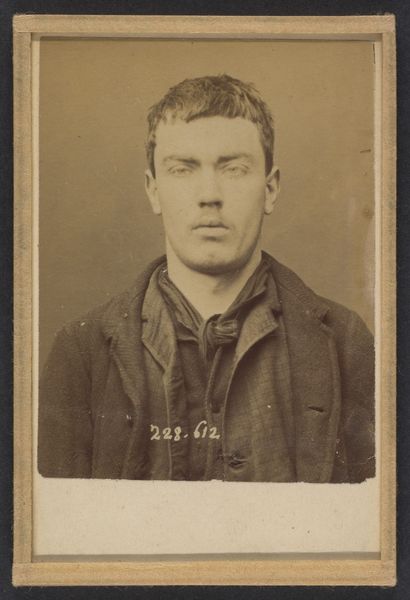
1894
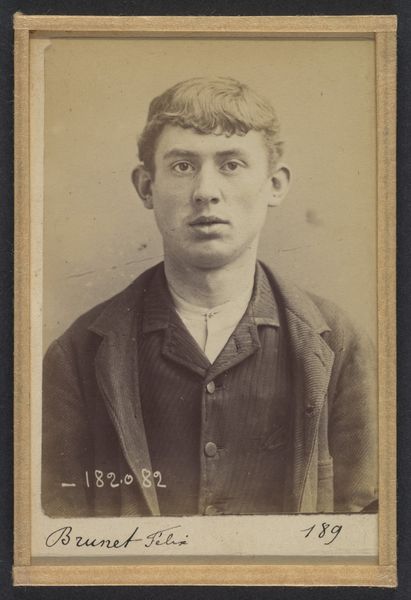
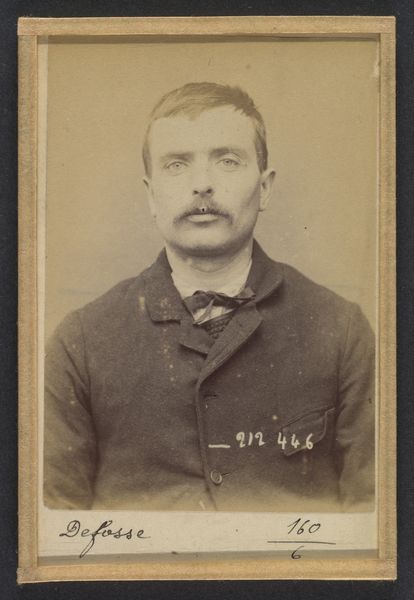
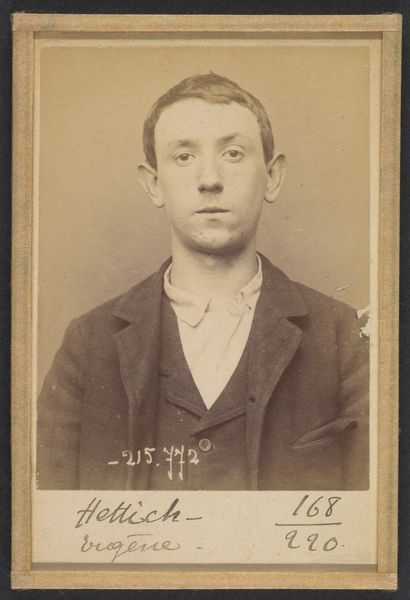
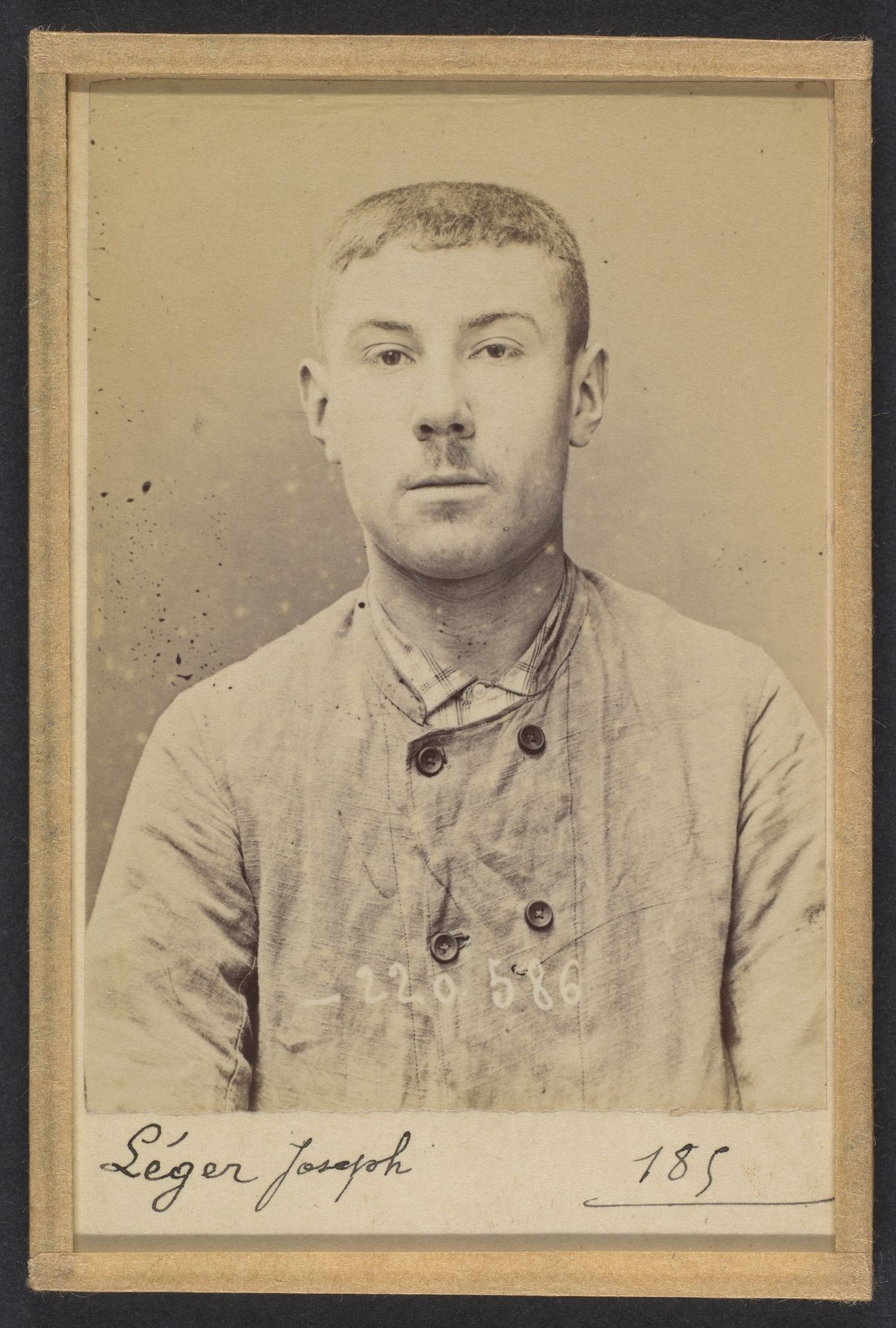
Leger. Joseph. 16 ans, né à Marseille (Bouches-du-Rhône). Jardinier. Fabrication d'engins explosifs. 4/7/94.


Listen to curator's interpretation
Curatorial notes
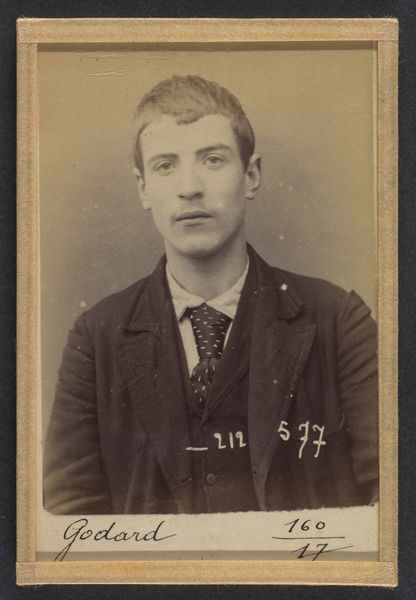
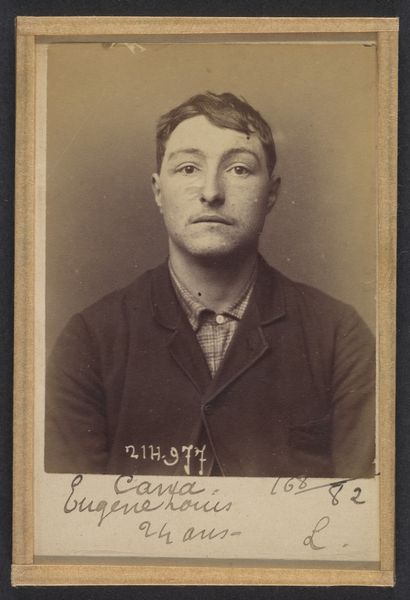
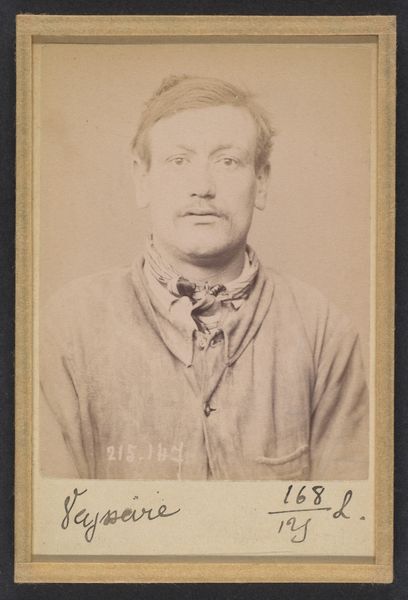
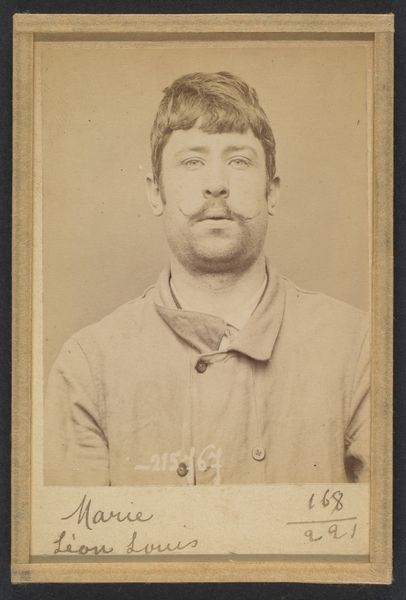
Editor: Here we have a photograph entitled "Leger. Joseph. 16 ans, né à Marseille (Bouches-du-Rhône). Jardinier. Fabrication d'engins explosifs. 4/7/94." by Alphonse Bertillon, taken in 1894. It's a rather stark image, quite different from the portraits we're used to seeing from that era. It has an arresting quality about it; can you offer any initial interpretations? Curator: This photograph transcends a simple portrait. Alphonse Bertillon was a pioneer in forensic science. Consider the historical backdrop: late 19th-century France, rife with social unrest, burgeoning anarchism. Bertillon’s mugshots weren't merely capturing faces; they were tools of control. How does knowing this context change your reading of the image? Editor: It definitely casts it in a different light. The subject isn't just a face; he's a statistic, a data point in a system. The way the image is labelled feels dehumanizing somehow. Curator: Precisely. The stark, almost clinical, presentation contrasts sharply with the traditional portraiture of the time. Note the institutional gaze, classifying and documenting individuals deemed a threat. "Fabrication d'engins explosifs," the charge noted in the image title, reveals the socio-political anxiety underpinning the photograph. Where do you see resistance, or perhaps subversion, in an image like this, if at all? Editor: I suppose any inherent resistance would be located in Joseph Leger’s individual humanity, struggling to break through the rigid system attempting to contain him. Curator: Exactly! Think about the gaze. Is there a challenge, defiance, or even resignation in his eyes? What is he communicating across time and circumstance? Bertillon's attempts to erase individuality through a systematic, ‘scientific’ method inadvertently highlight the resilience of human expression. Editor: It’s sobering to think about the power dynamics at play. Thanks, I'm starting to see this as more than just a historical photograph, but a social and political statement. Curator: Indeed. Art can serve as an ongoing record, as historical evidence. By examining power structures reflected in works of art, we create new understandings that we can carry into the present.