About this artwork
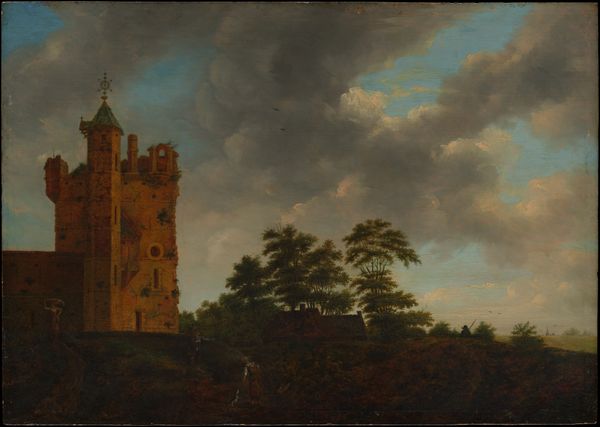
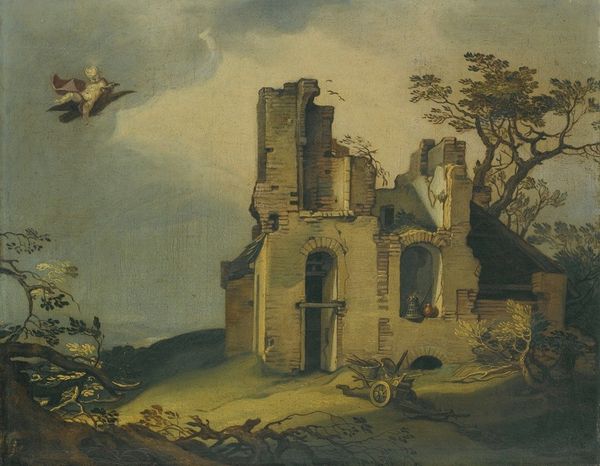
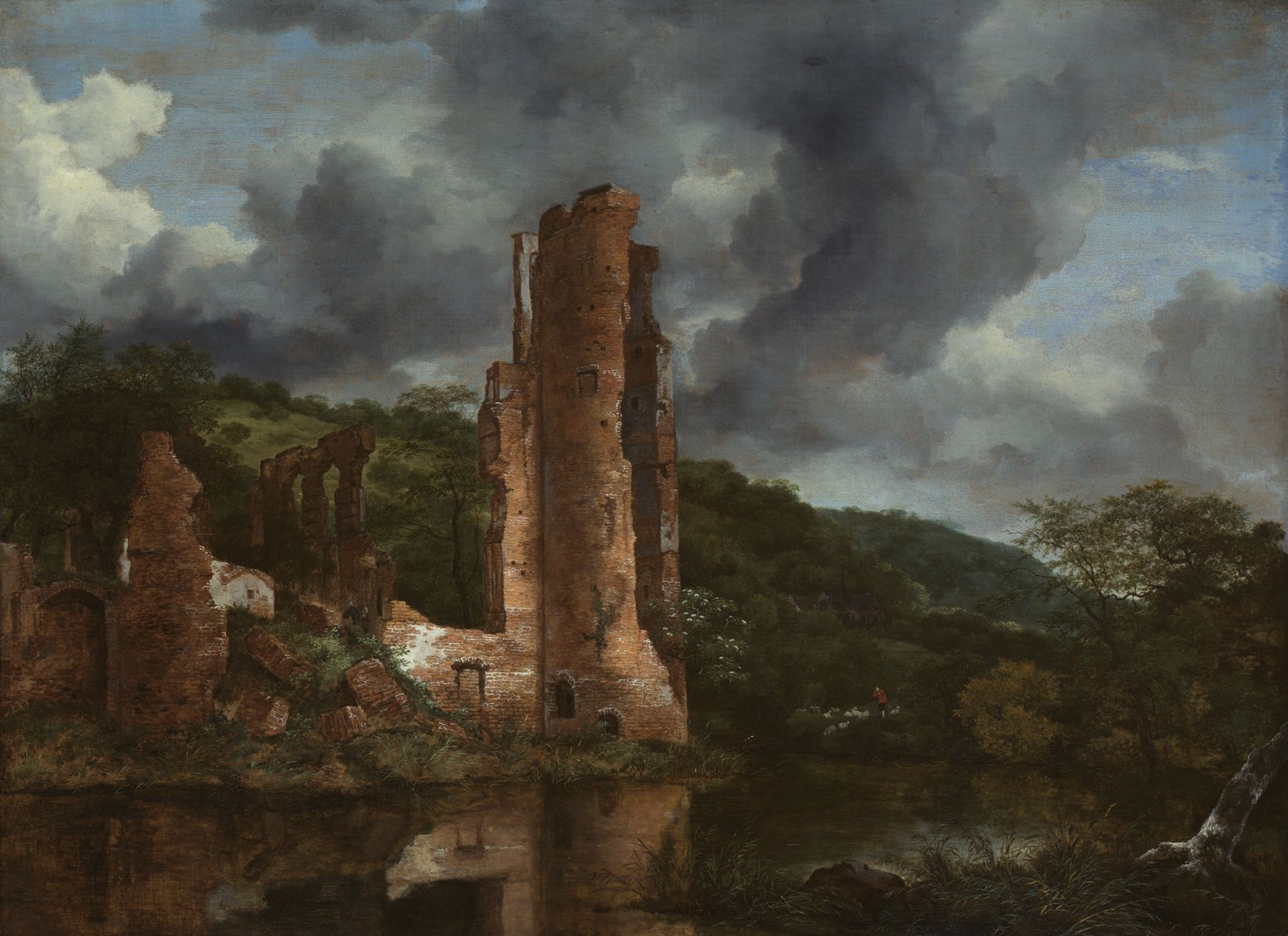
Jacob van Ruisdael painted "Landscape with the Ruins of the Castle of Egmond" using oil on canvas. Its dominant symbol, a ruined castle, speaks volumes about the transience of human achievement and the inexorable power of nature. This motif of ruins finds echoes in other works across time and space, from Roman ruins depicted during the Renaissance to contemporary photographs of abandoned industrial sites. The crumbling castle, a symbol of lost glory, transcends its immediate context, resonating with a universal sense of melancholy and the passing of time. Think of the romantic poets, such as Shelley or Byron, who used ruins as a profound emotional state. The ruined tower becomes a mirror reflecting our own mortality and the futility of earthly ambition. Consider the dark clouds looming above the castle; they are a projection of inner turmoil. The emotional power of the scene engages us on a subconscious level, tapping into our deepest fears and anxieties about loss and decay. The symbol of the ruin is not linear. It resurfaces, evolves, and takes on new meanings, reminding us that history is a continuous cycle of creation, destruction, and memory.
Landscape with the Ruins of the Castle of Egmond
1650 - 1655


Artwork details
- Medium
- painting, oil-paint
- Dimensions
- 98 × 130 cm (38 7/8 × 51 3/8 in.)
- Location
- The Art Institute of Chicago
- Copyright
- Public Domain
Tags
Comments
Share your thoughts
About this artwork
Jacob van Ruisdael painted "Landscape with the Ruins of the Castle of Egmond" using oil on canvas. Its dominant symbol, a ruined castle, speaks volumes about the transience of human achievement and the inexorable power of nature. This motif of ruins finds echoes in other works across time and space, from Roman ruins depicted during the Renaissance to contemporary photographs of abandoned industrial sites. The crumbling castle, a symbol of lost glory, transcends its immediate context, resonating with a universal sense of melancholy and the passing of time. Think of the romantic poets, such as Shelley or Byron, who used ruins as a profound emotional state. The ruined tower becomes a mirror reflecting our own mortality and the futility of earthly ambition. Consider the dark clouds looming above the castle; they are a projection of inner turmoil. The emotional power of the scene engages us on a subconscious level, tapping into our deepest fears and anxieties about loss and decay. The symbol of the ruin is not linear. It resurfaces, evolves, and takes on new meanings, reminding us that history is a continuous cycle of creation, destruction, and memory.
Comments
Share your thoughts