metal, sculpture
#
medieval
#
metal
#
gothic
#
traditional architecture
#
madonna
#
child
#
sculpture
#
france
#
virgin-mary
#
miniature
#
angel
Dimensions: open: 10 × 16 × 3 5/8 in. (25.4 × 40.6 × 9.2 cm) closed: 10 × 6 9/16 × 3 5/8 in. (25.4 × 16.7 × 9.2 cm)
Copyright: Public Domain
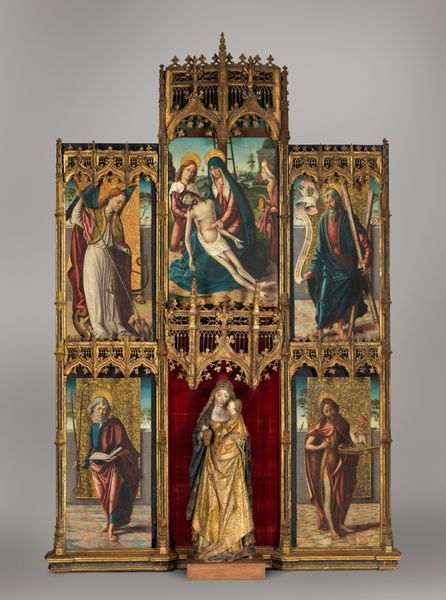
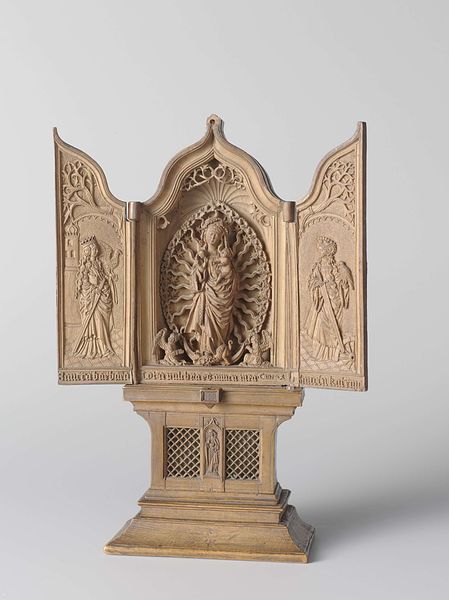
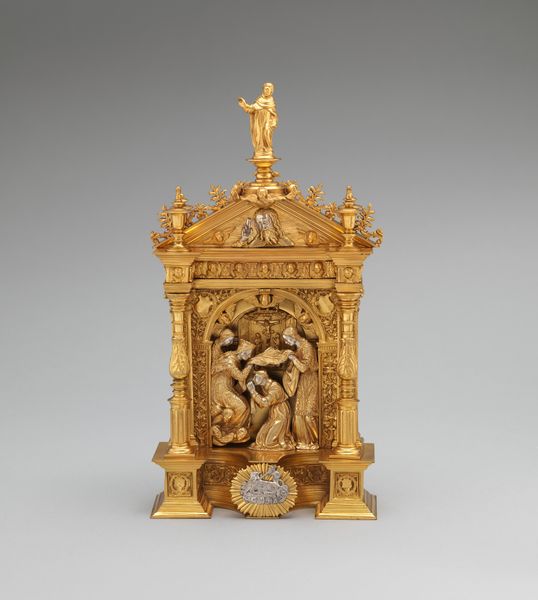
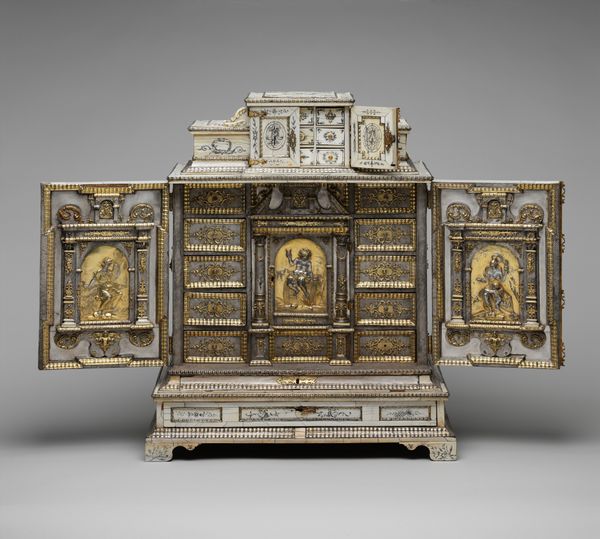
Editor: This is the “Reliquary Shrine,” a metal sculpture by Jean de Touyl, dating back to 1325-1350. The piece is incredibly intricate; it has so many miniature figures. What can you tell me about it? Curator: This piece speaks volumes about the socio-political role of the Church during the Gothic period. A reliquary isn't just decorative, it’s an object imbued with power; it often holds relics of saints or holy figures, connecting the earthly and divine realms. This piece reinforces hierarchies; think about who had access to these objects and the narratives they reinforce about power. How do you think this kind of imagery affected those who viewed it? Editor: It's hard to imagine now, but it must have been awe-inspiring to someone in the 14th century. It makes you wonder what kind of control that imagery offered the church, right? Curator: Absolutely. The Virgin Mary at the center is not just a maternal figure but a symbol of power, intercession, and divine authority, while the architecture is evocative of soaring cathedrals. Consider how women, especially, were encouraged to identify with this imagery even as their own agency was often curtailed within religious institutions. Where do you see tensions in this dynamic? Editor: Well, you have a female figure representing divine power, but that doesn't mean women in society held that power. Curator: Precisely. It’s a visual paradox that’s critical for understanding the complex position of women in the medieval period and the nuanced ways in which the Church exerted its ideological influence through art. The very miniature scale allowed portability—power could travel. And each hinged panel allows an unfolding narrative that serves a purpose. Considering how this sculpture blends political agenda, architectural style and iconography, do you see it as something empowering, oppressive, or somewhere in between? Editor: I think it's definitely both. It's beautiful, but also a tool of control. It is useful to be reminded that something beautiful isn't necessarily harmless. Curator: I agree completely; it prompts critical engagement. That tension is key to unraveling the artwork’s historical and contemporary relevance.
Comments
No comments
Be the first to comment and join the conversation on the ultimate creative platform.
 Collect
 React
React Comment
More like this