
Curatorial notes
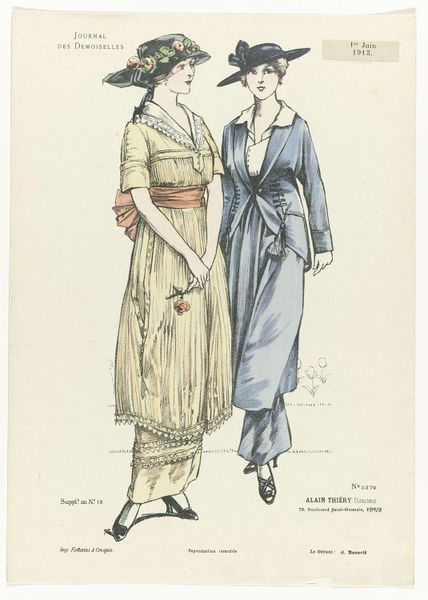
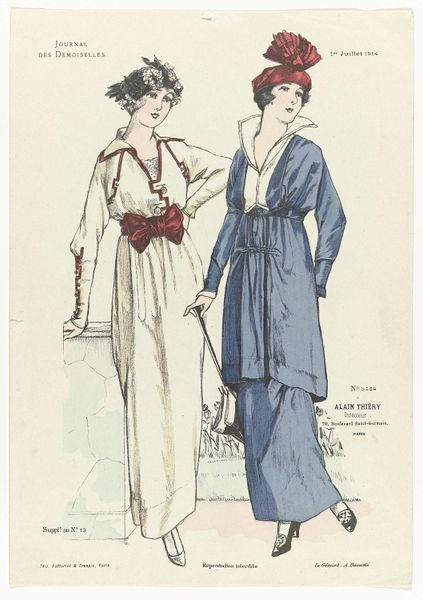
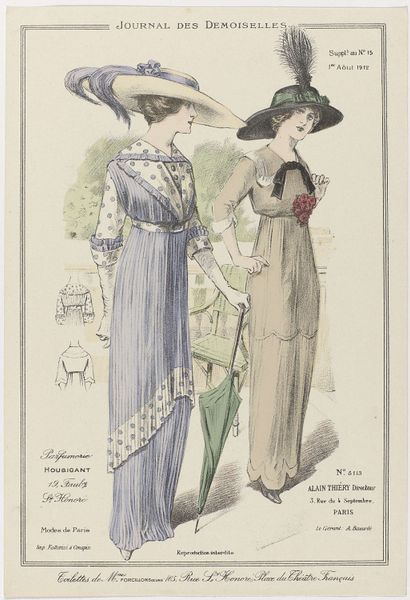
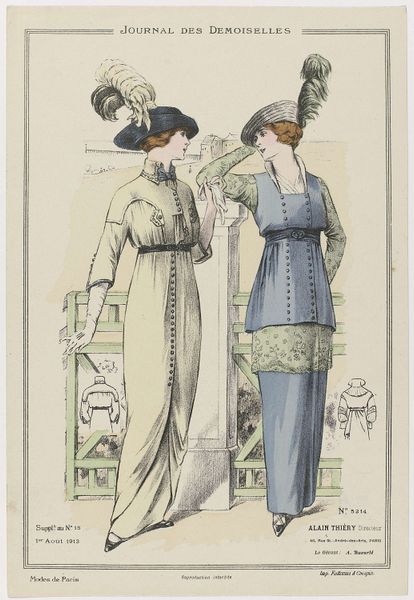
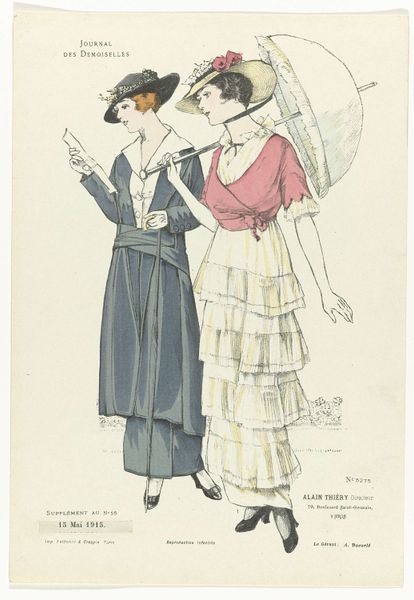
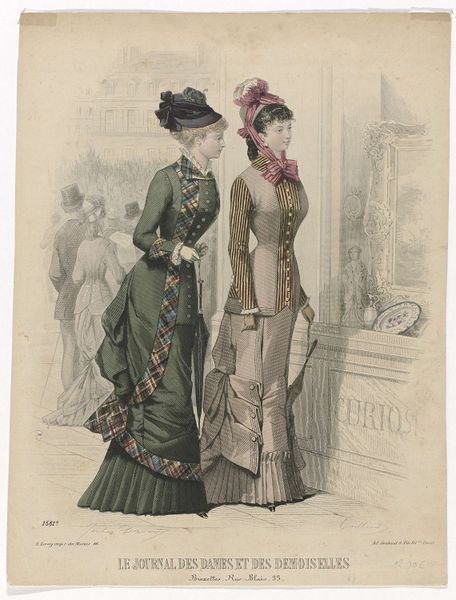
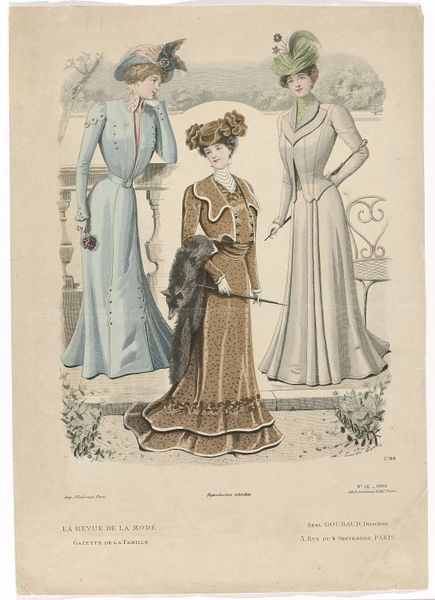
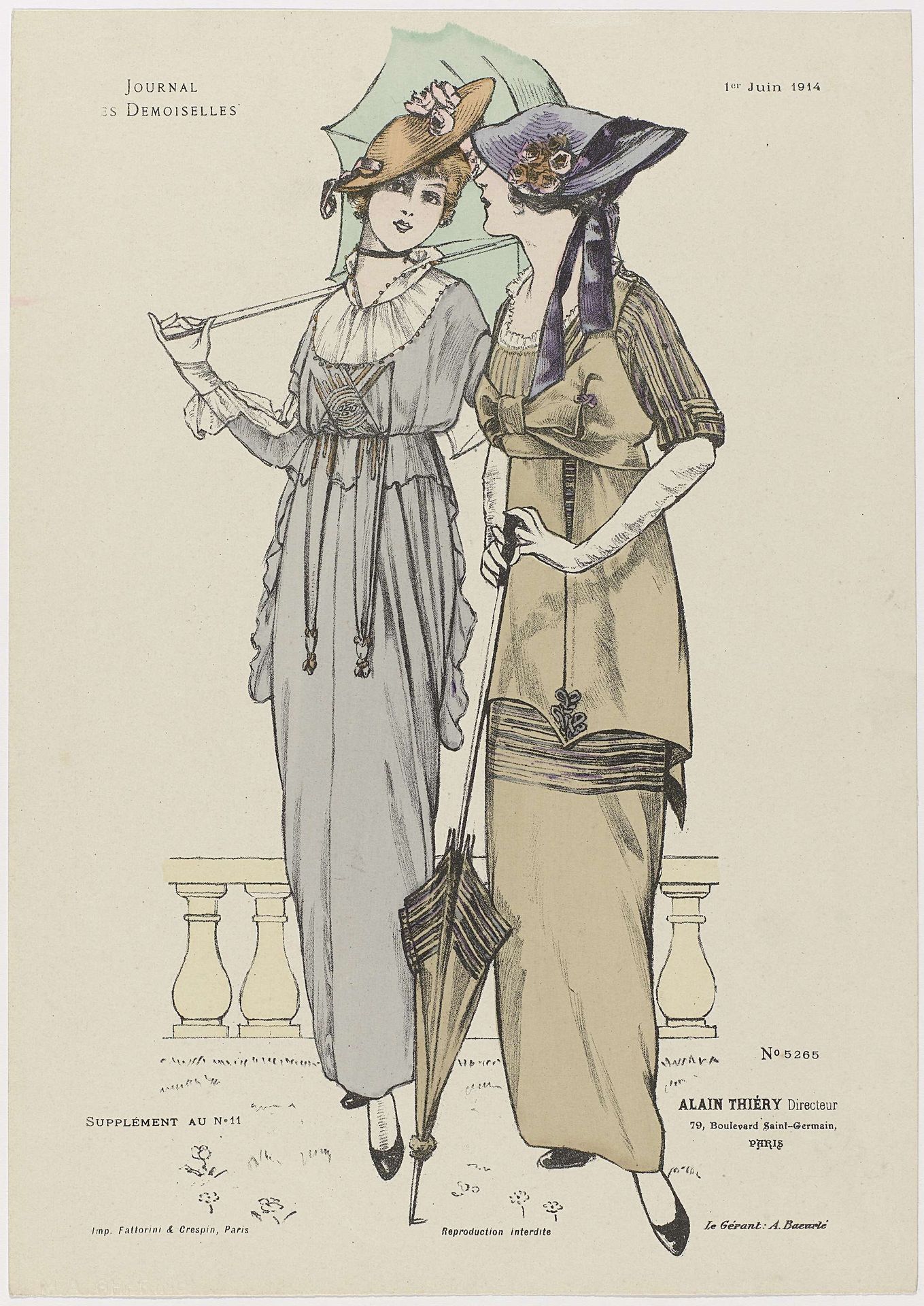
Curator: This piece, titled "Journal des Demoiselles," hails from 1914, and appears to be a fashion plate executed with pen and ink drawing, maybe some watercolor washes too. What's your first take on this image? Editor: Well, my first impression is that it feels like stolen moments. A whisper, a shared secret, hidden away from a more boisterous world...almost a longing for something just out of reach. Curator: I love that interpretation! Indeed, these women feel self-contained despite their close proximity. It's interesting to consider how much space and volume are created with a delicate impressionist style in drawing, with the suggestion of colors beyond the monochrome of pen strokes. The parasols create overlapping lines that lead into the women in fashionable hats and dresses. Editor: And notice the detail in their garments, and the hats—the way the fabric folds and drapes really showcases the era's silhouette! Look at the way the artist emphasizes line to create form and depth; it’s an incredible showcase of drawing. Also, did you notice the fashion mockups and character design are evident even with a quick glance, aren't they? Curator: Absolutely, this artist possesses immense technical prowess with form. However, in semiotic analysis, flowers symbolize femininity; the flowers worn with dresses, also serve as historical fashion marker for dresses, reflecting trends, culture and aesthetic values. Editor: So much attention given to capturing ephemeral beauty amidst what was probably quite a turbulent pre-war atmosphere in Europe, isn’t it? Maybe these fashion mockups allowed both the designer and viewer escape through aspiration and beautiful images. Curator: You're right, that contextual framing completely alters the piece, doesn't it? From a formalist perspective, the art embodies the structure through line quality, and symmetry in fashion that reflects cultural codes of early twentieth century and yet you read more of temporal cultural implications behind aesthetic design of each. What a conversation. Editor: It's funny how sometimes the strictness of the lines on the fashion sketch opens up these dreamy reflections.