About this artwork
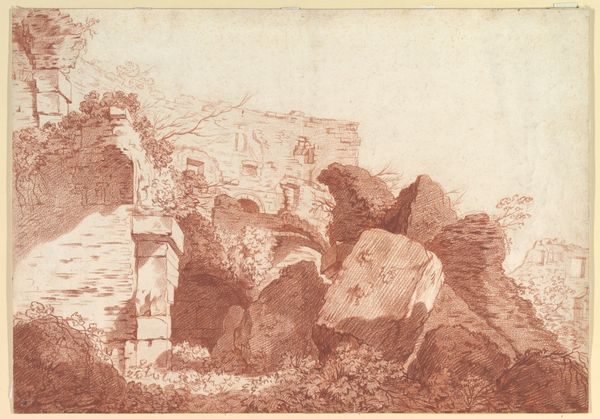
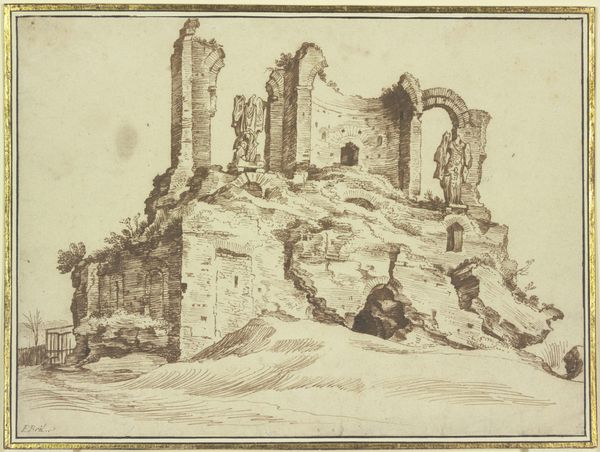
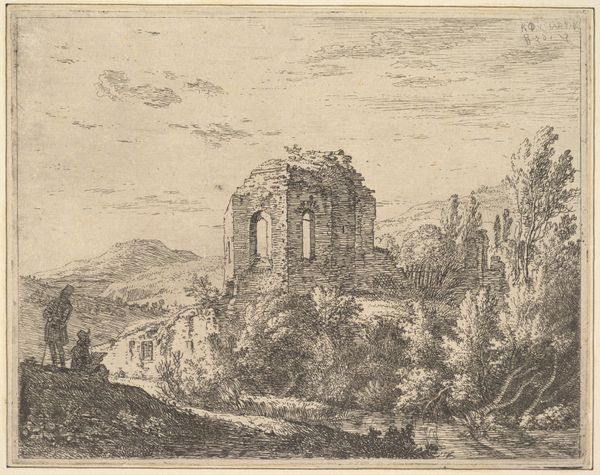
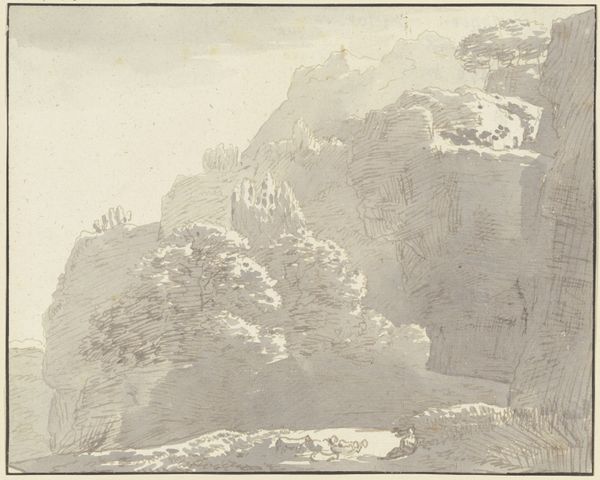
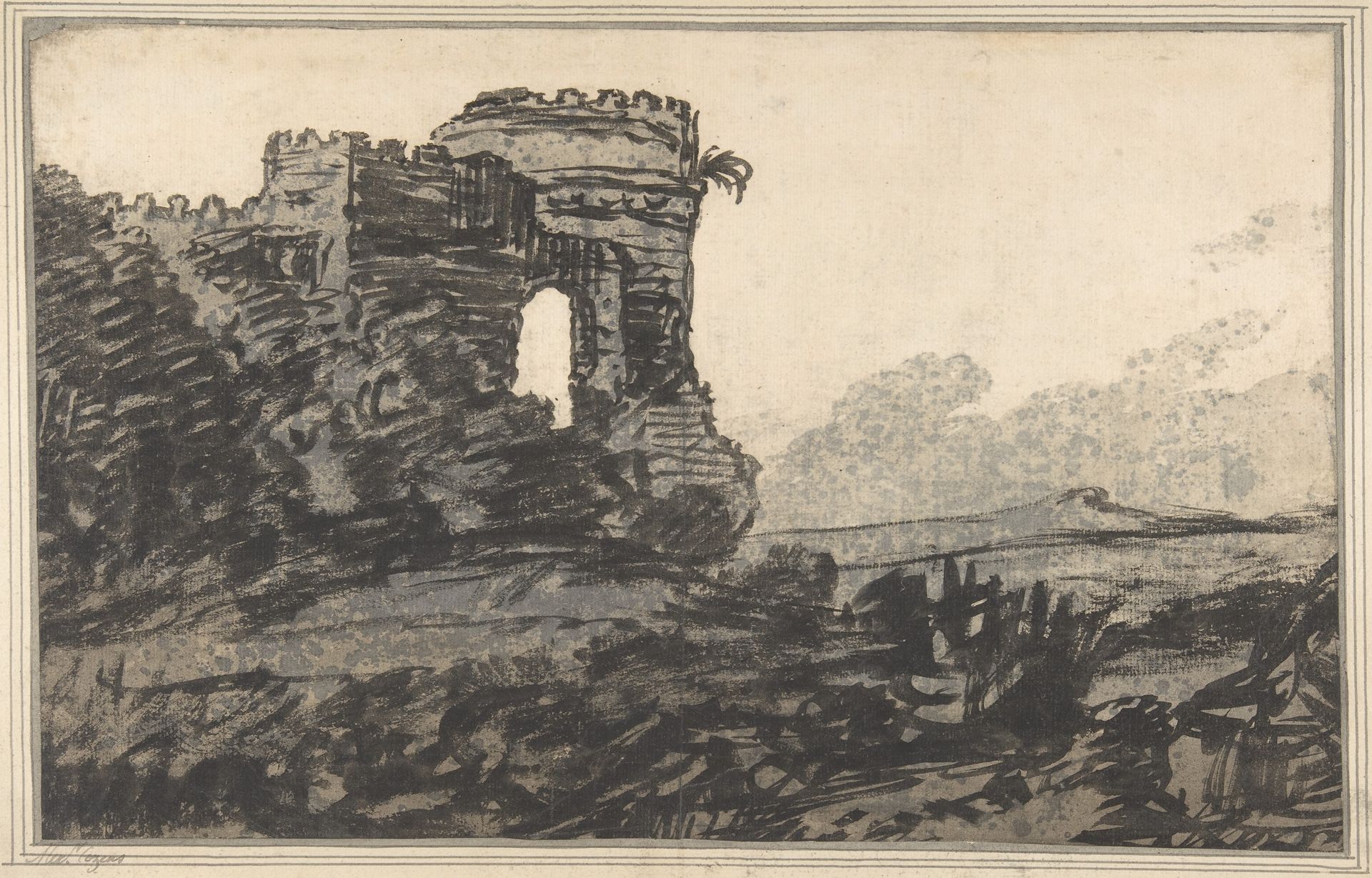
Alexander Cozens made this ink on paper drawing of a ruined castle, sometime in the 18th century. Now, ink might seem like a simple material, but its qualities—the way it bleeds, dries, and reflects light—can profoundly influence the appearance of an artwork. Look closely, and you'll see how Cozens used the ink in a free, almost gestural way. The strokes are broad and unrefined, capturing the rough texture of the stone, the wildness of the trees. There is a sense of immediacy and spontaneity. This approach was related to wider social trends, as it was used in sketching and allowed artists to rapidly record observations. This directness of expression was especially appealing to those who prized imagination over academic polish. While this might have been seen as a lesser pursuit, compared to oil painting for example, Cozens elevated the humble medium of ink to new heights. He demonstrated its capacity for evocative expression and its ability to capture the sublime beauty of nature, challenging traditional hierarchies of art.
Ruined Castle and Trees
1760 - 1764


Artwork details
- Dimensions
- Sheet: 10 1/2 × 16 3/4 in. (26.6 × 42.6 cm) Mount: 15 1/8 in. × 20 7/8 in. (38.4 × 53.1 cm)
- Location
- Metropolitan Museum of Art, New York, NY
- Copyright
- Public Domain
Comments
Share your thoughts
About this artwork
Alexander Cozens made this ink on paper drawing of a ruined castle, sometime in the 18th century. Now, ink might seem like a simple material, but its qualities—the way it bleeds, dries, and reflects light—can profoundly influence the appearance of an artwork. Look closely, and you'll see how Cozens used the ink in a free, almost gestural way. The strokes are broad and unrefined, capturing the rough texture of the stone, the wildness of the trees. There is a sense of immediacy and spontaneity. This approach was related to wider social trends, as it was used in sketching and allowed artists to rapidly record observations. This directness of expression was especially appealing to those who prized imagination over academic polish. While this might have been seen as a lesser pursuit, compared to oil painting for example, Cozens elevated the humble medium of ink to new heights. He demonstrated its capacity for evocative expression and its ability to capture the sublime beauty of nature, challenging traditional hierarchies of art.
Comments
Share your thoughts