Copyright: Public Domain: Artvee
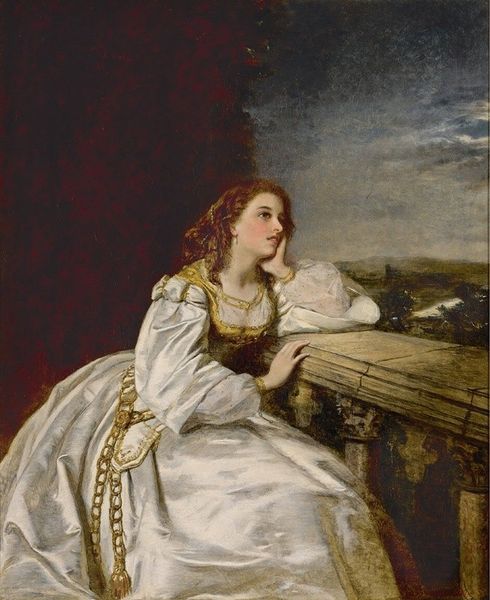
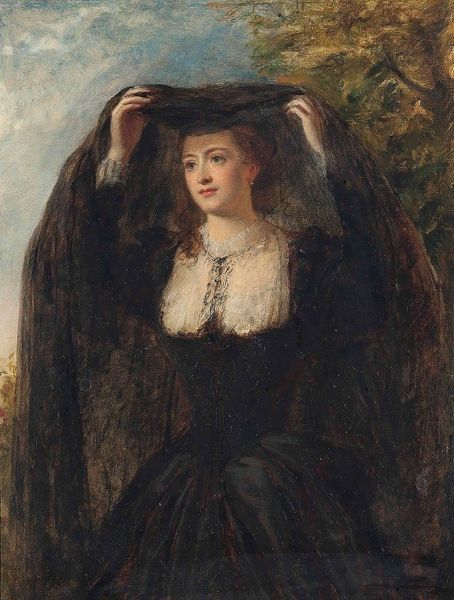
Curator: William Powell Frith painted "The Signal" in 1858, an oil on canvas that blends portraiture with a hint of historical narrative. The composition immediately strikes me. There's an undeniable air of melancholy about her, with those stormy skies as a backdrop. Editor: The way she delicately holds the white cloth makes you think, is she sending a signal of peace or of distress? And what does it mean to reproduce scenes of, presumably, feminine anticipation against an historical backdrop? Curator: Well, let’s look at what creates this effect. The fabric itself seems meticulously rendered, doesn’t it? Think of the labor that went into its production—the growing and processing of flax, the weaving, and lacework. It's a study in contrasts: the refined delicacy of the textile versus the rough-hewn stone of the castle walls. Editor: Indeed. Consider the historical implications of such labor. Textile production often intertwined with the economic realities of women's lives, particularly during this historical period, raising questions of social status. We need to look into how Frith chooses to depict gendered and class relationships here, which are undeniably present even if somewhat subdued. Curator: Good point. And that dress! The texture, the folds, the color – that dark velvet contrasted with the golden trim. It really emphasizes wealth, but also constraint, almost like a symbolic binding of women within domestic expectations and moral behavior during Victorian times. You get the impression of an artifact more than an attire. The materiality of the clothing conveys significant social meaning, while simultaneously acting like a display of sartorial aesthetics and craft. Editor: The tower adds another layer, doesn’t it? It represents both power and imprisonment. Notice the dramatic lighting, which heightens that Romantic ideal, but, critically, does this elevate or objectify this young woman? Curator: It is a rather theatrical rendering isn't it? It reminds me that these visual constructs are themselves manufactured – oil paint on canvas meticulously crafted to achieve this effect. What is perhaps "lost" or obscured is the "real life" from which this historical character would come, as its essence transforms into an artist’s vision. Editor: Yes, the whole presentation is layered in complexity. Thank you for that reflection on labor, materials, and presentation. The intersection of personal identity, historical context and cultural representation makes Frith's painting so thought-provoking and, admittedly, somewhat problematic as we consider it today. Curator: Indeed, a painting to consider through varied lenses, historical context and materiality and representation.
Comments
No comments
Be the first to comment and join the conversation on the ultimate creative platform.
 Collect
 React
React Comment
More like this