

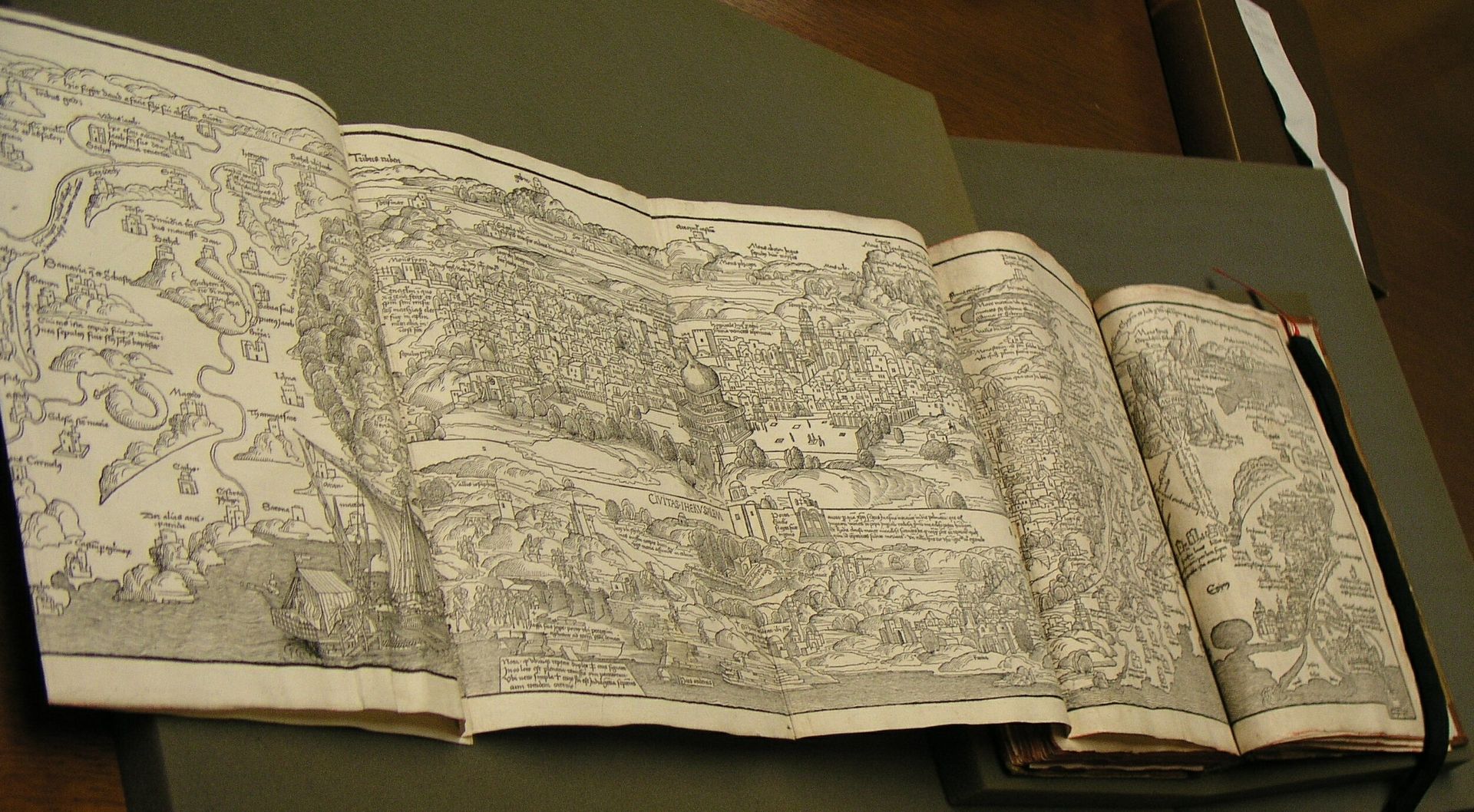
1486
Journey to the Holy Land


Listen to curator's interpretation
Curatorial notes
Erhard Reuwich, in Mainz, Germany, around 1486, produced this woodcut illustration in Bernhard von Breydenbach's book, "Journey to the Holy Land". It's not just a map; it's a window into the intersection of faith, commerce, and burgeoning print culture in the late 15th century. Consider the context: the Catholic Church, the Crusades, and pilgrimage were significant social forces. Reuwich's detailed panorama of Jerusalem and the routes leading to it caters to the spiritual desires of Christians wanting to imagine, or even undertake, the journey to the Holy Land. But, crucially, it also serves the practical needs of merchants and travelers. The printing press, still a relatively new invention, made such images more accessible, shaping perceptions of distant lands and religious sites. As historians, we delve into such contextual elements, examining travelogues, religious texts, and economic records to fully appreciate the complex layers of meaning embedded in artworks like this. These sources reveal the social and institutional forces that shaped both the production and consumption of this image.