1839
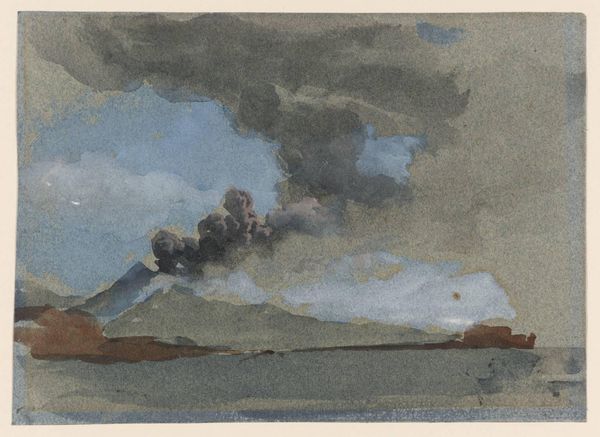
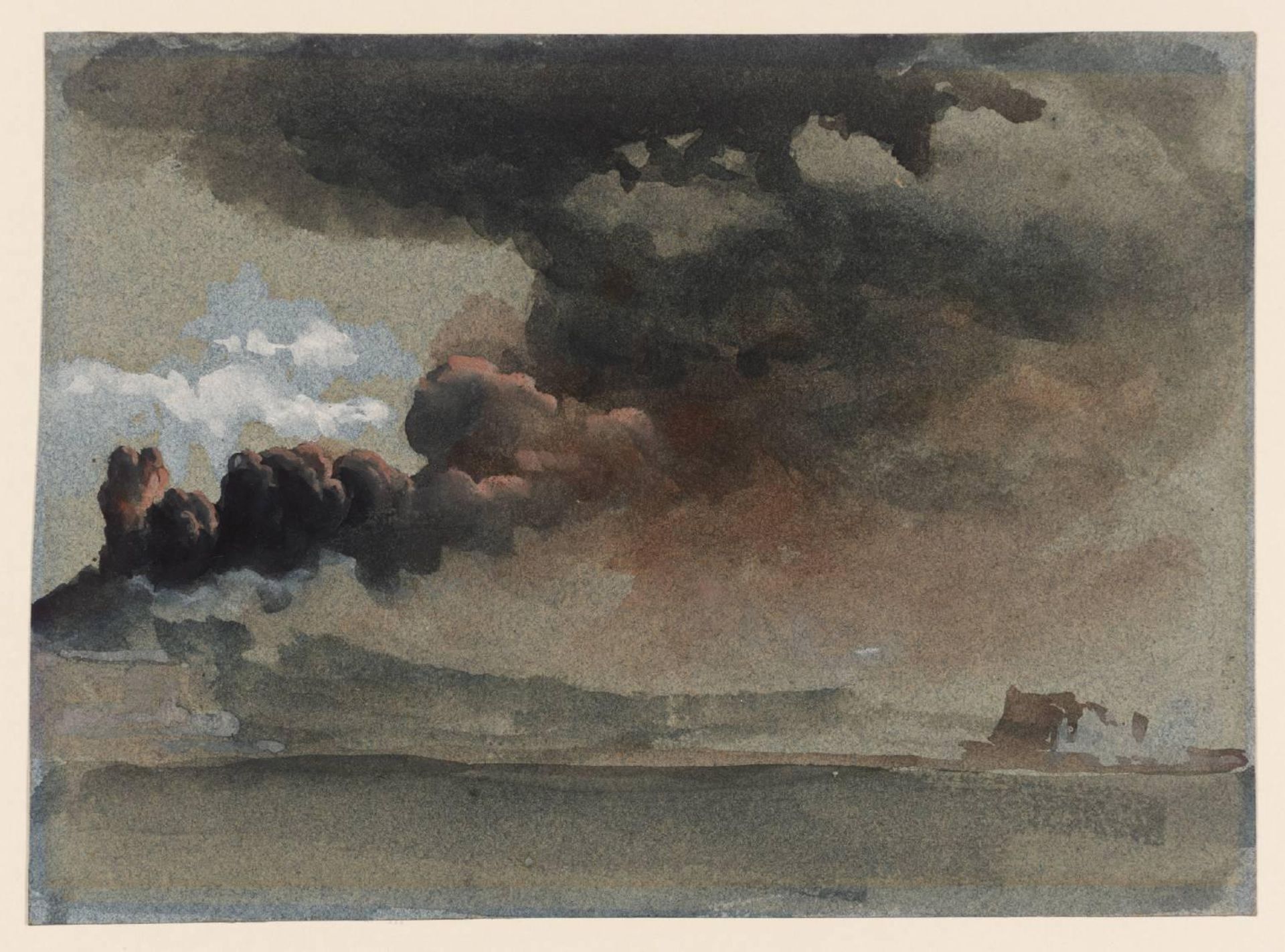
An Eruption of Mount Vesuvius


Listen to curator's interpretation
Curatorial notes
Curator: Clarkson Stanfield's watercolor, "An Eruption of Mount Vesuvius," certainly captures a dramatic moment. Editor: The overall effect is ominous, isn't it? The looming darkness seems to swallow everything below. Curator: Absolutely. The watercolor medium itself allows for this hazy, almost apocalyptic depiction. Think about the availability of these materials—watercolor paints, paper—and how they democratized landscape painting, making sublime spectacles accessible to a wider audience. Editor: And Vesuvius, then as now, is a powerful symbol. Eruptions carry immense symbolic weight – destruction, purification, the unpredictable power of nature itself. It is a cultural memento mori. Curator: It's fascinating how the availability and portability of materials changed not only who could make art, but what kind of subjects they could represent and circulate. Editor: Yes, seeing it this way adds another layer of meaning. Perhaps not just the depiction of disaster, but also a reflection on what we choose to witness and commemorate.