1541
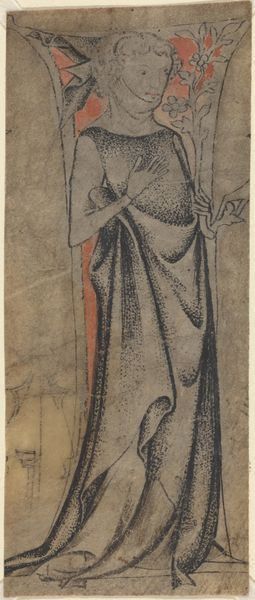
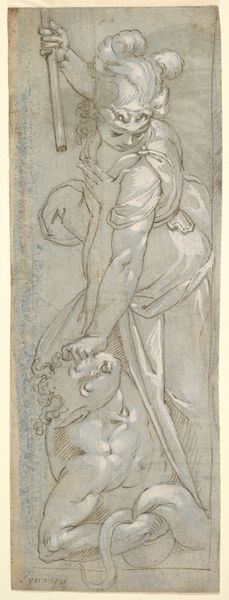
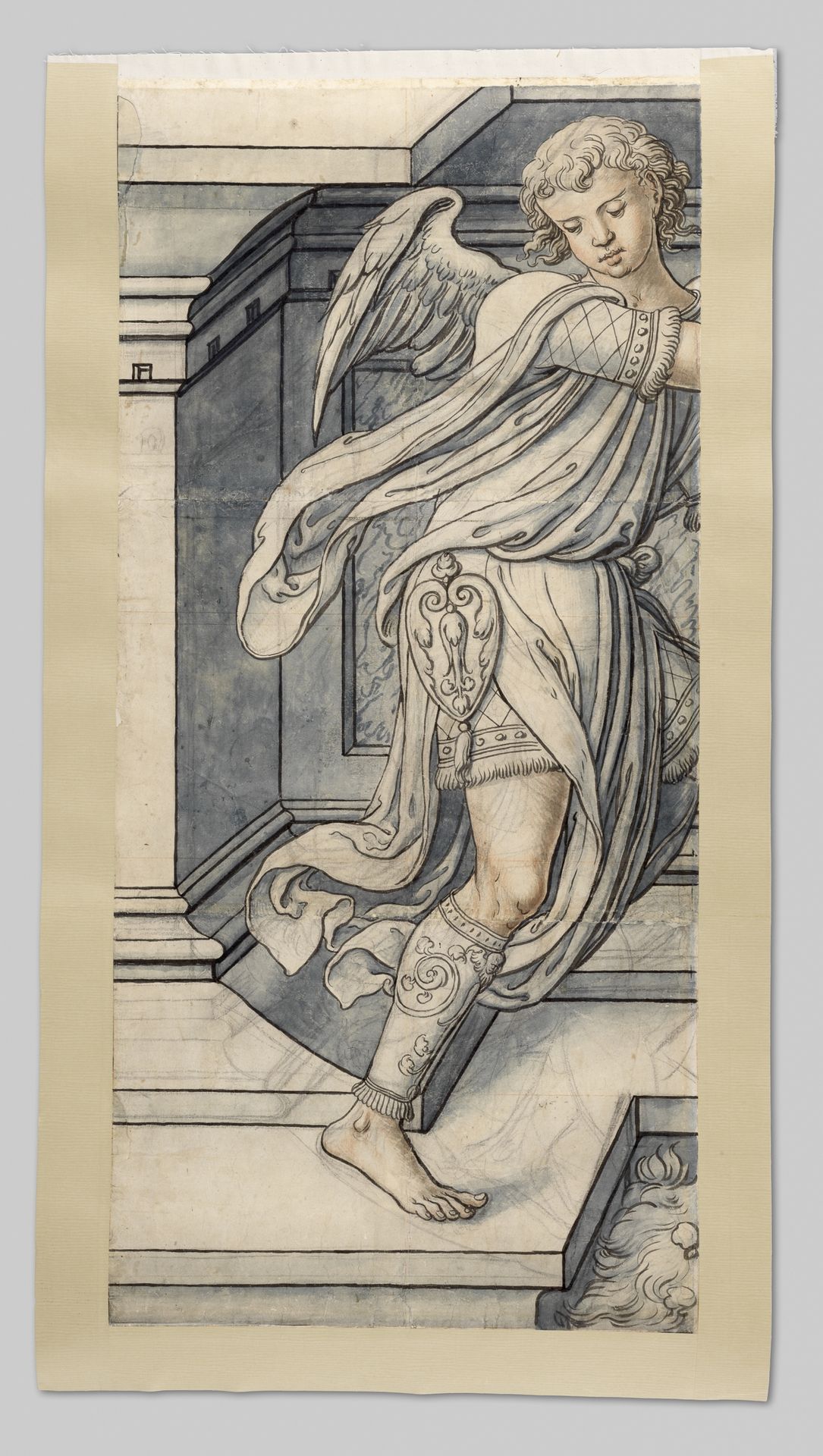
Engel. Fragmenten karton voor het glasraam in de westgevel van Joris van Egmond (Bisschop van Utrecht 1535-1559) voor de Sint Bavo Kerk te Haarlem

Listen to curator's interpretation
Curatorial notes
Curator: This intriguing sketch, "Engel. Fragmenten karton voor het glasraam…" by Gerrit Boels from 1541, is rendered with pen, ink, and pencil on paper. It feels rather fragile, doesn't it? Editor: It does. I'm drawn to how preliminary it seems. It's clearly a study for something grander, probably a stained-glass window, given the title. I wonder what we can glean from studying it in isolation, as a material object and document of the production process itself? Curator: Excellent question. Considering a materialist perspective, it is productive to examine the artistic labour behind the image. Look at the materials used – paper, ink, pencil. Were they easily accessible at the time? How might the cost and availability of materials influenced the artist’s process and design choices? The paper looks toned; could the artist afford the production cost of superior quality materials? Editor: So, it’s less about the angelic figure itself, or even the religious symbolism, and more about… the economic conditions of artistic production. Curator: Precisely. Also, think about how this drawing functioned as a template. Its purpose was inherently tied to its reproducibility on a much larger scale, likely involving different craftsmen for glass production. The drawing becomes almost a form of artistic instruction manual. Editor: That makes sense. It emphasizes how "high art" like stained glass relied on workshops and skilled labour, and was intertwined with various levels of craft production. Curator: Consider, too, that this "fragment" provides tangible insight into Renaissance-era labour divisions within the visual art industry. Editor: Fascinating! I didn't realize there was so much hidden within the artwork that the material and the process could unlock. Curator: Understanding the historical means of production enriches our understanding of not just the artwork but of the art market of the 16th century too.