

1645
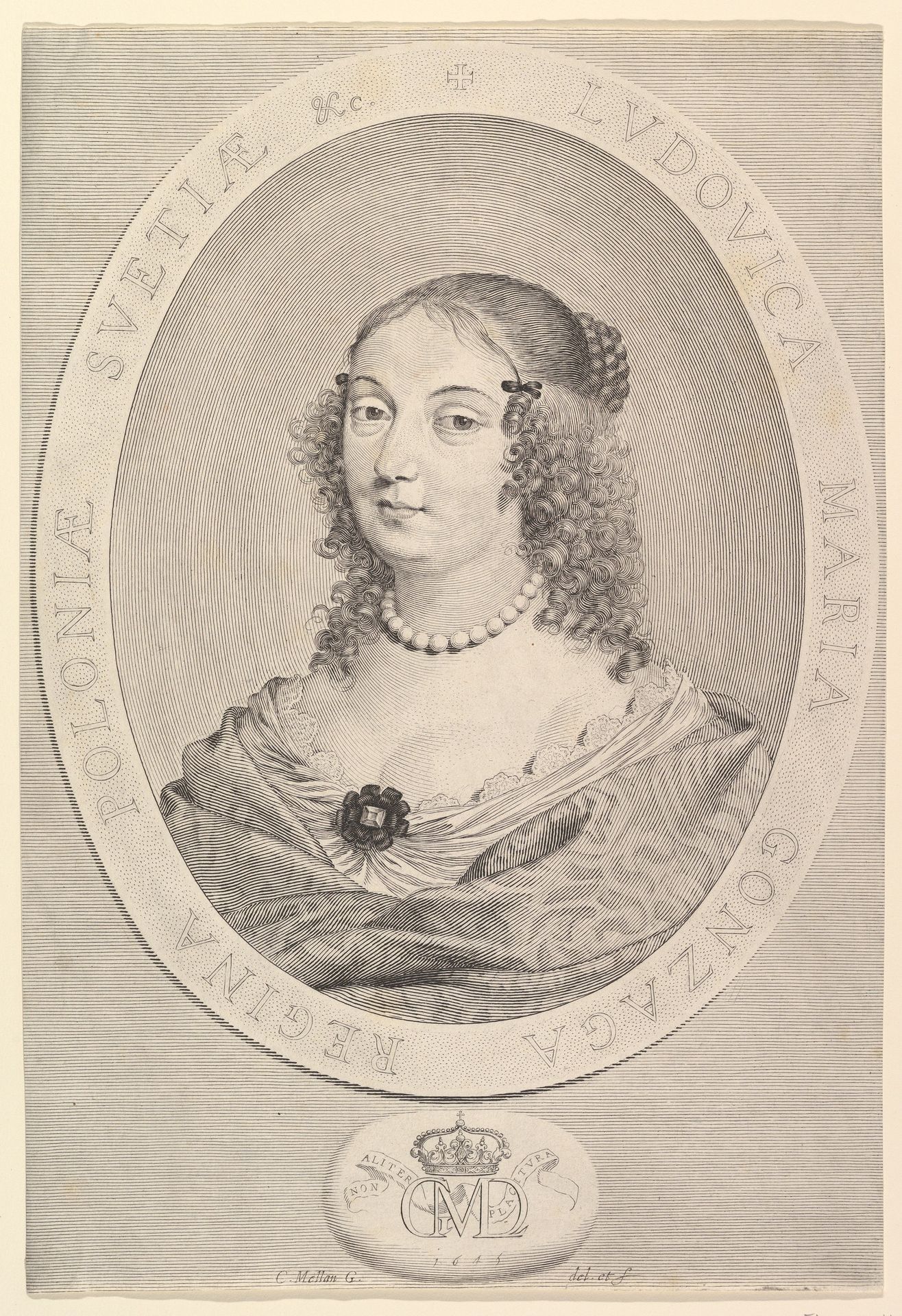
Ludovica Maria Gonzaga, Queen of Poland


Listen to curator's interpretation
Curatorial notes
Curator: Today we are looking at Claude Mellan’s engraving, "Ludovica Maria Gonzaga, Queen of Poland," created in 1645. It currently resides in the collection of the Metropolitan Museum of Art. Editor: Oh, my, she has the loveliest melancholic gaze, doesn't she? Like she's just heard a particularly moving piece of harpsichord music and is about to burst into poetry, perhaps something terribly witty and heartbreaking all at once. Curator: It is a rather compelling depiction. It's worth noting that Ludovica Maria Gonzaga played a significant role in 17th-century Polish politics and diplomacy. Her influence as Queen cannot be understated. Editor: I adore how the engraver captured the fabric of her gown, that shimmering effect, simply achieved with lines, you know? There is a lot of luminosity there. Curator: Precisely. Mellan was a master of using parallel lines to create tonal variations and suggest volume. The very technique itself invites discourse on power, presentation, and visibility in early modern Europe. Editor: Yes! And I love how the austerity is sort of softened by those wisps of curls around her face. Like, yes, I'm the Queen of Poland, hear me roar, but also...I enjoy a good sonnet. Curator: Such perceived “softening” reflects, perhaps, calculated constructions of femininity even within positions of authority. We also see how portraiture was instrumental to solidifying royal image-making. The very dissemination of images such as this one served crucial propagandistic purposes. Editor: Hmmm, while all that’s true and totally interesting, to me, the beauty still transcends mere propaganda. It’s in the quiet confidence in her eyes. Makes me want to imagine what a day in her life might have been like! Did she sneak off to the stables in disguise, I wonder? Curator: Undoubtedly her life was infinitely more complex than a glimpse would suggest. Thinking about portraits like this prompts necessary discussion around issues of agency, gender dynamics and royal representation during a period undergoing monumental societal transformations. Editor: Absolutely, she contains multitudes! I'm very pleased to have spent a few moments looking closer together. Curator: Indeed, examining her through interdisciplinary lenses grants critical understandings regarding the intricate performance of monarchy and feminine identity in the 17th century.