About this artwork
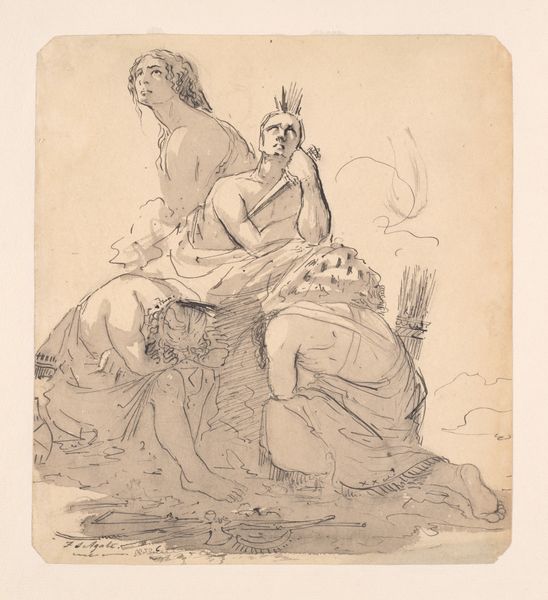
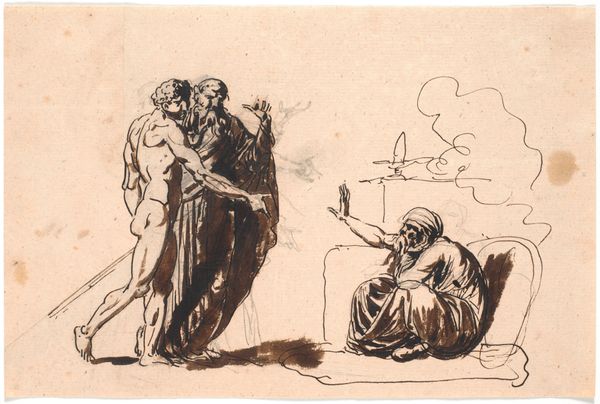
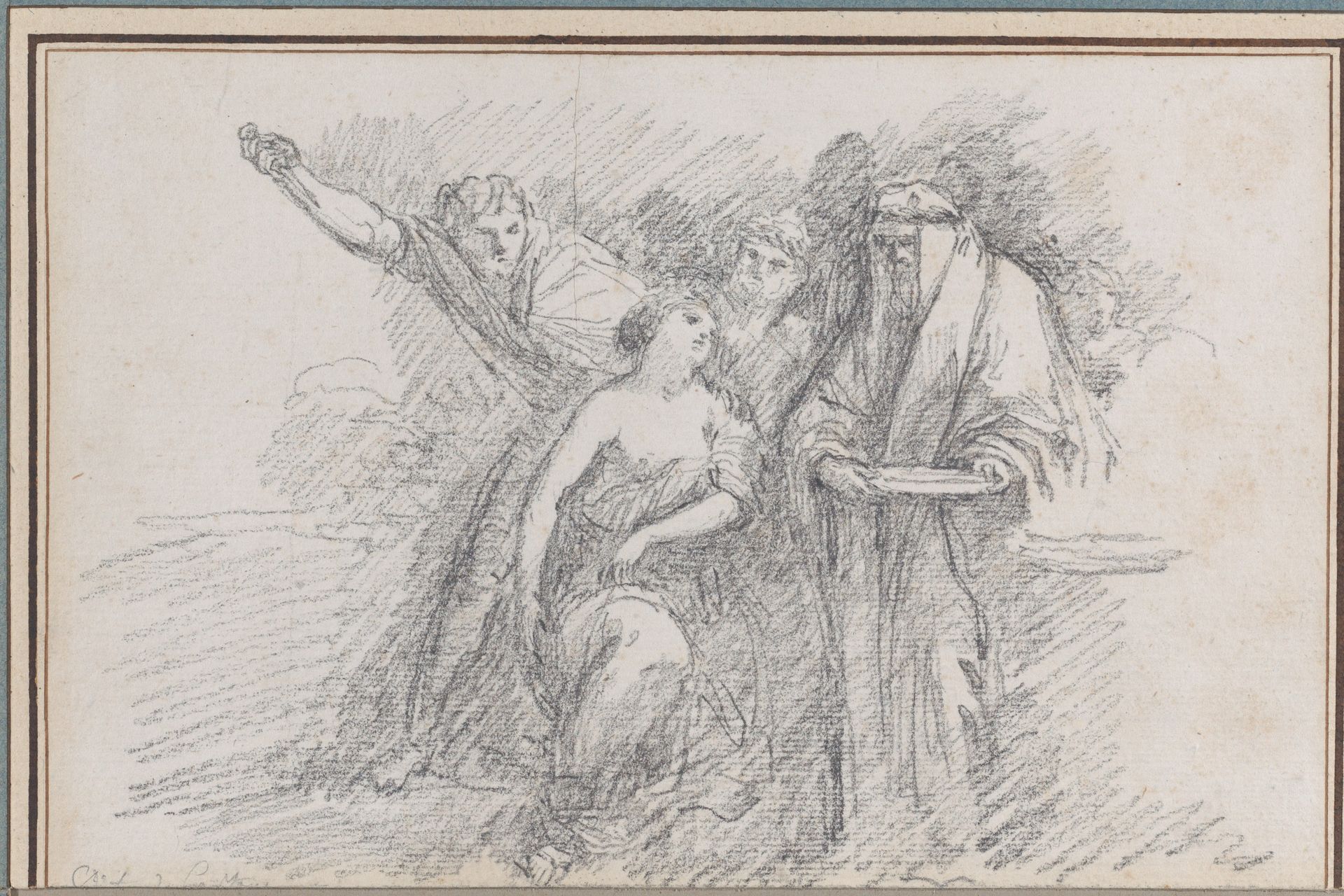
This drawing, "The Sacrifice of Polyxena, after Pietro da Cortona," was created by Jean Robert Ango in the late 18th century. It’s rendered in graphite on paper, a medium that lends itself to quick studies and reproductions. Ango's choice of graphite is significant. It's a readily available material, associated with sketching and preliminary work rather than finished masterpieces. The drawing is a copy of a painting by the Italian Baroque artist, Pietro da Cortona. Graphite allowed Ango to quickly capture the essence of da Cortona’s dramatic scene. The image shows a scene of human sacrifice, fraught with tension. The quick, gestural lines impart a sense of immediacy, but also distance us from the depicted violence. The choice of such accessible materials and techniques opens up questions about the role of the artist as a reproducer and interpreter, rather than solely an originator. It challenges us to see value not just in the final image, but in the processes of learning, copying, and disseminating artistic ideas.
The Sacrifice of Polyxena, after Pietro da Cortona
1754 - 1775


Artwork details
- Dimensions
- Sheet: 5 1/2 × 8 7/16 in. (14 × 21.5 cm)
- Location
- Metropolitan Museum of Art, New York, NY
- Copyright
- Public Domain
Comments
Share your thoughts
About this artwork
This drawing, "The Sacrifice of Polyxena, after Pietro da Cortona," was created by Jean Robert Ango in the late 18th century. It’s rendered in graphite on paper, a medium that lends itself to quick studies and reproductions. Ango's choice of graphite is significant. It's a readily available material, associated with sketching and preliminary work rather than finished masterpieces. The drawing is a copy of a painting by the Italian Baroque artist, Pietro da Cortona. Graphite allowed Ango to quickly capture the essence of da Cortona’s dramatic scene. The image shows a scene of human sacrifice, fraught with tension. The quick, gestural lines impart a sense of immediacy, but also distance us from the depicted violence. The choice of such accessible materials and techniques opens up questions about the role of the artist as a reproducer and interpreter, rather than solely an originator. It challenges us to see value not just in the final image, but in the processes of learning, copying, and disseminating artistic ideas.
Comments
Share your thoughts