lithograph, print
#
narrative-art
#
lithograph
# print
#
asian-art
#
indigenism
#
genre-painting
Dimensions: height 382 mm, width 458 mm
Copyright: Rijks Museum: Open Domain
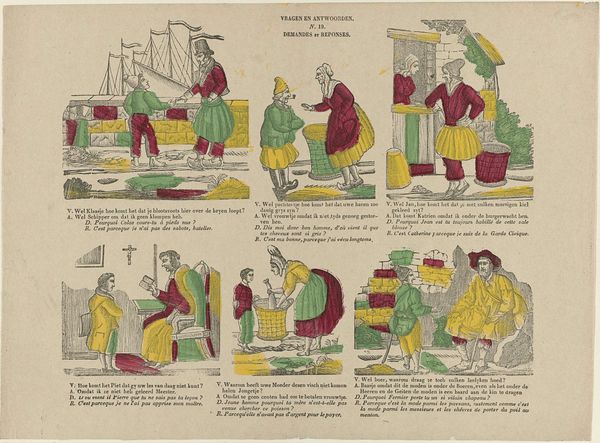
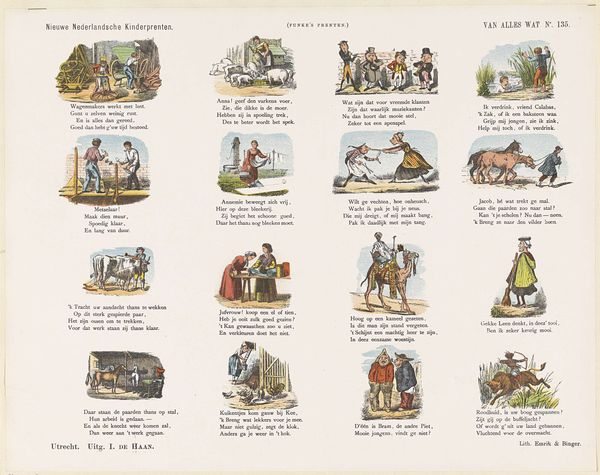
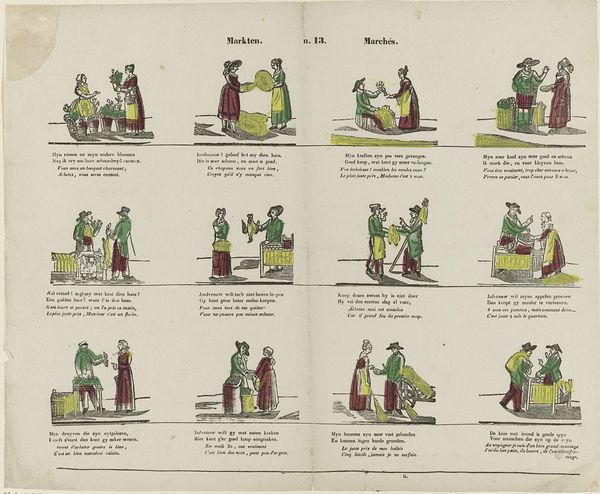
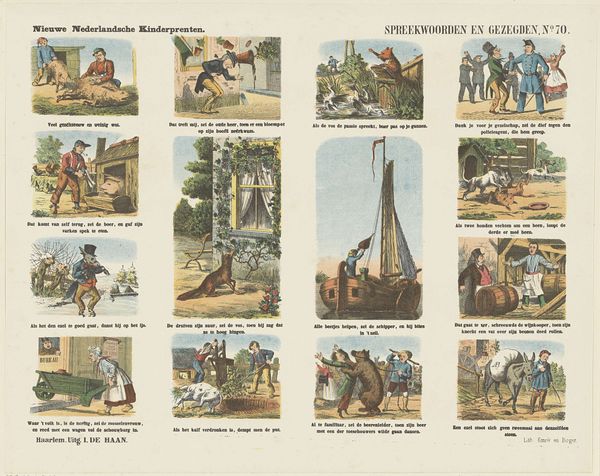
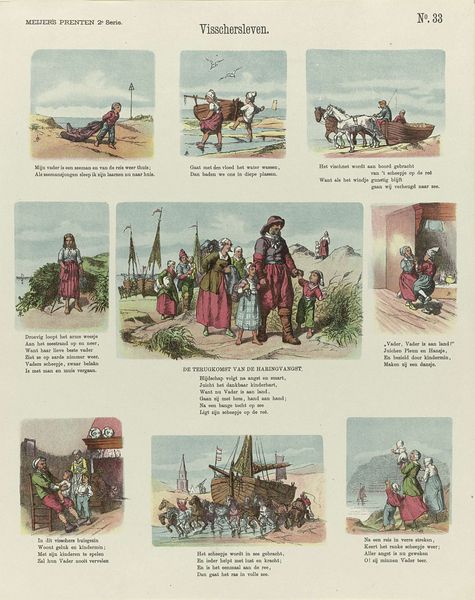
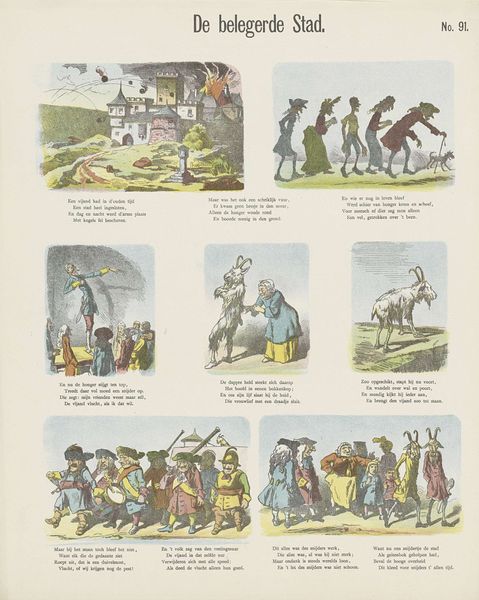
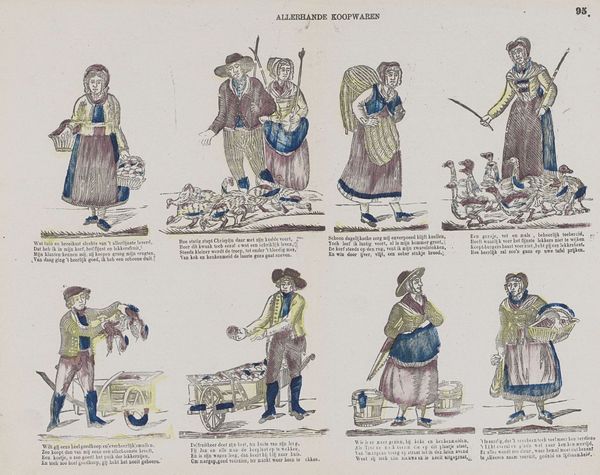
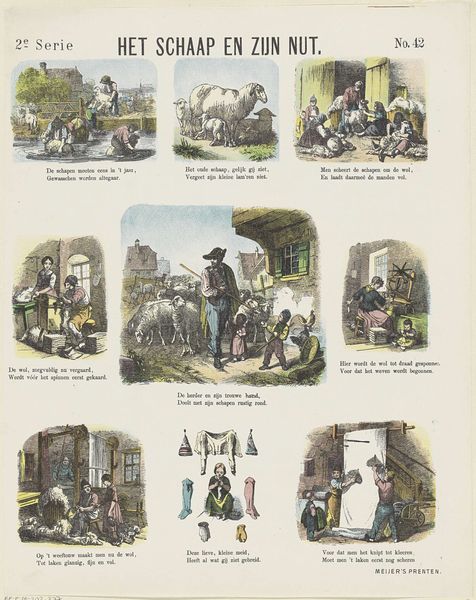
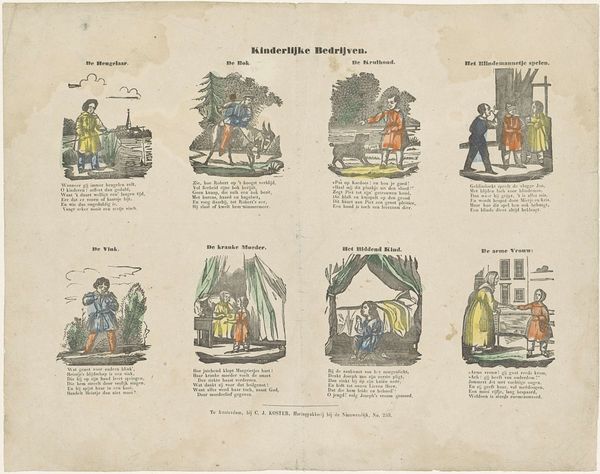
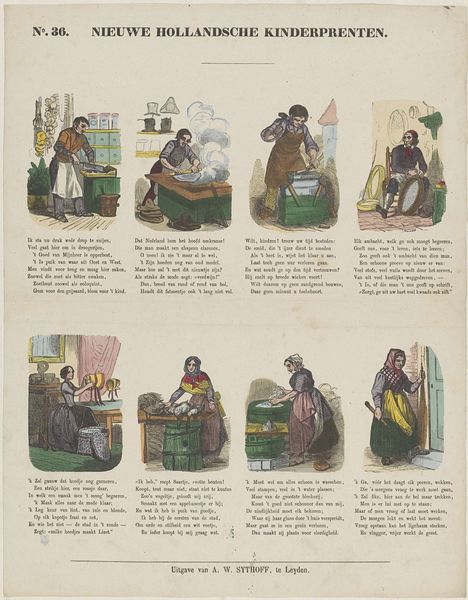
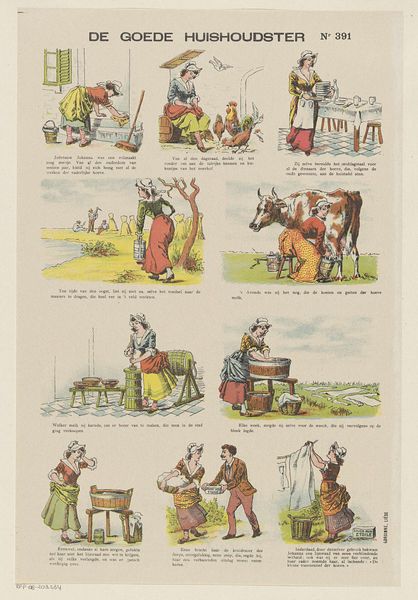
Curator: This is "Dorpse activiteiten," or "Village Activities," a lithograph made between 1868 and 1881 by Gualtherus Kolff. What strikes you most when you look at this piece? Editor: Well, at first glance, it seems to depict daily life, maybe even like an educational chart? I see various activities presented in small vignettes, almost like a visual encyclopedia of Javanese life. How do you interpret this work? Curator: It is so interesting to consider how this print engages with themes of labor, gender and representation. It is titled "Netherlands-Indies Prints" which clearly tells us that this piece emerges out of a very specific colonial context. Do you notice how the representation of daily village life in Java becomes a tool for Dutch understanding, perhaps even control? The artist emphasizes women performing domestic duties and working in the fields. It reinforces the colonial gaze by creating easily consumable images of colonized life. What happens if we view this not simply as a record but also an enactment of power? Editor: That’s fascinating. It makes me think about the act of observing itself and how that can influence and change the culture. The layout is neat and orderly, making it easier for viewers to digest this view of daily life. Is it meant to educate, or is it romanticizing colonial life for people back home? Curator: Both, perhaps! Remember that art is rarely just one thing. It’s in that tension—between documentation and romanticization, education and control—that the politics of representation become visible. Who is seeing this? What assumptions might they bring? And how does the artist, consciously or unconsciously, play into that? Editor: This has completely shifted my perspective! Now I am looking beyond the surface level of daily activities and thinking about the power dynamics at play during that time period. Curator: Exactly! Seeing art is not only about appreciating beauty but understanding the broader political and historical narratives.
Comments
No comments
Be the first to comment and join the conversation on the ultimate creative platform.
 Collect
 React
React Comment
More like this