c. 1911 - 1916
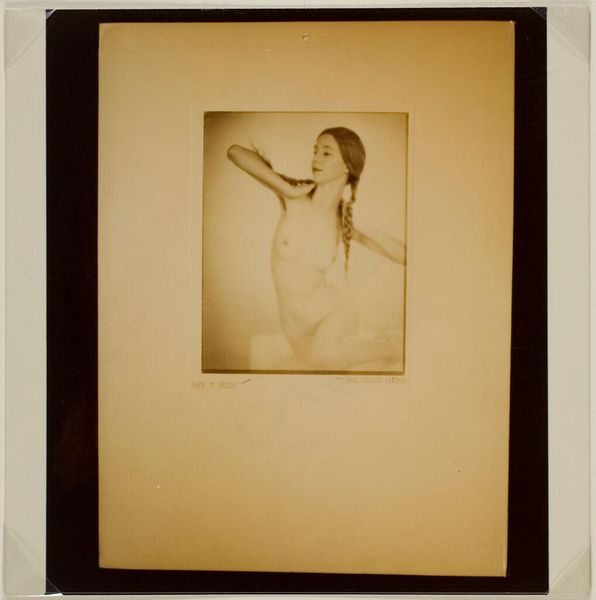
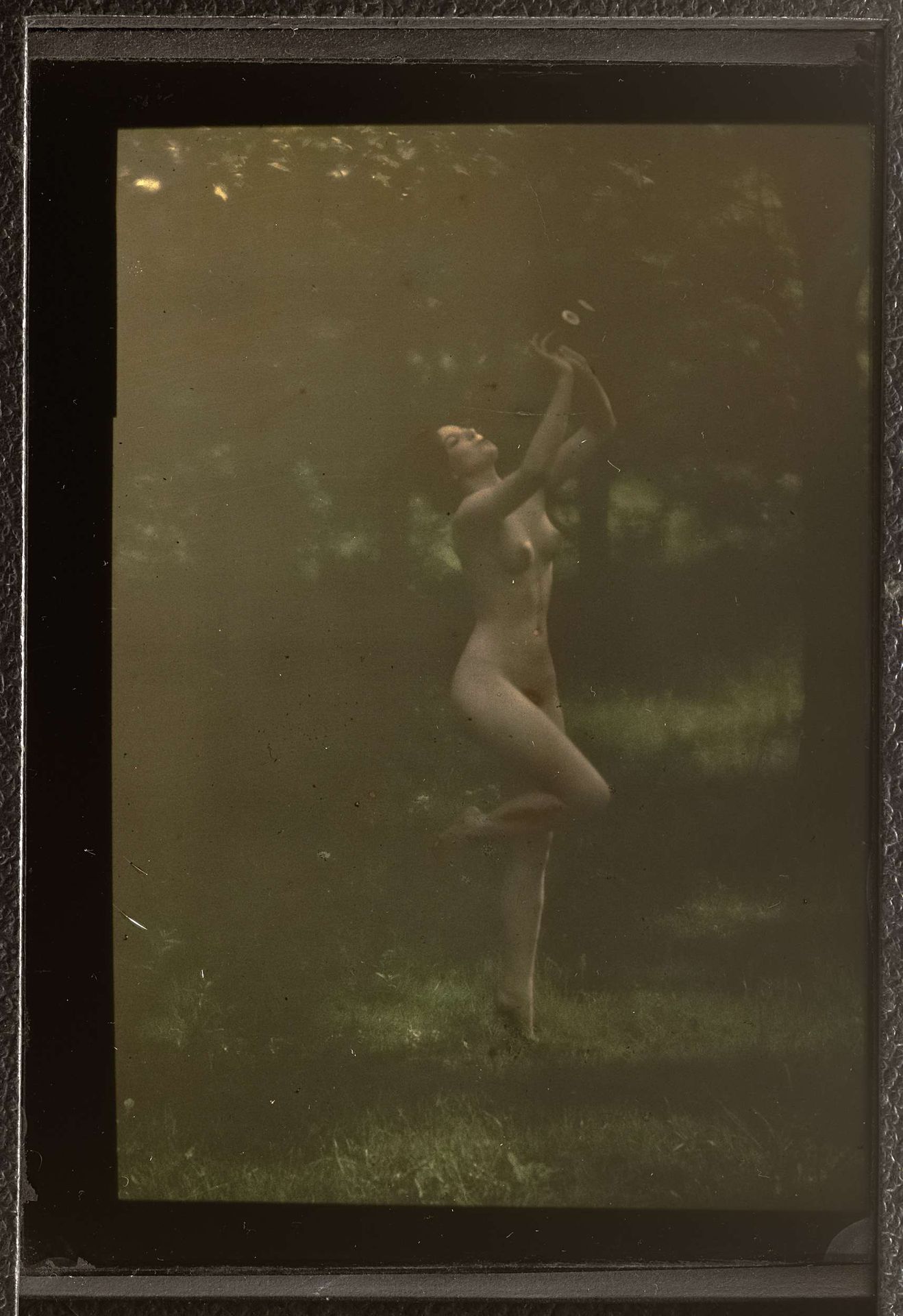
Nude Dancer with Aulos

Listen to curator's interpretation
Curatorial notes
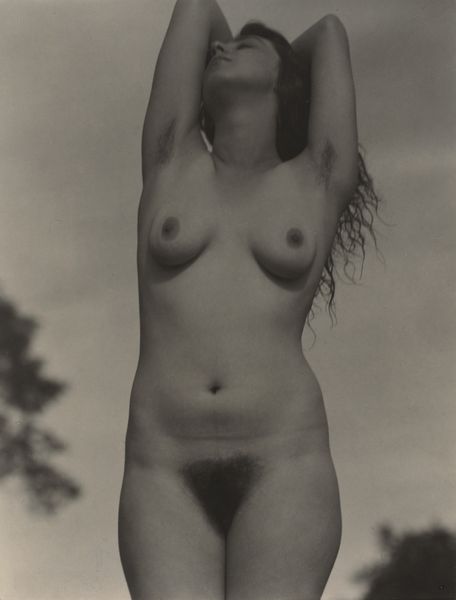
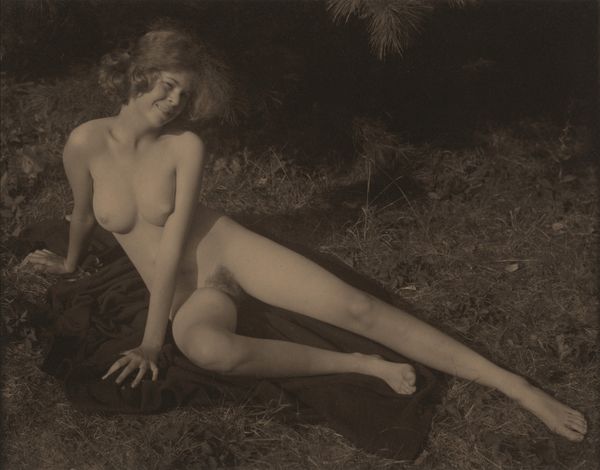
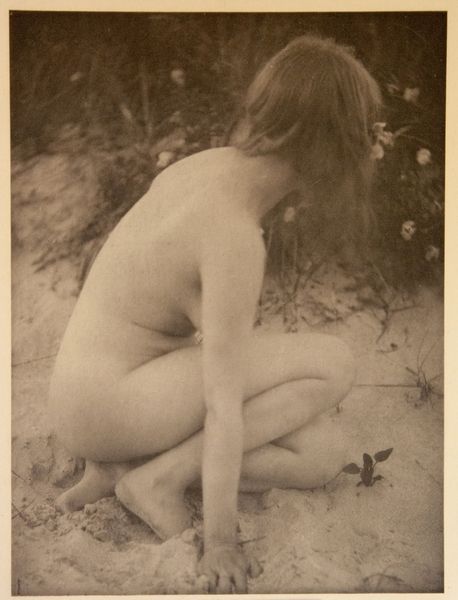
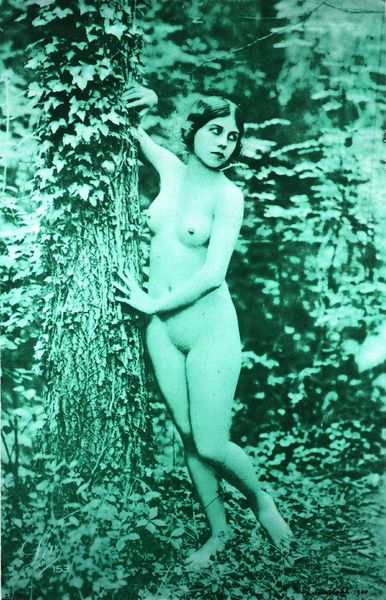
Curator: At first glance, this feels almost ghostly, like a memory trying to surface. Editor: Well, let’s orient ourselves. We're looking at a work by Arnold Genthe, an American photographer active in the early 20th century. This gelatin silver print, titled "Nude Dancer with Aulos", was likely created sometime between 1911 and 1916. Curator: Aulos, huh? Is that some kind of flute? Because that figure is holding what looks like a wind instrument… Editor: Yes, it's an ancient Greek wind instrument, something like a double flute. Genthe, though German-born, deeply explored bohemian circles, which had a huge influence on him, a kind of neo-classicism infused with Art Nouveau aesthetics. Curator: That makes sense. There's a deliberate artifice to it, right? She's in this outdoor setting, but the pose is so studied, so theatrical. Like a carefully staged tableau vivant, meant to evoke some idyllic, pre-industrial past. Editor: Exactly. It speaks to Pictorialism. Genthe wasn't aiming for pure representation, but for a subjective, painterly impression. He was using photographic techniques to conjure mood, like a hazy, dreamlike state, you get that effect of romantic exoticism and almost mythological portrayal. Curator: And the use of nude studies would have been rather scandalous back then, wouldn't it? What kind of response did Genthe get when showing such artworks to the public? Editor: The response was surely complicated, and even potentially polarizing. Some viewers could have been shocked at first. Then a deep conversation may have started, for some more than others of course. By referencing classical forms, Genthe creates art historical narratives around the nude figure, almost transcending the contemporary, which certainly pleased a public audience hungry for references, in what could be seen as the 'good old times'. Curator: Yes, now I notice, it’s true what you mean. What a way to consider and use history to avoid scandals. All in all, for me, this work embodies nostalgia for an imagined, more harmonious existence. Editor: And for me it also embodies what an artist may go through to be perceived as genius.