1903 - 1913
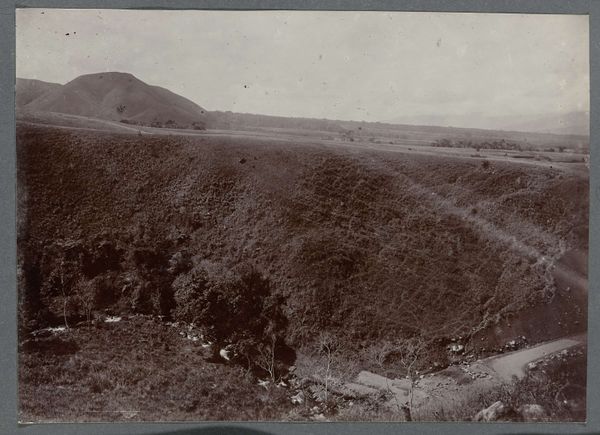
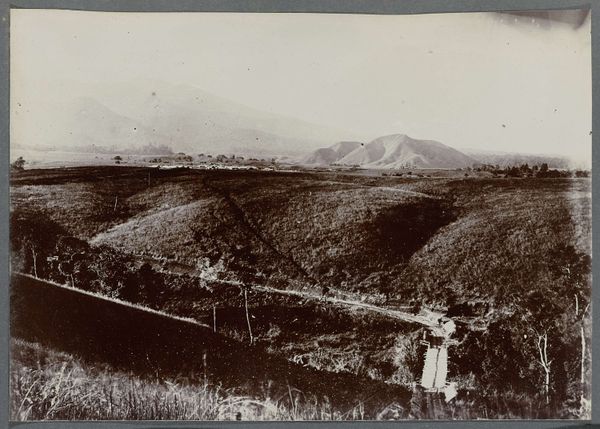
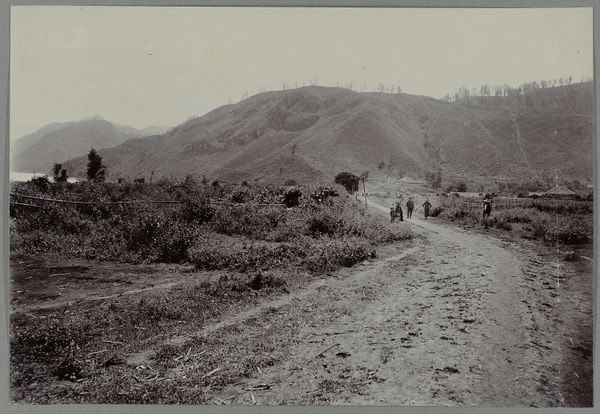
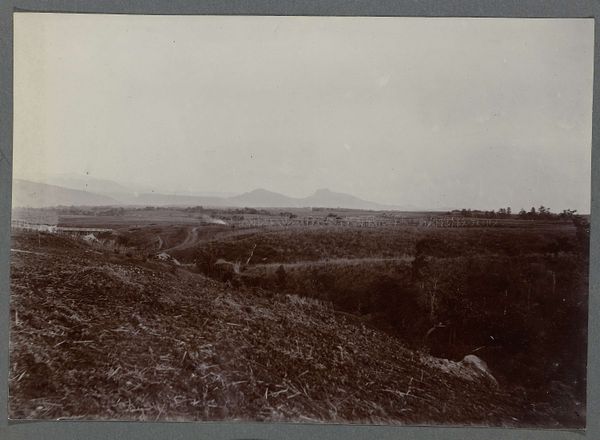
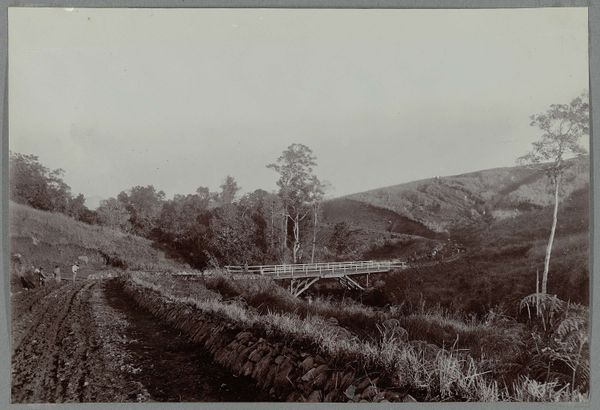
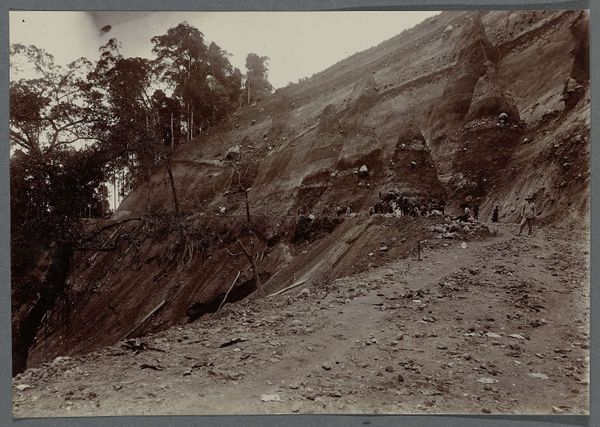
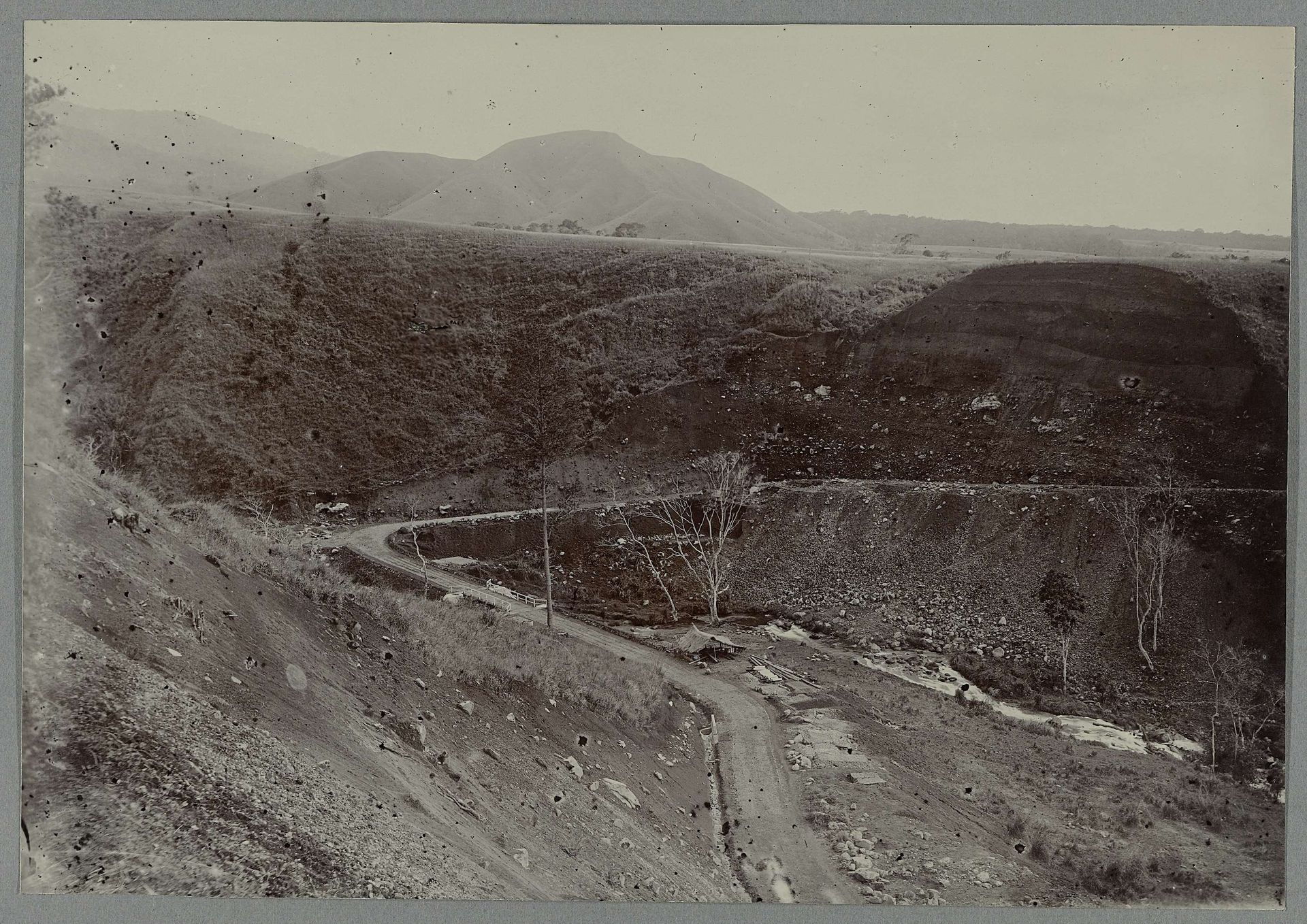
Werk aan de weg bij de Woih ni Koelos

Listen to curator's interpretation
Curatorial notes
Editor: Here we have "Werk aan de weg bij de Woih ni Koelos," a photograph, an albumen print actually, created sometime between 1903 and 1913 by an anonymous artist. It feels… desolate. What do you see in this piece? Curator: I see a stark representation of colonial infrastructure development. Look at the road under construction: the raw materials, the displaced earth. This isn't just about building a road; it's about resource extraction and control. What labor went into constructing this road? How were materials sourced? Editor: So, less about the artistry and more about…the means? The nuts and bolts, literally. Curator: Precisely. The “realism” we see flagged speaks volumes. This photograph isn’t presenting an idealized landscape, but a document – arguably propaganda, but primarily a record. Whose purpose did this road serve? What indigenous communities were impacted? We should consider the materiality of this image – the albumen print itself – as a manufactured product, implicated in this historical narrative. Editor: It’s fascinating to consider the albumen print itself as part of the story, a physical record intertwined with colonial ambition. Curator: And remember, this photograph wouldn't exist without specific equipment, chemicals, and labor processes. That's all material – all integral to its meaning. The “albumen-print”, the dirt, and the road’s reason to be: it is all speaking to capitalistic movement. Editor: I definitely see that now. It’s a good reminder to always look beyond the surface and think about the how and why something was made. Thanks!